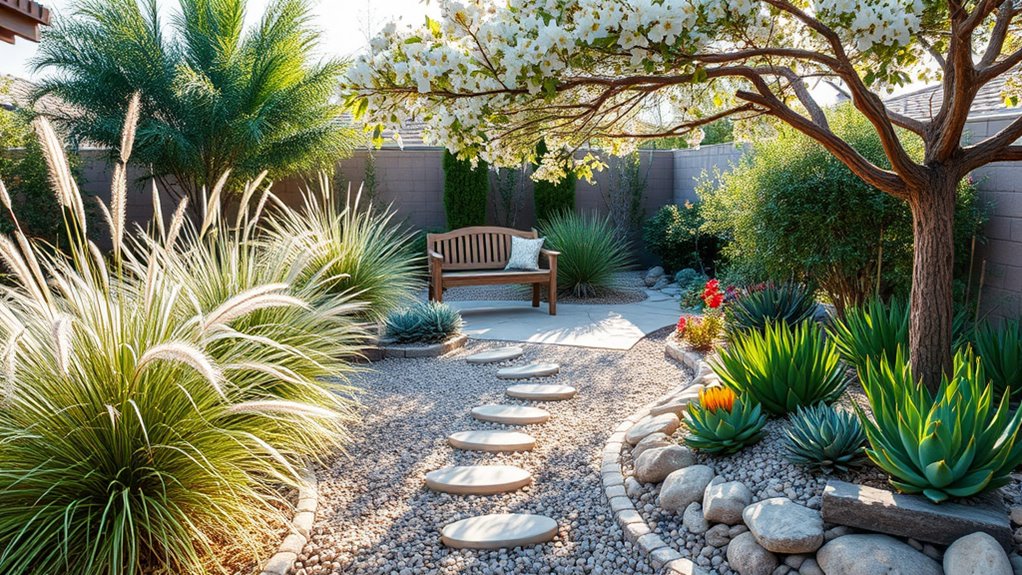
If you're looking for low-maintenance landscaping ideas, consider using drought-resistant plants like succulents and hardy varieties such as agave and sedum. Incorporate hardscaping features, like durable stone pathways and raised beds, to minimize upkeep as you enhance your outdoor space. Substitute traditional grass with ground covers like moss and creeping thyme for a lush, low-maintenance look. Additionally, don't forget the benefits of mulching for soil health and aesthetics. Keep going to discover even more creative solutions!
Drought-Resistant Plants for Sustainable Beauty
When you choose drought-resistant plants, you not merely create a stunning view but furthermore contribute to water conservation. By incorporating succulent varieties into your garden, you're taking a proactive step toward sustainability. These plants thrive in dry conditions, requiring minimal water once established, which gives you control over your garden's upkeep.
Adhering to xeriscaping principles, you can design a beautiful outdoor space that minimizes water use whilst maximizing visual appeal. Select hardy plants like agave or sedum, which come in various colors and textures, ensuring your garden remains lively year-round.
Arranging these plants thoughtfully not only improves aesthetics but likewise reduces the need for frequent watering and maintenance. By embracing drought-resistant options, you empower yourself to create a low-maintenance garden that supports the environment whilst providing you with the beauty you desire. So go ahead, take charge of your garden with these sustainable choices.
Hardscaping Features to Minimize Maintenance
Hardscaping features can transform your outdoor space in addition to greatly reducing maintenance. By incorporating elements like a well-planned patio design, you can create areas for relaxation and entertainment without the hassle of constant upkeep. Choose materials that complement your home and withstand the elements, ensuring your patio remains beautiful year-round.
Stone pathways are another excellent option. They not only guide visitors through your garden but provide a durable solution that requires minimal care. By laying out these pathways strategically, you'll control foot traffic and protect your plants, reducing wear and tear in other areas.
Consider integrating raised beds or retaining walls made of natural stone to add structure and visual interest. These options require little maintenance, allowing you to enjoy your outdoor space without the burdens of traditional landscaping. With these hardscaping features, you’ll maintain control over your yard while keeping it both functional and attractive. Additionally, incorporating these elements can improve drainage and prevent soil erosion, making your yard more sustainable. Since hardscaping enhances both aesthetics and functionality, it is considered one of the best home improvement projects for increasing property value. By thoughtfully selecting materials that complement your home’s design, you can create a cohesive and inviting outdoor space. Moreover, incorporating features like pathways or patios made from similar stone materials can create a seamless transition between different areas of your yard, enhancing its overall appeal. These additions not only provide practical spaces for gathering and leisure but also serve as some of the best outdoor upgrades for homes, elevating both functionality and style. By carefully planning your outdoor layout and integrating these hardscaping elements, you can cultivate a stunning environment that adds value and enjoyment to your property for years to come. To further enhance your outdoor space, consider incorporating various textures and colors through plants and furnishings, which can create a dynamic contrast against the hardscaping elements. As with mixing patterns in home decor, harmonizing different materials and colors in your garden can evoke a sense of creativity and personal style. By choosing plants that complement the stone features while introducing vibrant blooms, you can achieve a layered and visually engaging landscape that celebrates both nature and design.
Ground Covers That Replace Traditional Grass
To further reduce maintenance in your terrain, consider ground covers that can replace traditional grass. These alternatives not only save you time but also provide a unique aesthetic. For instance, moss gardens create a lush, green carpet that thrives in shady areas, requiring minimal watering and no mowing. This low-maintenance option allows you to enjoy a serene environment without the hassle.
Another excellent choice is creeping thyme. This hardy plant flourishes in sunny spots and forms a dense mat that suppresses weeds while adding lively color. Plus, it releases a pleasant aroma when walked on, making your outdoor space even more inviting.
Mulching Techniques for Soil Health and Aesthetics
Although many homeowners overlook the significance of mulching, incorporating it into your yard design can greatly improve both soil health and visual appeal. By choosing the right mulch types, you not only protect your soil but also improve your outdoor space. Organic mulches, like wood chips or shredded bark, decompose over time, enriching the soil with essential nutrients. Conversely, inorganic mulches, such as gravel or rubber, offer durability and require less upkeep.
You'll also enjoy significant aesthetic benefits. A well-chosen mulch can unify your garden's look, creating a polished, intentional design. For instance, dark-colored mulch can make lively flowers stand out, while lighter shades can brighten shaded areas. By applying a layer of 2-3 inches, you control weeds, retain moisture, and regulate soil temperature, ensuring your yard thrives with minimal effort. Embrace mulching to boost both your garden's health and style.
Container Gardening for Versatile and Easy Care
Mulching can improve your garden's overall look and health, but if you're seeking even more flexibility in your gardening design, container gardening offers a fantastic solution. With containers, you can easily rearrange plants to match your style or seasonal changes. Self-watering containers make it even simpler, allowing you to maintain healthy plants without constant monitoring. You'll appreciate the systematic control over moisture levels, ensuring your plants thrive.
Consider vertical gardening for a dynamic visual impact, maximizing space as you minimize effort. Use wall-mounted planters or tiered shelves to create lush displays that draw the eye upward. This method not only improves aesthetics but also saves ground space, allowing for easier maintenance.
Whether you're growing herbs on your patio or colorful blooms on your balcony, container gardening empowers you to cultivate a stunning garden with minimal work. Embrace this versatile approach to enjoy a flourishing garden that suits your lifestyle.
Frequently Asked Questions
How Do I Choose the Right Plants for My Climate?
Choosing the right plants for your climate starts with comprehending your area's plant hardiness zone. Check local guidelines to see which plants thrive best in your conditions. You'll want to focus on native species, as they're adapted to your climate and require less maintenance. By selecting plants that suit your environment, you'll guarantee a healthier scenery that reflects your control over your space as you minimize the effort needed to keep it lively.
What Tools Are Essential for Low-Maintenance Landscaping?
Think of your landscaping tools as the compass guiding you through a serene garden. To achieve low-maintenance landscaping, you'll need a few necessities. A sturdy shovel, pruning shears, and a rake are key for efficient upkeep. Don't forget a good-quality hose and watering can for those dry spells. Incorporating these tools with smart maintenance tips guarantees you stay in control, making your outdoor space both beautiful and manageable.
Can I Install Hardscaping Features Myself?
Yes, you can install hardscaping features yourself! With the right hardscaping materials and a bit of research on installation techniques, you'll feel empowered to create your own outdoor space. Start by planning your layout and gathering the necessary tools. Make certain to follow proper methods for laying stones or pavers to guarantee durability. Don't hesitate to consult online resources or tutorials—they'll guide you through each step, giving you complete control over your project.
How Often Should I Water Drought-Resistant Plants?
Envision a desert bloom, lively yet resilient. When caring for drought-resistant plants, you'll find a flexible water schedule is key. Depending on the plant types, watering once every two weeks is often sufficient, especially if you're experiencing dry spells. Check the soil; if it's dry an inch down, it's time to hydrate. You've got the reins, so adjust your schedule as needed to keep your garden thriving with minimal effort.
What Are the Costs Associated With Low-Maintenance Landscaping?
When you think about the costs associated with low-maintenance gardening, consider both the initial investment and ongoing expenses. Your initial investment might include durable materials and drought-resistant plants, which can save you money in the long run. Ongoing expenses, like occasional weeding or minimal watering, are typically lower compared to traditional gardening. By comprehending these costs, you can make informed choices that keep your garden beautiful without breaking the bank.