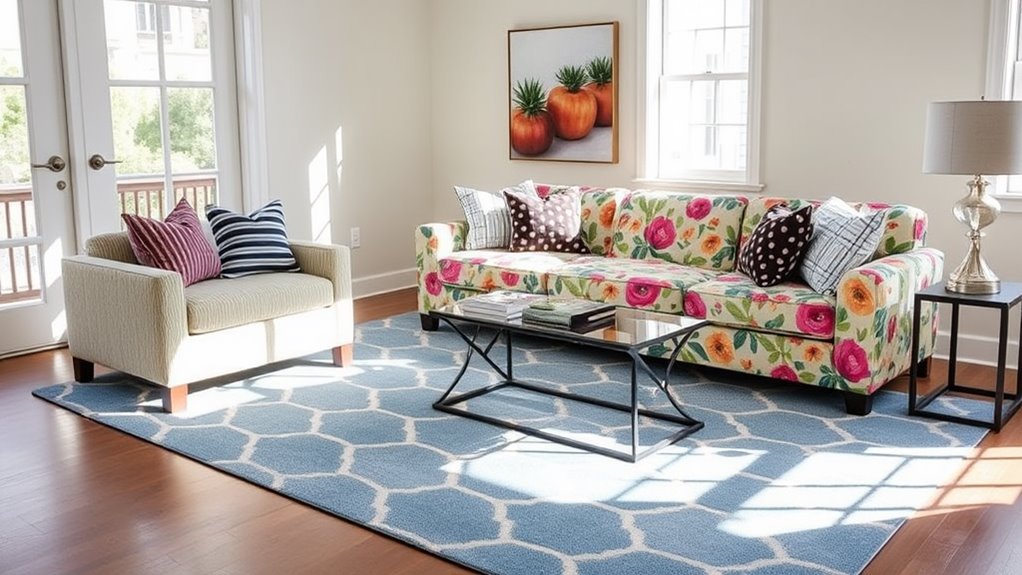
To mix and match patterns like a pro, start by choosing a cohesive color palette. Establish a focal point, like bold artwork, to guide your pattern choices. Balance the scale of patterns—combine large designs with smaller ones for visual interest. Use accessories, such as cushions and rugs, to tie everything together. Don't shy away from experimenting with different styles. Trust your instincts, and you'll create a space that feels uniquely you. There's much more to explore on this topic!
Understanding the Basics of Pattern Mixing
When you start mixing patterns in home decor, it's essential to grasp the basics first. Comprehending pattern psychology is key; it helps you recognize how different patterns influence mood and perception. You want to create visual harmony, so think about scale, color, and style.
Begin with a dominant pattern that sets the tone, then introduce complementary patterns that augment rather than clash. Stick to a consistent color palette to unify your choices. For instance, if you have a bold geometric print, balance it with softer florals or stripes in more subdued tones.
Don't forget about scale—mix large patterns with smaller ones for a layered effect. This balance provides structure and prevents chaos. By perfecting these fundamentals, you'll gain the control needed to curate a space that feels cohesive and intentional, showcasing your unique style without overwhelming your senses.
Choosing a Color Palette
A well-chosen color palette can improve your pattern mixing game and tie your decor together seamlessly. Start by considering color psychology; different hues evoke distinct emotions and can set the mood in any space. For instance, warm colors like reds and oranges energize a room, whereas cool tones such as blues and greens create a calming effect.
To gain control over your environment, select a primary color that resonates with you and build around it. Use two to three complementary colors to add depth and interest without overwhelming your design. Remember, balance is key—too many colors can create chaos.
When mixing patterns, confirm your chosen colors appear across different elements to unify the look. By strategically selecting a color palette, you're not just decorating; you're crafting an atmosphere that reflects your style and improves your everyday experience.
Starting With a Focal Point
Creating a focal point in your space is essential for effective pattern mixing. It sets the tone and guides your focal point selection, allowing you to showcase your unique style. By establishing a strong focal point, you can start creating contrast with your patterns.
| Focal Point Ideas | Pattern Mixing Tips |
|---|---|
| Bold Artwork | Use complementary colors |
| Statement Furniture | Mix geometric with floral |
| Unique Lighting | Balance busy with simple |
| Accent Wall | Layer textures for depth |
With your focal point defined, you'll have a solid foundation to build upon. It's all about control; the focal point helps you dictate how your patterns interact. Don't shy away from bold choices—embrace them! Remember, a well-chosen focal point not just improves your decor but also makes mixing and matching patterns feel effortless.
Balancing Scale and Size
When mixing patterns, you can't overlook the importance of proportions. The scale of each pattern should complement the size of your furniture and space, creating a harmonious look. Layering techniques can help you achieve balance, making your decor feel cohesive and inviting.
Proportions Matter
Balancing scale and size is essential for achieving harmony in your decor. Comprehending proportion importance helps you create visual equilibrium in your space. When mixing patterns, consider the scale of each element. Here's a quick guide to keep in mind:
| Size Category | Pattern Example |
|---|---|
| Small | Delicate florals |
| Medium | Geometric designs |
| Large | Bold stripes |
Layering Techniques
Grasping proportions sets the stage for effective layering techniques in your decor. Start by evaluating the scale of your elements. When layering rugs, choose a larger base rug and a smaller, patterned one on top. This creates depth and visual interest without overwhelming the space. For layering artwork, mix sizes and orientations. Pair a large statement piece with smaller prints to draw the eye around the room. Verify that the colors and patterns complement each other to maintain harmony. Remember, balance is key; too many bold patterns can clash. Trust your instincts—if something feels off, adjust until it feels right. With these techniques, you'll gain control over your decor, crafting a space that truly reflects your style.
Combining Different Types of Patterns
Although mixing patterns might seem intimidating, combining different types can create a lively and dynamic space. Start by selecting a dominant pattern—perhaps a bold geometric design or a striking floral pattern. Then, introduce complementary patterns like stripe patterns or polka dots to add depth without overwhelming your space.
Consider balancing graphic patterns with softer elements like botanical or ethnic prints. For an edgy touch, incorporate animal prints alongside classic plaid patterns for contrast. Abstract patterns can serve as a bridge between more structured designs, bringing cohesion to your decor.
Always pay attention to color schemes; unifying colors will help different patterns harmonize. By strategically layering these diverse patterns, you'll achieve a curated yet eclectic look that showcases your unique style. Take control of your space and experiment with combinations that speak to you!
Using Texture to Your Advantage
Incorporating texture into your home decor can improve your design, adding dimension and interest to your space. By embracing texture variety, you can create a controlled environment that feels both dynamic and inviting. Think about combining materials like smooth silk cushions with rough, woven throws. This tactile contrast not merely catches the eye but likewise encourages interaction as you move through the room.
Choose textures that complement your existing patterns, ensuring they don't compete but rather improve one another. For instance, pair a bold geometric print with a soft, plush rug to ground the space whilst adding depth. You've got the ability to direct the mood—whether cozy or sophisticated—through your choice of textures. Remember, texture variety can transform a flat design into a multi-layered masterpiece, creating an atmosphere where you feel fully in control of your decor choices.
Creating Visual Interest With Layering
Even though layering may seem intimidating at first, it's one of the most effective ways to create visual interest in your home decor. By perfecting layering techniques, you can transform a flat space into one that exudes style and depth. Start by choosing a base pattern—this could be a rug or large piece of artwork that anchors the room. From there, add complementary patterns through cushions, throws, or curtains.
Mixing various shapes, sizes, and textures will improve visual depth, making your decor more dynamic. Don't shy away from bold choices; instead, embrace them. For instance, pair a large floral print with a smaller geometric pattern to create a striking contrast. Balance is key, so make sure that your layered patterns don't overwhelm the space. With practice, you'll gain confidence in layering, allowing you to curate a space that reflects your unique taste and personality.
Incorporating Neutrals for Balance
Though mixing bold patterns can create an enchanting look, incorporating neutrals is essential for achieving balance in your decor. Neutral color schemes serve as a foundation, allowing lively patterns to shine without overwhelming the space. When you strategically place these calming tones, you create a necessary breathing room that improves the overall aesthetic.
Consider using whites, grays, or beiges as your backdrop. They ground the room while unifying disparate elements, making your patterns feel intentional rather than chaotic. This balancing act guarantees that your bold choices don't compete for attention; instead, they complement one another.
You can mix in textured neutrals, like linen or cotton, to add depth without introducing more colors. By thoughtfully incorporating neutrals, you maintain control over your design, confirming it remains cohesive and visually appealing. Remember, a well-balanced space invites comfort and sophistication, elevating your living experience effortlessly.
Using Accessories to Mix Patterns
When you're mixing patterns, accessories can be your best friends. By choosing complementary color palettes and layering different textures and fabrics, you can create a cohesive look. Let's explore how to use these elements effectively to improve your space.
Choose Complementary Color Palettes
To create a harmonious look during mixing patterns, it's essential to choose complementary color palettes that tie everything together. Consider color psychology—colors evoke emotions, so select shades that reflect the mood you want your space to convey. For a lively feel, opt for warm colors like reds and oranges; for a calming effect, lean in the direction of cool blues and greens. Seasonal palettes can likewise guide your choices; in spring, think pastels, as autumn calls for rich, earthy tones. Use accessories like cushions, rugs, and artwork to incorporate these colors, ensuring they complement your patterns. By strategically selecting these hues, you'll maintain control over the overall aesthetic, resulting in a cohesive and stylish environment.
Layer Textures and Fabrics
Mixing patterns can seem intimidating, but layering textures and fabrics is a transformative element that adds depth and interest to your decor. By perfecting fabric combinations, you gain control over your space's visual appeal. Here are three key strategies for effective texture layering:
- Vary the Weave: Combine smooth, sleek fabrics like satin with textured options such as linen or velvet to create contrast.
- Incorporate Patterns: Use patterned accessories like cushions or throws to introduce visual complexity as you keep your base layer neutral.
- Play with Scale: Mix larger patterns with smaller ones to maintain balance and avoid overwhelming the space.
Embrace these techniques, and you'll enhance your decor with confidence and style!
Experimenting With Different Styles
Although experimenting with different styles can feel intimidating, it's a rewarding way to improve your home decor. Embrace bold combinations and playful contrasts to create a space that reflects your personality. Start with key pieces, like furniture or art, and build around them.
Here's a quick reference table to inspire your mixing and matching:
| Style | Key Characteristics |
|---|---|
| Bohemian | Eclectic, lively patterns |
| Modern | Clean lines, minimal patterns |
| Industrial | Raw materials, neutral tones |
Try layering patterns from these styles in unexpected ways. Pair a modern geometric rug with bohemian pillows for a striking effect. Don't shy away from mixing textures and colors; it can lead to stunning outcomes. Remember, the goal is to find joy in the process and make your space uniquely yours!
Maintaining Consistency Throughout the Space
To create a cohesive look, you need to focus on your color palette and pattern scale. Choosing colors that complement each other will unify your space, whereas balancing the scale of your patterns guarantees they don't compete. Let's explore how these elements can improve your decor during the process of keeping everything harmonious.
Color Palette Harmony
Harmony in a color palette creates a cohesive atmosphere that can improve your home decor. By grasping color theory and applying color harmony, you can control how your space feels. Here are three strategies to achieve this:
- Choose a Dominant Color: Select one main color to anchor your design, ensuring it flows through the space.
- Incorporate Complementary Colors: Use colors opposite your dominant hue on the color wheel for balance and vibrancy without overwhelming the senses.
- Create a Monochromatic Scheme: Stick to varying shades and tints of a single color for a sophisticated, unified look.
Pattern Scale Balance
Balancing pattern scale in your home decor creates a visually appealing environment that feels intentional and cohesive. To achieve pattern harmony, consider using a mix of large, medium, and small patterns throughout your space. Large patterns can anchor a room, whereas smaller patterns add detail and interest.
Aim for visual balance by distributing these patterns evenly across your decor. For instance, if you have a bold, large-patterned sofa, pair it with smaller patterned cushions or curtains. This combination will prevent any single pattern from overwhelming the space.
Trusting Your Instincts and Personal Style
Trusting your instincts is essential regarding mixing and matching patterns in home decor. When you embrace your personal preferences, you naturally build style confidence, allowing your space to reflect who you are. Don't hesitate to experiment; your home is a canvas for your creativity.
Here are three tips to help you trust your instincts:
- Start Small: Introduce patterns gradually. Choose a couple of accent pillows or a throw rug to see how they feel in your space.
- Use a Mood Board: Create a digital or physical mood board with colors and patterns that resonate with you. This visual guide can help solidify your vision.
- Listen to Your Gut: If something feels right, go for it. Your intuition often knows what works best for your style, even though it diverges from conventional advice.
Frequently Asked Questions
Can I Mix Patterns in Small Spaces Effectively?
Absolutely, you can mix patterns in small spaces effectively. It's all about achieving pattern balance. Instead of overwhelming the area, choose a few complementary patterns that elevate each other. For instance, pair a bold geometric print with a subtle floral. You'll create visual interest without clutter. Remember, the key is to maintain harmony; this way, you'll feel in control of the space's aesthetic, making it both stylish and inviting.
What Are Some Common Pattern Mixing Mistakes to Avoid?
When mixing patterns, it's essential to avoid clashing colors and overwhelming designs. Stick to a cohesive color palette to maintain harmony in your space. Don't let too many dominant patterns compete for attention; choose one or two that stand out whilst keeping others subtle. Additionally, consider scale—mixing large and small patterns can create balance, but too many large prints can feel chaotic. Stay mindful, and you'll create a stylish, controlled environment.
How Do I Choose Patterns for Different Rooms?
When choosing patterns for different rooms, start by establishing your color palettes and room themes. Think about how each pattern complements the existing colors and style. For a cohesive look, select patterns that share a common color or motif. Consider the room's function; softer patterns work well in bedrooms, whereas bolder designs can energize living spaces. You've got the control to create a space that's uniquely yours by mixing patterns thoughtfully.
Can I Use More Than Three Patterns Together?
Absolutely, you can use more than three patterns together! Think of your space as a lively fabric, where layered textures and contrasting colors dance together harmoniously. The key's balance; choose a dominant pattern, then accent it with a couple of complementary designs. Keep the colors cohesive to maintain control over the visual chaos. Trust your instincts, and don't shy away from experimenting—your home's personality will shine when you embrace the unexpected!
Should I Consider Seasonal Changes in My Pattern Choices?
Absolutely, you should consider seasonal changes in your pattern choices. By incorporating seasonal themes, you can create a dynamic and inviting atmosphere in your space. Think about adjusting your color palettes to reflect the warmth of fall or the freshness of spring. This approach not only keeps your decor feeling relevant but likewise gives you control over the mood in your home, ensuring it resonates with the time of year. Additionally, integrating seasonal elements can extend beyond just colors to include textures and materials, such as cozy knits in winter or light linens in summer. Moreover, as you refresh your decor, consider pairing it with musthave beauty products for seasons that align with your aesthetic, enhancing both your interior and personal style. This holistic approach transforms your living space into a cohesive sanctuary that celebrates the essence of each season.