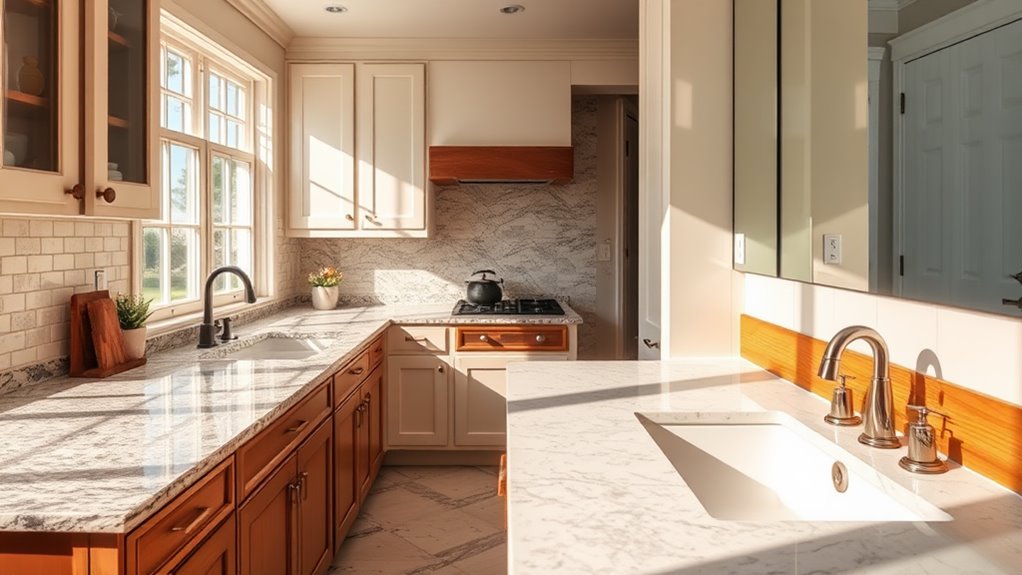
Choosing the best countertops for your kitchen and bathroom means balancing style, durability, and maintenance. Start by considering materials like granite for luxury and durability or quartz for low upkeep. Think about how colors and patterns will complement your space, and factor in your budget. Don't forget the importance of thickness for both appearance and strength. Keep going to discover more tips on matching countertops with cabinets and fixtures for a cohesive design.
Understanding Different Countertop Materials
When you're choosing countertops, it's essential to understand the various materials available, as each has its own unique benefits and drawbacks. By knowing the material benefits, you can make an informed decision that suits your kitchen or bathroom needs. For instance, granite offers durability and a luxurious appearance, whereas laminate provides affordability and a variety of styles.
If you're looking for eco-friendly options, consider bamboo or recycled glass countertops. These choices not just minimize your environmental impact but additionally add a distinct style to your space.
Don't forget about quartz, which combines beauty with low maintenance. Each material has its perks, so weigh your options carefully. Think about how each choice aligns with your lifestyle and values. In the end, you're in control of creating a space that reflects your taste while meeting practical needs. Take your time to explore and choose wisely.
Assessing Durability and Longevity
When choosing countertops, you need to evaluate their strength and how well they'll hold up over time. Different materials come with varying maintenance needs and lifespans, which can impact your long-term satisfaction. Let's explore how each option stacks up regarding durability and longevity.
Material Strength Comparison
In selecting countertops, it is crucial to evaluate material strength, as this directly influences durability and longevity. You'll want to take into account granite toughness, known for its ability to withstand heat, scratches, and heavy impacts. This natural stone can last a lifetime if maintained properly. Conversely, quartz resilience offers another strong option. Engineered from natural stone and resin, quartz resists staining and doesn't require sealing, making it a practical choice for busy kitchens and bathrooms. By comparing these materials, you can make an informed decision that aligns with your lifestyle. Remember, selecting a durable countertop means investing in a surface that will serve you well for years to come, giving you the control you desire in your space.
Maintenance Requirements Overview
Choosing the right material is just the beginning; comprehending maintenance requirements is key to ensuring your countertops remain in top condition for years. Different materials demand varying degrees of care, so knowing what to expect helps you maintain control over your kitchen and bathroom aesthetics.
| Material Type | Maintenance Needs |
|---|---|
| Granite | Seal every 1-2 years |
| Quartz | Wipe with mild soap |
| Laminate | Avoid excessive moisture |
| Eco-Friendly Options | Regular eco-friendly cleaners |
Consider countertop finishes as well; polished surfaces may require more frequent cleaning, whereas honed finishes can hide stains better. By choosing wisely and committing to maintenance, you'll enjoy beautiful, lasting countertops without hassle.
Lifespan Expectations by Material
Countertops can markedly vary in lifespan, depending on the material you select for your kitchen or bathroom. If you want long-lasting durability, consider granite or quartz; both offer impressive material lifespans of 15 to 30 years with proper care. Laminate, although budget-friendly, typically lasts around 10 years, so you'll want to weigh cost against longevity. Solid surface countertops likewise provide decent countertop longevity, usually lasting about 10 to 20 years. If you're after something unique, natural stone like marble may appeal, but expect a shorter lifespan of 10 to 15 years because of its susceptibility to scratches and stains. In the end, comprehending these material lifespans helps you choose a countertop that meets your needs and lifestyle.
Evaluating Maintenance Requirements
When choosing countertops, it's essential to contemplate how much cleaning and care they'll need. You'll want to think about their stain resistance and how they'll hold up over time. Comprehending these maintenance requirements can save you time and effort in the long run.
Cleaning and Care Needs
Maintaining your countertops is crucial for their longevity and appearance, and different materials come with varying care requirements. You'll want to choose the right cleaning methods and care products to keep them looking their best. Here's a quick guide to help you decide:
| Countertop Material | Recommended Cleaning Methods |
|---|---|
| Granite | Mild soap and water; soft cloth |
| Quartz | pH-balanced cleaner; microfiber |
| Marble | Specialty stone cleaner; avoid acids |
| Laminate | Non-abrasive cleaner; damp cloth |
Understanding these needs will empower you to protect your investment, ensuring your countertops stay beautiful and functional. Be proactive in your maintenance routine, and you'll enjoy your surfaces for years to come.
Stain Resistance Levels
How do you choose a countertop that can withstand everyday spills and stains? Start by considering stain resistance levels. Look for materials like quartz or granite, which offer excellent protection against common kitchen mishaps. Implement stain prevention techniques, such as sealing porous surfaces and using coasters for drinks. You'll want to adopt effective cleaning methods too—quickly wipe up spills with mild soap and water to prevent staining. Regular maintenance is key; a simple routine can keep your countertops looking pristine. By prioritizing stain resistance, you empower yourself to enjoy your kitchen or bathroom without the constant worry of damage. Choose wisely, and you'll have a surface that not only looks great but also endures everyday life.
Durability Over Time
Choosing a countertop isn't just about aesthetics; it's also crucial to contemplate how well it'll hold up over time. Durability often translates to lower maintenance and more savings in the long run. When you evaluate options, consider their environmental impact alongside countertop warranties. Here's a quick comparison:
| Material | Durability (Years) | Maintenance Level |
|---|---|---|
| Granite | 20-30 | Low; seal every few years |
| Quartz | 25-50 | Very low; occasional wipe |
| Laminate | 10-20 | Medium; avoid excessive heat |
Considering Style and Aesthetic Appeal
Though the functionality of your countertops is crucial, their style and aesthetic appeal can transform your kitchen and bathroom into stunning spaces. When choosing, consider how the design aligns with your vision. You can achieve either modern design or traditional elegance based on personal preference.
Here are some key factors to keep in mind:
- Color Scheme: Verify your countertops complement the existing color palette.
- Material Texture: Think about how different textures like glossy or matte affect the overall look.
- Edge Profiles: Select edge styles that improve your design theme.
- Patterns: Look for unique patterns that can serve as focal points.
- Lighting: Consider how natural and artificial light interacts with your chosen materials.
Budgeting for Your Countertop Selection
When you're ready to select countertops, budgeting plays a pivotal role in your decision-making process. Start by establishing your countertop budget, as this will guide your choices. Determine how much you're willing to spend before you get swept away by stunning materials.
Next, conduct a cost comparison among different options like granite, quartz, and laminate. This helps you understand where your money goes and what fits within your budget. Don't forget to factor in installation costs, as they can greatly affect your overall expenses.
Exploring Color Options and Patterns
How do you want your countertops to improve the overall aesthetic of your kitchen or bathroom? Choosing colors and patterns isn't just about looks; it's about how they influence your space. Consider the principles of color psychology: warm tones can create a cozy feel, whereas cool shades promote calmness.
Think about these pattern trends to amplify your design:
- Bold Contrasts: Dark and light combinations add drama.
- Subtle Textures: Soft patterns create a sophisticated backdrop.
- Marble Effects: Timeless elegance with luxurious appeal.
- Geometric Designs: Modern flair for contemporary spaces.
- Natural Veining: Unique, organic touches that catch the eye.
Impact of Countertop Thickness
Countertop thickness can greatly influence both the functionality and aesthetic of your kitchen or bathroom. By choosing the right thickness, you not only improve the visual appeal but also guarantee durability. Thicker countertops typically offer greater strength, making them less prone to chipping and cracking. They can raise countertop aesthetics, creating a bold statement in your space.
Here's a quick comparison of thickness advantages:
| Thickness | Advantages |
|---|---|
| 1 inch | Lightweight, cost-effective |
| 1.5 inches | Good balance of durability and style |
| 2 inches | High-end appearance, superior strength |
When you prioritize thickness, you gain control over both the look and longevity of your countertops. Make a choice that aligns with your vision and functional needs, and you'll be rewarded with a stunning, practical space.
Installation Process and Considerations
Although the installation process for countertops may seem straightforward, careful planning and consideration are essential to guarantee a successful outcome. To take control of the installation, follow these key steps:
- Accurate Countertop Measurements: Measure your space precisely to avoid costly mistakes.
- Choose Installation Techniques: Decide between DIY or professional help based on your skill level.
- Select the Right Adhesive: Use a strong adhesive suitable for your countertop material.
- Prepare the Base: Verify your cabinets are level and sturdy to support the weight of the countertop.
- Allow for Expansion: Plan for temperature fluctuations to prevent cracking.
Matching Countertops With Cabinets and Fixtures
When you're designing your kitchen or bathroom, finding the right balance between countertops, cabinets, and fixtures is crucial for achieving a cohesive look. You want to guarantee that your choices reflect your style as you maintain harmony throughout the space. Start with cabinet color coordination; lighter cabinets often pair well with darker countertops and vice versa. Don't forget about fixture style harmony—choose faucets and handles that complement your countertop material.
Here's a quick guide to help you out:
| Countertop Style | Cabinet Color | Fixture Style |
|---|---|---|
| Granite | White or Gray | Sleek Stainless Steel |
| Quartz | Dark Wood | Matte Black |
| Marble | Light Beige | Polished Nickel |
Frequently Asked Questions
What Is the Average Lifespan of Different Countertop Materials?
In terms of countertop materials, you want options that stand the test of time. Laminate's lifespan typically ranges from 10 to 15 years, giving you a decent run before needing a refresh. Conversely, granite boasts impressive durability, often lasting 20 years or more with proper care. So, as you consider your choices, think about how each material aligns with your vision for lasting beauty and functionality in your space.
Can I Use the Same Countertop for Both Kitchen and Bathroom?
You can definitely use the same countertop material for both your kitchen and bathroom, but you'll want to contemplate kitchen durability and bathroom aesthetics. Some materials, like quartz, offer great durability for kitchen use yet appearing stylish in a bathroom. Nevertheless, think about how each space feels. You might prefer a softer look for your bathroom, whereas opting for something more robust in the kitchen. Choose wisely to maintain balance!
How Do I Choose a Countertop for a Small Space?
When you're choosing a countertop for a small space, think about space-saving solutions that improve functionality. Opt for materials like quartz or compact laminate, which are durable yet sleek. Consider how the color and finish can create an illusion of more space; lighter shades often work best. Keep in mind your personal style and how the countertop will complement other elements in the room, giving you control over the overall aesthetic.
Are There Eco-Friendly Countertop Options Available?
Picture a wise gardener, nurturing a thriving garden. Just like that, you can cultivate an eco-friendly kitchen or bathroom. There are plenty of sustainable materials to choose from, like bamboo or reclaimed wood, that bring warmth and character. You’ll likewise find recycled surfaces, crafted from glass or paper, providing unique styles as well as reducing waste. By selecting these options, you’re not just enhancing your space; you’re additionally making a significant statement about your values. In addition to selecting sustainable materials, incorporating natural finishes and non-toxic sealants can further reduce harmful emissions and improve indoor air quality. Choosing water-efficient fixtures and energy-saving appliances also helps conserve valuable resources while lowering utility costs. These mindful decisions contribute to a healthier home and a more sustainable future.
What Are the Best Countertops for a Rental Property?
When you're selecting countertops for a rental property, you want durability and appeal without breaking the bank. Consider granite alternatives like laminate or quartz; they're cost-effective and easy to maintain. Keep budget considerations in mind—choose materials that can withstand wear and tear during still looking great. This way, you'll attract tenants and guarantee your investment remains intact, giving you the control you need over your property's value.