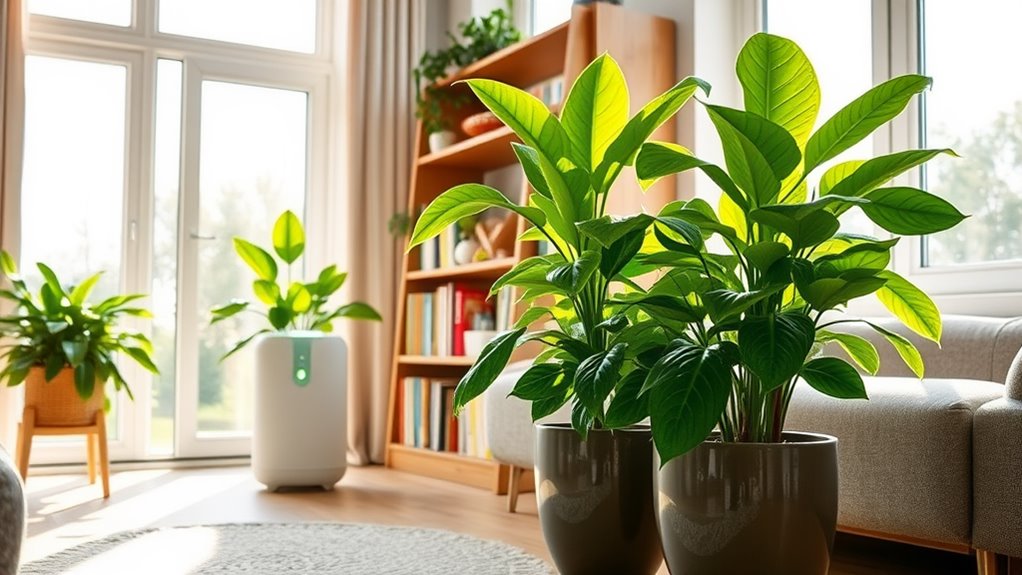
To improve indoor air quality in your home, start by managing common pollutants like dust and pet dander through regular cleaning. Improve ventilation by opening windows or using mechanical systems, and make good use of air purifiers customized to your needs. Maintain humidity levels between 30-50% to prevent mold growth. Opt for low-VOC products and establish a no-smoking policy. Regular HVAC maintenance keeps everything efficient. There's much more to learn for a healthier home environment.
Understand Common Indoor Air Pollutants
Even though you might not see them, common indoor air pollutants can greatly impact your health and comfort. By comprehending these pollutants, you can take control of your environment. Common sources include dust mites, pet dander, mold, and volatile organic compounds (VOCs) from household products like paints and cleaners. These elements can lead to various health impacts, such as allergies, respiratory issues, and even long-term conditions like asthma.
You can reduce your exposure by regularly cleaning, using air purifiers, and choosing low-VOC products. Pay attention to humidity levels, since high moisture can promote mold growth. Additionally, consider the impact of tobacco smoke, which can linger and affect air quality. Recognizing these risks empowers you to create a healthier home. Don't let hidden pollutants compromise your well-being; take proactive steps to guarantee the air you breathe supports your health.
Improve Ventilation in Your Home
To improve the quality of the air you breathe, improving ventilation in your home is essential. Start by maximizing natural ventilation; open windows and doors to create a cross-breeze, allowing fresh air to flow in and stale air to escape. This simple act can greatly reduce indoor pollutants.
If natural ventilation isn't enough, consider mechanical ventilation systems. These systems can actively exchange indoor air with outdoor air, ensuring a consistent supply of fresh air, especially in tightly sealed homes. Options like exhaust fans and whole-house ventilation systems can help maintain ideal air quality.
Regularly check and maintain these systems to keep them running efficiently. By taking charge of your home's ventilation, you'll not just improve air quality but additionally create a healthier living environment. Remember, fresh air is your ally in combating indoor pollution!
Use Air Purifiers Effectively
To use air purifiers effectively, you need to start by choosing the right one for your space. Next, think about where you place it to guarantee maximum efficiency in cleaning the air. Finally, regular maintenance is essential to keep your purifier running at its best.
Choose the Right Purifier
How can you guarantee the air in your home is clean and safe? Choosing the right air purifier is key. Start by comprehending different purifier types, like HEPA, activated carbon, and UV purifiers. Each type targets specific pollutants, so identify your primary concerns—whether it's allergens, smoke, or odors. Next, explore filter options. HEPA filters excel at capturing tiny particles, whereas activated carbon filters tackle gases and odors effectively. Look for purifiers with a combination of these technologies for maximum impact. Don't forget about the size of the purifier; ascertain it's appropriate for your space. By selecting a well-suited air purifier, you take control of your indoor air quality, creating a healthier environment for you and your family.
Placement for Maximum Efficiency
Even though selecting the right air purifier is crucial, its placement in your home can greatly impact its effectiveness. To maximize airflow patterns and improve purification, consider these strategic locations:
| Location | Benefits | Considerations |
|---|---|---|
| Living Room | Central airflow, high usage | Avoid corners, obstacles |
| Bedroom | Improved sleep quality | Confirm filter locations are clear of bedding |
| Kitchen | Reduces cooking odors | Keep away from appliances that generate heat |
Regular Maintenance Is Key
Though you might think that simply owning an air purifier is enough to guarantee clean indoor air, regular maintenance is vital for it to perform at its best. To take control of your indoor air quality, you need to establish consistent cleaning routines. Start by checking and replacing air filters according to the manufacturer's recommendations—typically every 3 to 6 months. Dirty filters can hinder airflow and reduce efficiency, making your purifier less effective. Furthermore, don't forget to clean the unit itself; dust and debris can accumulate and impact performance. By prioritizing these maintenance tasks, you'll make sure your air purifier operates at peak performance, providing you with the fresh, clean air you deserve. Take charge of your environment, and breathe easier!
Maintain Optimal Humidity Levels
Maintaining ideal humidity levels is essential for creating a healthy indoor environment. When humidity is too high, it can lead to mold growth and dust mites, whereas too low humidity can cause dry skin and respiratory issues. To take control, implement effective humidity control techniques. Invest in a hygrometer to monitor your home’s moisture levels regularly. Aim for a range of 30-50% for best comfort and health. To achieve optimal humidity, use dehumidifiers in damp areas and humidifiers in dry spaces as needed. Proper ventilation, such as using exhaust fans in kitchens and bathrooms, can also help regulate moisture levels. These steps will not only improve air quality but also prevent mold in your home, ensuring a healthier living environment.
If humidity spikes, consider using dehumidifiers or moisture absorption methods like silica gel or activated charcoal in damp areas. On the flip side, if your air is too dry, you might opt for humidifiers or simply leave a pot of water on the stove to evaporate. By actively managing these levels, you'll encourage a more comfortable living space, reducing allergens and enhancing your overall well-being. Take charge of your indoor air quality—your health depends on it.
Incorporate Indoor Plants
Incorporating indoor plants can greatly improve your air quality. You'll want to choose the best air-purifying varieties and place them strategically for maximum benefit. Plus, knowing how to care for them will guarantee they thrive and continue to enhance your space.
Best Air-Purifying Plants
As you seek to improve your indoor air quality, reflect on the benefits of incorporating air-purifying plants into your living space. These plants not just improve aesthetics but additionally actively filter harmful toxins from the air. Here are some excellent plant varieties to reflect on for their air purifying benefits:
- Spider Plant – Great at removing formaldehyde and xylene.
- Peace Lily – Effective against ammonia, benzene, and mold spores.
- Snake Plant – Converts CO2 into oxygen at night, improving air quality.
- Pothos – Known for eliminating indoor pollutants like formaldehyde and carbon monoxide.
Placement for Maximum Benefit
Positioning your air-purifying plants correctly can greatly improve their effectiveness in improving indoor air quality. To maximize their benefits, consider their filter types and the air flow in your home. Place taller plants near windows to catch sunlight and improve air circulation, as smaller plants can thrive on shelves or tables.
| Plant Type | Recommended Placement |
|---|---|
| Spider Plant | Near a light source |
| Peace Lily | In corners for airflow |
| Snake Plant | On desks for easy access |
| Boston Fern | Hanging for humidity boost |
Care and Maintenance Tips
To guarantee your indoor plants thrive and continue to improve air quality, regular care and maintenance are vital. Implementing strategic maintenance routines not just keeps your plants healthy but also maximizes their air-purifying abilities. Here are four fundamental tips to maintain your indoor plants:
- Water Wisely: Check soil moisture regularly; over-watering can harm roots and reduce air quality.
- Dust Leaves: Wipe leaves with a damp cloth to remove dust, allowing plants to absorb more light and improve air circulation.
- Rotate Plants: Turn your plants occasionally to guarantee even growth and exposure to light.
- Fertilize Periodically: Use a balanced fertilizer every few months to provide crucial nutrients that promote healthy growth.
Choose Low-VOC Products
When you're renovating or redecorating your space, choosing low-VOC products can greatly improve your indoor air quality. Volatile Organic Compounds (VOCs) can release harmful fumes and compromise your health. By opting for eco-friendly materials and sustainable choices, you take control of your environment.
Here's a quick comparison of common products:
| Product Type | Low-VOC Option |
|---|---|
| Paint | Water-based latex paint |
| Flooring | Bamboo or cork flooring |
| Adhesives | Plant-based adhesives |
| Furniture | Reclaimed wood furniture |
| Cleaning Supplies | Natural, biodegradable cleaners |
Selecting low-VOC alternatives not just benefits your health but likewise supports the planet. You'll create a safer, healthier home as you make responsible choices. So, as you plan your next project, prioritize low-VOC options to improve your living space and well-being.
Regularly Clean and Dust Your Home
Keeping your home clean and dust-free is essential for maintaining good indoor air quality. You have the ability to take control of your environment by establishing effective cleaning schedules. Implement these dusting techniques to improve your indoor air:
- Use Microfiber Cloths: They trap dust better than traditional cloths, reducing airborne particles.
- Vacuum Regularly: Opt for a vacuum with a HEPA filter to capture fine dust and allergens.
- Declutter Spaces: Fewer items mean less dust accumulation, making cleaning easier and more effective.
- Wash Fabrics Frequently: Don't forget curtains, pillow covers, and bedding, as they can hold dust and allergens.
Implement a No-Smoking Policy
Maintaining a clean and dust-free home helps set the stage for a healthier environment, but addressing smoking habits is another important step. Implementing a no-smoking policy in your home allows you to take control of your indoor air quality. The smoking effects extend beyond the smoker, releasing harmful indoor toxins that can linger in your space. These toxins can lead to respiratory issues and other health complications for everyone in your home.
Schedule Routine HVAC Maintenance
Though you may not think about your HVAC system often, scheduling routine maintenance is crucial for ensuring ideal indoor air quality. Regular check-ups improve HVAC efficiency and prevent costly repairs, giving you more control over your home's environment.
Here are four key benefits of seasonal maintenance:
- Improved Air Quality: Regular filter changes reduce dust and allergens in the air.
- Energy Savings: An efficiently running system uses less energy, lowering your bills.
- Extended Lifespan: Routine care can prolong the life of your HVAC system, saving you money on replacements.
- Consistent Comfort: Seasonal check-ups help maintain even temperatures throughout your home.
Frequently Asked Questions
How Often Should I Replace Air Filters in My HVAC System?
You should replace your HVAC air filters every 1 to 3 months, depending on usage and filter type. Regular filter maintenance is essential for optimal air filtration and improves your home's air quality. If you have pets or allergies, check them monthly. Staying on top of this task not merely prolongs the life of your system but furthermore guarantees you breathe cleaner air. Take control of your environment by prioritizing filter replacements.
Can Indoor Air Quality Affect Sleep Quality?
Did you know that poor indoor air quality can reduce your sleep quality by up to 30%? Your sleep environment plays an essential role in how well you rest. When air pollutants, like dust and allergens, linger in your home, they can disrupt your sleep cycle and lead to restless nights. By taking control of your indoor air quality, you can create a healthier sleep environment that promotes better, more restorative sleep.
What Are the Signs of Poor Indoor Air Quality?
You might notice several signs of poor indoor air quality, like persistent musty odors or visible mold growth in damp areas. If you've been experiencing frequent headaches, fatigue, or respiratory issues, it could be linked to contaminants in your space. Furthermore, if you've got gas appliances, be aware of carbon monoxide buildup, which can be dangerous. Recognizing these signs lets you take control of your environment and improve your overall well-being.
Are Essential Oils Beneficial for Indoor Air Quality?
Did you know that indoor air can be up to five times more polluted than outdoor air? You might find vital oils beneficial for improving your air quality. They act as natural air fresheners, helping to mask unpleasant odors during providing vital oil benefits like reducing airborne bacteria. By diffusing or using them in cleaning products, you can take control of your indoor environment and create a fresher, healthier space for yourself and your family.
How Can I Test My Home's Air Quality?
To test your home's air quality, you can use air quality monitors that track pollutants and allergens. Start by identifying potential pollution sources, like mold, dust, or chemicals from cleaning products. These monitors provide real-time data, helping you understand your indoor environment. Once you've gathered the information, you can take action to improve your air quality, ensuring a healthier space for you and your family. Taking control starts with knowing what's in the air you breathe!