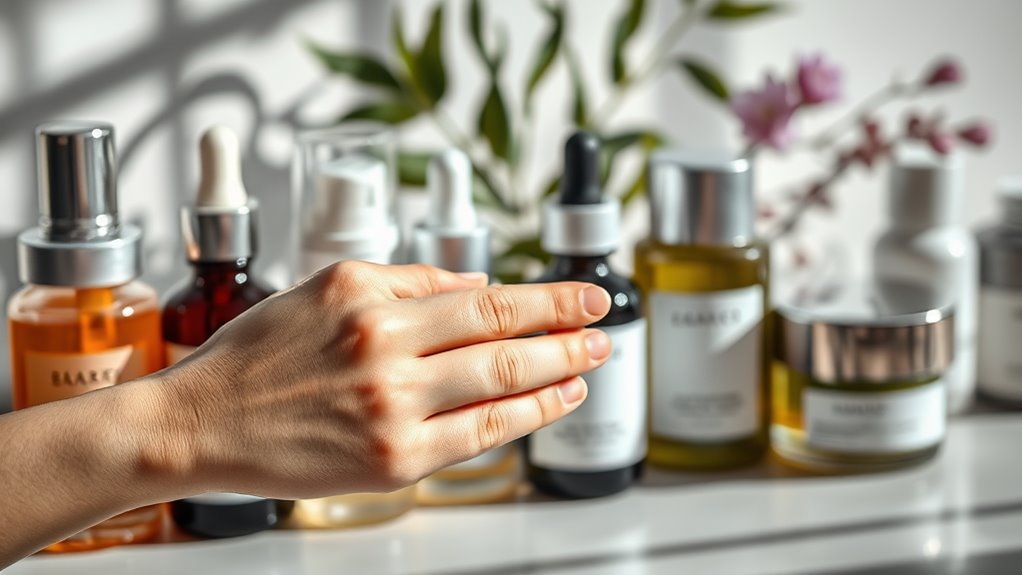
Mixing certain skincare ingredients can cause irritation and reduce effectiveness. For example, avoid combining retinol and vitamin C, along with AHAs/BHAs with retinol. Niacinamide and vitamin C might compromise each other's potency, whereas benzoyl peroxide and retinol can lead to dryness. It's best to keep crucial oils away from exfoliants too. To guarantee healthy skin, it's important to know which combinations to skip. So, stick around to uncover more vital tips for your skincare routine!
Retinol and Vitamin C
Even though both retinol and vitamin C can considerably improve your skincare routine, mixing them can lead to irritation and reduced effectiveness. Retinol benefits your skin by promoting cell turnover, minimizing fine lines, and boosting collagen production. In contrast, vitamin C works wonders as an antioxidant, brightening your complexion and fighting free radicals.
While they each offer incredible results individually, their synergy can be disrupted when applied together. When you layer these potent actives, the potential for irritation increases, and their effectiveness might diminish. Instead of combining them in one application, consider using vitamin C in the morning to protect your skin from environmental stressors and retinol at night for deeper repair. This way, you maximize their unique benefits without compromising your skin's health. Embrace innovative strategies for your routine, and your skin will thank you for it.
AHA/BHA and Retinol
When you're looking to improve your skincare routine, mixing AHA/BHA with retinol might seem tempting, but doing so can lead to increased irritation and sensitivity. AHA and BHA are influential exfoliants, offering impressive AHA benefits like improved skin texture and brightness. Nevertheless, when combined with retinol, which boosts cellular turnover and promotes Retinol effectiveness, your skin may become overwhelmed.
The potent combination can strip away natural moisture, resulting in redness and peeling. Instead of achieving that coveted glow, you might end up with a compromised barrier. To maximize the advantages of both ingredients, consider using them on alternating nights. This way, you can enjoy the AHA benefits and the effectiveness of retinol without sacrificing your skin's comfort. Embrace innovation in your routine, but remember: sometimes, less is more. Prioritize your skin's health over the desire to layer every active ingredient.
Niacinamide and Vitamin C
Even though many skincare enthusiasts rave about the benefits of niacinamide and vitamin C, mixing these two potent ingredients can actually create complications. While both have impressive properties, combining them can compromise their effectiveness, particularly affecting vitamin C stability.
Here's what you should know before mixing:
- pH Levels: Niacinamide works best at a higher pH, whereas vitamin C thrives in an acidic environment.
- Decreased Efficacy: Mixing can neutralize their benefits, leading to reduced effectiveness.
- Irritation Risk: The combination may irritate sensitive skin, causing redness or discomfort.
- Layering Options: Consider applying them at different times for maximum benefits.
- Innovative Alternatives: Explore formulations that stabilize these ingredients separately.
Benzoyl Peroxide and Retinol
Mixing benzoyl peroxide and retinol can lead to skin troubles you might want to avoid. Although both ingredients boast impressive benefits, their combination can cause irritation, redness, and dryness, hindering your skin goals. It is crucial to understand their individual roles to maximize their potential.
| Ingredient | Benefits | Recommended Use |
|---|---|---|
| Benzoyl Peroxide | Treats acne, reduces breakouts | Use in the morning |
| Retinol | Boosts cell turnover, smooths skin | Use at night |
| Combination Risk | Increased irritation and sensitivity | Avoid mixing |
For ideal results, consider using these ingredients on alternate days. This way, you can enjoy the benzoyl peroxide effectiveness in treating acne while still benefiting from retinol application's anti-aging properties. Your skin will appreciate the thoughtful approach!
Essential Oils and Exfoliants
When you mix vital oils with exfoliants, you risk irritating your skin more than you might realize. It's important to understand how dilution can impact your skin's reaction to these ingredients. Keeping them separate can help maintain your skin's health and prevent discomfort.
Skin Irritation Risks
If you're not careful, combining essential oils with exfoliants can lead to skin irritation. When these potent ingredients clash, they can compromise your skin barrier, causing irritation symptoms like redness, itching, and dryness. To maintain healthy, glowing skin, consider these risks:
- Increased sensitivity and irritation
- Compromised skin barrier function
- Unwanted redness and inflammation
- Breakouts or acne flare-ups
- Long-term skin damage
Dilution Importance
Grasping how to properly dilute ingredients is key to preventing skin irritation, especially with critical oils and exfoliants. When you mix these potent elements, it's fundamental to employ effective dilution techniques to achieve the right concentration balance. For necessary oils, always dilute them with a carrier oil to guarantee they're safe for your skin. Exfoliants, particularly acids, should likewise be used judiciously; combining them without proper dilution can lead to redness and discomfort. By comprehending the importance of dilution, you empower yourself to innovate your skincare routine as well as safeguarding your skin's health. Remember, a well-balanced formulation can improve your experience, allowing you to reap the benefits without the downsides. Always test new mixtures cautiously to ascertain your skin thrives.
Salicylic Acid and Glycolic Acid
Though both salicylic acid and glycolic acid are popular in skincare for their exfoliating properties, mixing them can lead to irritation and dryness. Salicylic acid benefits include deep-cleansing pores and reducing inflammation, whereas glycolic acid effects focus on enhancing skin texture and tone. Nevertheless, using them together might overwhelm your skin, negating their advantages.
Consider these points before mixing:
- Sensitivity: Increased risk of irritation.
- Over-exfoliation: Stripping the skin's natural barrier.
- Compromised results: Diminished effectiveness of both acids.
- Inconsistent pH: Alteration in skin's pH balance.
- Redness and peeling: Possible adverse reactions.
To optimize your skincare routine, use these acids on alternate days or incorporate them into separate products. This way, you'll enjoy the unique benefits of each without compromising your skin's health. Embrace innovation in your skincare as you respect your skin's needs!
Vitamin C and Hydroquinone
Although both vitamin C and hydroquinone are potent in targeting hyperpigmentation, using them together can lead to reduced effectiveness and skin irritation. Vitamin C benefits include brightening the skin and providing antioxidant protection, whereas hydroquinone effects focus on lightening dark spots and evening skin tone. Nevertheless, when combined, these ingredients can destabilize each other, diminishing their individual strength.
You might find that vitamin C thrives in a stable environment, whereas hydroquinone can cause sensitivity and redness, especially in higher concentrations. Instead of mixing these two, consider using them at different times of the day—vitamin C in the morning for a radiant glow and hydroquinone at night for its targeted brightening effect. This innovative approach allows you to utilize the unique benefits of each ingredient without compromising your skin's health. Always remember to patch test and consult with a dermatologist when trying new combinations.
Peptides and Acids
When you're using peptides in your skincare routine, it's essential to be cautious about combining them with certain acids. Peptides thrive on stability, but their effectiveness can be undermined by the acid sensitivity of some formulations. Mixing these ingredients can lead to reduced potency and even irritation.
Here are some key considerations when blending peptides and acids:
- pH Levels: Verify compatible pH levels for ideal peptide stability.
- Layering Order: Apply peptides before acids to prevent degradation.
- Formulation Type: Choose products designed to work together.
- Skin Response: Monitor how your skin reacts to avoid irritation.
- Innovative Solutions: Look for hybrid products that balance both ingredients effectively.
Alcohol-Based Products and Hyaluronic Acid
Mixing alcohol-based products with hyaluronic acid can create a recipe for dryness and irritation. Alcohol sensitivity is a real concern, especially for those with delicate skin. When you apply alcohol-laden products, they can strip away your skin's natural oils, disrupting your hydration balance. This can leave your skin feeling parched and tight, counteracting the moisturizing benefits of hyaluronic acid.
Instead of achieving that plump, dewy look you crave, you might end up with irritated skin that feels rough and lacks energy. To keep your skin in ideal condition, consider using alcohol-free formulas or applying hyaluronic acid on its own. This way, you can utilize its robust hydrating properties without compromising your skin's health. Embrace innovation by exploring new products that prioritize hydration without the harsh effects of alcohol, and watch your skin flourish!
Frequently Asked Questions
Can I Use Multiple Serums in My Routine?
Absolutely, you can use multiple serums in your routine! Just make sure to focus on serum layering and product compatibility. Start with the thinnest consistency and work your way up to thicker formulas, allowing each layer to absorb properly. Experiment with serums that target different concerns—like hydration and brightening—for a more innovative approach. Just remember, not all ingredients play well together, so keep an eye on how your skin reacts!
What Is the Best Order to Apply Skincare Products?
To get the most out of your skincare routine, focus on application techniques and product layering. Start with a gentle cleanser, then apply toners or essences to prep your skin. Next, layer serums based on their consistency—thinner ones first, followed by thicker formulations. Finish off with moisturizers and sunscreen. Remember, each product needs time to absorb, so don’t rush. This innovative approach guarantees your skin receives all the benefits without overwhelming it. Additionally, be mindful of common skincare myths that can lead to ineffective routines, such as the belief that more product always yields better results. Overloading your skin can cause irritation rather than benefits, so use only what’s necessary. Lastly, consistency is key—sticking to your routine daily will help achieve long-term, healthy skin.
How Do I Know if My Skin Is Reacting Poorly?
Ever wondered if your skin's trying to tell you something? If you notice redness, itching, or burning after applying products, you might be experiencing skin reactions. These signs often indicate product sensitivity, and ignoring them can lead to more irritation. Keep an eye on how your skin responds after trying new ingredients. If something feels off, don't hesitate to adjust your routine. Your skin deserves the best care!
Are There Any Natural Alternatives to Avoid Mixing Harmful Ingredients?
Absolutely, there are plenty of natural ingredients that serve as safe alternatives! You might consider using aloe vera for hydration instead of synthetic moisturizers. For exfoliation, try sugar or coffee grounds instead of harsher chemical options. If you're looking for a natural anti-aging solution, consider rosehip oil. These innovations not just nourish your skin but additionally reduce the risk of irritation. Always patch test new ingredients to verify they work well for you!
How Often Should I Exfoliate My Skin Safely?
In terms of giving your skin a little refresh, finding the right balance is key. Depending on your skin type, you might want to exfoliate once or twice a week. If you've got sensitive skin, less is more—think every two weeks. For oily or combination skin, you could safely crank it up a notch. Just listen to your skin, and adjust your exfoliation frequency to keep things glowing and healthy.