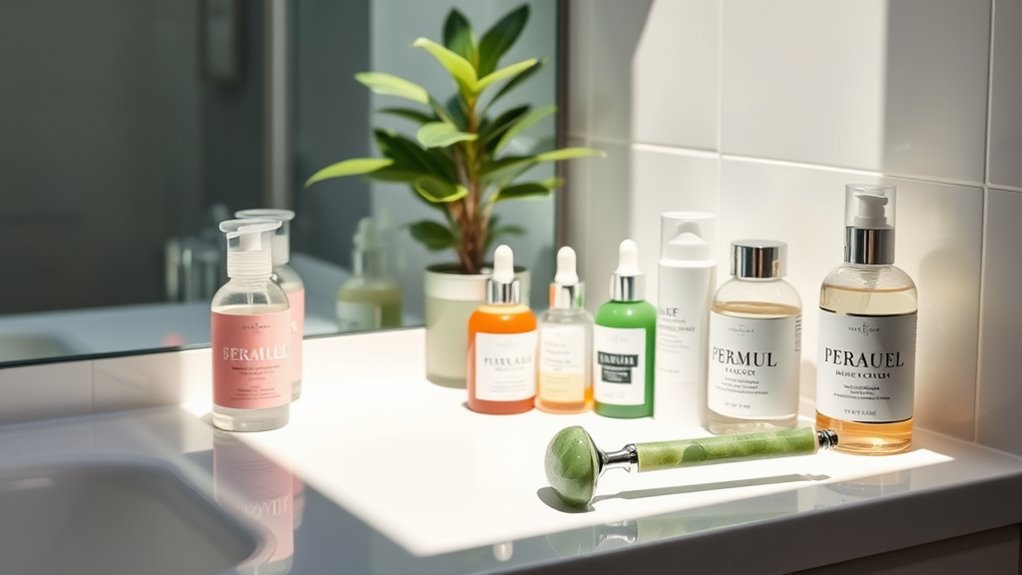
Sunscreen's essential, even on cloudy days; up to 80% of UV rays can get through. Oily skin still needs moisturizer to stay balanced and healthy. Don't assume natural ingredients are always better; effectiveness varies. Skincare shouldn't stop in your 20s; starting early keeps your skin youthful. Expensive doesn't always mean effective; focus on quality ingredients. You can't truly shrink pores, and hydration alone won't clear your skin. Discover more about these myths and improve your skincare routine!
Sunscreen Isn't Necessary on Cloudy Days
Even though it might be overcast, you shouldn't skip sunscreen on cloudy days. Many people believe that cloud cover blocks harmful UV rays, but that's a misconception. In fact, up to 80% of UV rays can penetrate clouds, meaning you're still at risk for skin damage. Just since the sun isn't shining brightly doesn't mean you're safe; UV rays can still wreak havoc on your skin.
To stay ahead in your skincare game, make it a habit to apply sunscreen daily, regardless of the weather. Look for innovative formulas that offer broad-spectrum protection, ensuring you shield yourself from both UVA and UVB rays. Even on cloudy days, you're exposed to potential skin aging and other risks. By incorporating sunscreen into your routine, you're making a proactive choice for your skin's health. Don't let the clouds fool you—protect yourself and stay radiant!
Oily Skin Doesn't Need Moisturizer
If you have oily skin, you might think you can skip moisturizer, but that's a myth. Hydration is essential for all skin types, including oily skin, and using the right formula can help balance your complexion. Choosing a lightweight, non-comedogenic moisturizer can keep your skin hydrated without making it greasy.
Importance of Hydration
Hydration is essential for maintaining healthy skin, regardless of whether you have oily skin. Many people mistakenly believe oily skin doesn't need moisture, but that's far from the truth. Embracing hydration can yield significant hydration benefits, including:
- Enhanced Skin Barrier: A well-hydrated skin barrier protects against environmental stressors and keeps moisture locked in.
- Balanced Oil Production: When you hydrate properly, your skin won't overproduce oil to compensate for dryness.
- Improved Texture: Consistent hydration leads to plump, smooth skin, reducing the appearance of fine lines.
Ignoring hydration can lead to imbalances and skin issues. So, make hydration a priority in your skincare routine to keep your skin healthy and lively. Your complexion will thank you!
Choosing the Right Formula
Many people think that oily skin doesn't need moisturizer, but that's a common misconception. Your skin type still craves hydration, regardless of it producing excess oil. The right product formulation can help balance your skin without adding greasiness. Lightweight, oil-free moisturizers are perfect for providing hydration without clogging pores.
| Moisturizer Type | Benefits |
|---|---|
| Gel-based | Lightweight, absorbs quickly |
| Oil-free lotion | Hydrates without excess oil |
| Water-based | Revitalizing, non-comedogenic |
| Hyaluronic acid serum | Deep hydration, plumps skin |
| Mattifying moisturizer | Controls shine, reduces oiliness |
Investing in the right moisturizer can transform your oily skin into a balanced, radiant canvas. Don't skip this vital step!
Natural Ingredients Are Always Better
Although natural ingredients are often marketed as the best choice for skincare, it is crucial to acknowledge that not all of them are universally effective or safe. Here are three key points to reflect on when evaluating natural vs. synthetic ingredients:
- Efficacy: Just because an ingredient is natural doesn't mean it's effective for your skin type. Many synthetic alternatives have been scientifically formulated to deliver results.
- Sourcing: The method of ingredient sourcing can impact purity and quality. Some natural ingredients may contain allergens or irritants, whereas synthetic options can be rigorously tested for safety.
- Stability: Natural ingredients can be less stable than their synthetic counterparts, leading to shorter shelf lives and potential degradation in performance.
Embracing innovation in skincare means comprehending that both natural and synthetic ingredients have their place. It's about finding what works best for you, rather than blindly following trends.
You Only Need Skincare in Your 20s
Thinking that you only need skincare in your 20s is a common misconception that can lead to long-term skin issues. Age awareness is vital; your skin's needs evolve as you grow older. By starting preventive skincare early, you can maintain a youthful appearance and combat problems before they arise.
If you ignore your skin's health beyond your twenties, you might find yourself grappling with premature aging, dryness, or even severe skin conditions later on. Incorporating a well-rounded skincare routine at every age allows you to address specific concerns and adapt to your skin's changing needs.
Investing in your skin now pays off later. Make it a habit to nourish, protect, and rejuvenate your skin no matter your age. Remember, skincare isn't just a phase; it's a lifelong expedition towards healthier skin! Embrace innovation in your routine, and your future self will thank you.
Expensive Products Are More Effective
You might think that splurging on high-end skincare guarantees better results, but that's not always the case. The truth is, the effectiveness of a product often comes down to its ingredients rather than its price tag. So, when you're shopping for skincare, focus on what's inside the bottle instead of just the cost.
Price Doesn't Equal Quality
Many people believe that a higher price tag guarantees a more effective skincare product, but that's not always the case. Price perception often clouds our judgment, leading us to think that expensive products offer superior quality assurance. Here are some insights to reflect on:
- Brand Marketing: High-cost products may invest heavily in marketing rather than formulation.
- Ingredient Quality: Innovation in skincare often comes from affordable brands using effective ingredients.
- Personal Response: Your skin may respond better to a budget-friendly option than a pricey one.
Ultimately, don't let price dictate your skincare choices. Focus on what works for you, and keep in mind that effective solutions can come at any price point.
Ingredients Matter Most
Though price doesn't always reflect quality, the ingredients in skincare products can greatly impact their effectiveness. When you're shopping for skincare, focus on active ingredients that deliver real results. High-quality formulations often contain potent actives like retinol, hyaluronic acid, or peptides, which can improve formulation efficacy. Don't get swayed by flashy packaging or celebrity endorsements; instead, look for transparency in ingredient lists. Innovative products can be found at various price points, so it's important to educate yourself about what works for your skin. Remember, it's not just about spending more; it's about knowing how to choose the right ingredients customized to your needs. Prioritize efficacy over price, and your skin will thank you.
You Should Exfoliate Every Day
Although exfoliating can offer benefits for your skin, doing it every day isn't necessary and might even do more harm than good. Daily exfoliation can disrupt your skin barrier, leading to irritation and sensitivity. Instead, consider these key points:
- Balance is Key: Exfoliate 2-3 times a week to maintain a healthy glow without overdoing it.
- Type Matters: Choose the right exfoliant for your skin type—gentler options for sensitive skin and stronger formulations for oilier types.
- Listen to Your Skin: Pay attention to how your skin reacts. If you notice redness or dryness, cut back on exfoliation.
Embracing innovation in your skincare routine means comprehending what your skin really needs. Remember, less can be more regarding exfoliation, allowing your skin to thrive without compromising its natural barrier.
Makeup Causes Breakouts
There's a common belief that makeup is the primary culprit behind breakouts, but the reality is more nuanced. Different makeup types can actually work with your skin if you know how to choose them wisely. The key lies in your skincare routines and the ingredients in your products.
| Makeup Type | Non-Comedogenic? | Recommended for |
|---|---|---|
| Liquid Foundation | Yes | Oily/Combination Skin |
| Cream Blush | No | Dry Skin |
| Powder Makeup | Yes | All Skin Types |
| Tinted Moisturizer | Yes | Sensitive Skin |
| Setting Spray | Varies | All Skin Types |
You Can Shrink Pores
Many people believe that certain skincare products can effectively shrink pores, but it's important to understand how pore size works. Pore size is largely determined by genetics and cannot be permanently altered. Misconceptions surrounding this topic lead to a few common skincare myths. Here are three key points to keep in mind:
- No Magic Products: No serum or cream can truly shrink pores; they can only temporarily minimize their appearance.
- Cleanliness Matters: Keeping your skin clean can help reduce the buildup that makes pores look larger, but won't change their size.
- Hydration Helps: Well-hydrated skin can appear plumper, which may make pores look less noticeable.
Instead of chasing after shrinking your pores, focus on maintaining healthy skin. Embrace innovative skincare routines that improve your complexion rather than fall for these skincare myths!
Drinking Lots of Water Clears Your Skin
You might think that drinking lots of water is the key to clear skin, but it's not that simple. Although staying hydrated is important, other factors like diet and skincare routines play a bigger role in your skin's clarity. Let's clear up some common misunderstandings about water intake and its effects on your complexion.
Hydration vs. Skin Clarity
How often have you heard that drinking lots of water can magically clear your skin? Although staying hydrated offers vital hydration benefits, it's not a cure-all for skin clarity. Here are three key points to reflect on:
- Skin's Natural Barrier: Your skin needs more than just water; it requires oils and nutrients to maintain its barrier.
- Internal vs. External Factors: Factors like diet, stress, and skincare products play a significant role in skin health.
- Hydration's Role: Although hydration can improve skin texture, it's just one piece of the puzzle.
Other Factors Matter More
As hydration plays a role in your skin's health, it's important to recognize that other factors matter more regarding achieving clear skin. Sure, drinking water is vital, but it won't magically erase breakouts or blemishes. Your skincare routine is only as effective as the ingredients you choose and how consistently you apply them. Furthermore, lifestyle choices—like diet, sleep, and stress management—play a key role in skin clarity. Incorporating antioxidants, maintaining a balanced diet, and getting adequate rest can greatly improve your skin's appearance. Remember, although hydration is a piece of the puzzle, it's your holistic approach that'll eventually lead to that radiant complexion you're aiming for. Focus on the bigger picture for innovative skincare success.
Water Intake Misunderstandings
Even though staying hydrated is crucial for overall health, the belief that drinking large amounts of water will clear your skin is a common misconception. Here are three key hydration myths you should rethink:
- Water Alone Isn't Enough: Your skin needs nutrients, not just H2O.
- Water Sources Matter: Hydration can come from food, not just drinking water. Think fruits and veggies!
- Skin Health is Multifactorial: Factors like diet, sleep, and skincare products play a bigger role.
While hydration is important, focusing solely on water intake won't solve your skin issues. Embrace a balanced approach by addressing these hydration myths and incorporating diverse water sources into your routine for the best skin health.
All Skin Types React the Same Way to Products
Although it might seem convenient to think that all skin types react similarly to skincare products, the reality is quite different. Skin type variations play a significant role in how your complexion responds to various formulations. What works wonders for oily skin may wreak havoc on dry or sensitive skin. This isn't just about preference; it's about comprehending product sensitivity.
For instance, ingredients like retinol can cause irritation for some, whereas others may thrive on its benefits. It's vital to recognize that your unique skin composition requires a customized approach. Rather than relying on one-size-fits-all solutions, consider your specific needs and sensitivities.
Innovative brands now offer personalized skincare options, allowing you to embrace your skin's individuality. By staying informed and adapting your regimen accordingly, you'll reveal the true potential of your skincare experience, ensuring every product improves rather than hinders your skin's health.
Frequently Asked Questions
How Often Should I Apply Sunscreen for Maximum Effectiveness?
To maximize sunscreen effectiveness, you should reapply it every two hours, especially if you're outdoors. Daily sunscreen use is vital, even on cloudy days, as UV rays can penetrate through clouds. If you're swimming or sweating, reapply more frequently—every 80 minutes is ideal. Embracing this routine not just protects your skin but additionally nurtures a proactive approach to skincare, keeping you innovative in your sun protection strategy. Don't skip it!
Are There Specific Moisturizers for Oily Skin?
Maneuvering through the realm of skincare can feel like walking a tightrope, especially with oily skin. You need moisturizers that won't weigh you down; look for lightweight formulas that hydrate without adding excess shine. Oil-free options are your best friends, ensuring your skin stays balanced and fresh. Embrace innovation in your routine, and watch your complexion transform as you find the perfect moisturizer that quenches your skin's thirst without the greasy aftermath.
What Are Some Harmful Natural Ingredients to Avoid?
When choosing skincare, it's vital to avoid harmful oils and toxic botanicals. Ingredients like mineral oil can clog pores, whereas certain key oils may irritate your skin. Stay clear of botanical extracts that are known to cause allergic reactions or sensitivities. Always check for labels that list these harmful components, ensuring you don't compromise your skin's health. Prioritize innovative formulations that utilize safe, effective ingredients for your skincare routine.
When Should I Start a Skincare Routine?
You should start a skincare routine as early as your teenage years, but it’s never too late to begin! Focus on routine basics like cleansing, moisturizing, and sun protection. As you age, adapt your products to target specific concerns. Using innovative ingredients can improve your routine and keep your skin healthy. Remember, it’s about consistency and finding what works best for your unique skincare age and needs! Additionally, establishing the best morning skincare routine can help protect your skin from environmental stressors throughout the day. Incorporate antioxidants, such as vitamin C, to brighten and defend against damage, and always finish with SPF for essential sun protection. With time and patience, a well-curated routine will keep your skin looking radiant and youthful.
Does Price Correlate With Product Safety and Quality?
Does price correlate with product safety and quality? Not necessarily. Although you might perceive higher-priced products as more effective, it's essential to focus on ingredients and formulation rather than just price tags. Many affordable options deliver outstanding results without compromising safety. Innovation in skincare means that effectiveness doesn't always come with a hefty price. So, don't let price perception cloud your judgment; research ingredients to find what truly works for your skin.