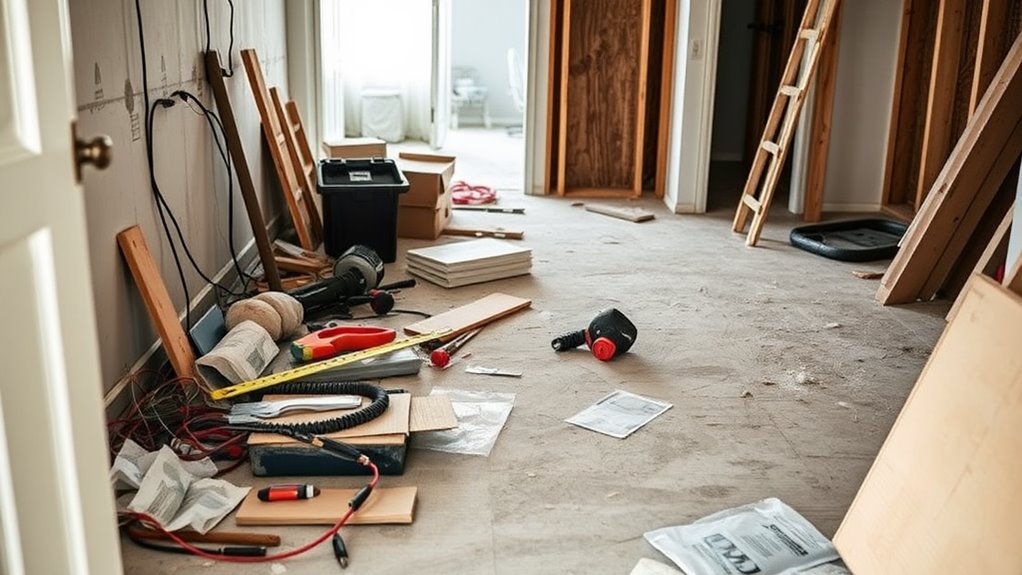
You're about to begin a home renovation project, so it's essential to understand common mistakes to avoid. Inadequate budgeting and poor communication with contractors can lead to costly surprises. You'll want to prioritize functionality and flow, and consider sustainability. By being aware of these pitfalls, you can better navigate your project and make informed decisions to guarantee its success, and there's more to explore to help you get it right.
Inadequate Budgeting and Financial Planning
Since you're excited to plunge into your home renovation project, it's essential to avoid the common pitfall of inadequate budgeting and financial planning. Without a solid financial foundation, your project can quickly spiral out of control, leaving you with unexpected expenses and stress. To avoid this, develop effective budgeting strategies that account for every aspect of your project, from materials to labor costs. Create a detailed financial forecast to identify potential risks and opportunities for cost savings. Consider setting aside a contingency fund to cover unexpected expenses. By taking control of your finances, you'll be better equipped to make informed decisions and stay on track. Remember, a well-planned budget is vital to a successful home renovation project.
Poor Communication With Contractors and Suppliers
When you're renovating your home, you're not just hiring contractors and suppliers – you're building a team. To guarantee this team works together seamlessly, you need to establish clear expectations from the get-go. By defining roles, setting regular progress updates, and maintaining open lines of communication, you'll avoid misunderstandings and costly mistakes down the line.
Clear Expectations Matter
Clear expectations are the foundation of a successful home renovation project, and poor communication with contractors and suppliers is a recipe for disaster. You must clearly outline your expectations to avoid misunderstandings and costly delays. Establish open and honest communication channels with your contractors and suppliers to guarantee everyone is on the same page. Define your project scope, timeline, and budget, and make certain all parties understand their roles and responsibilities. Effective expectation management is key to a stress-free renovation. Remember, clear communication is a two-way street, so be approachable and receptive to feedback from your contractors and suppliers. By setting clear expectations, you'll avoid costly mistakes and guarantee your dream renovation becomes a reality.
Define Roles Clearly
To guarantee a harmonious and efficient renovation process, you must define the roles of each contractor and supplier involved in your project. This means assigning specific tasks and responsibilities to each party, ensuring everyone knows their role and what's expected of them. Effective role delegation prevents confusion, miscommunication, and delays. Clearly outline who's responsible for what, including materials procurement, labor, and project timelines. Establish a single point of contact for each task to avoid misdirected requests or information. By assigning clear responsibilities, you'll avoid duplication of effort, reduce mistakes, and maintain control over your project.
Regular Progress Updates
As you navigate the complex web of contractors and suppliers, maintaining open lines of communication is vital to confirm your renovation stays on track. Regular progress updates are significant to guarantee that everyone is on the same page. This means setting a clear update frequency, whether it's daily, weekly, or monthly, to track progress and identify potential issues early on.
| Update Frequency | Progress Tracking | Benefits |
|---|---|---|
| Daily | Monitor task completion, material delivery | Identify labor or material delays |
| Weekly | Review project milestones, budget | Catch scope creep or cost overruns |
| Monthly | Assess overall project progress, timeline | Make adjustments to stay on schedule |
Failure to Obtain Necessary Permits and Licenses
You're likely excited to get started on your renovation project, but don't skip the essential step of obtaining necessary permits and licenses. You'll need to figure out what permits are required for your specific project, and failure to do so can lead to costly inspections and penalties down the line. Furthermore, if you're planning to tackle certain tasks yourself, you'll need to make sure you have the proper licenses to avoid putting yourself and others at risk.
Permit Requirements Unclear
Unclear permit requirements can lead to a world of trouble in your home renovation project. You might think you're saving time and money by skipping the permit process, but it can cost you more in the long run. To avoid this mistake, take the time to research and understand the permit requirements for your project.
Here are the crucial permit types to take into account:
- Building permits: required for structural changes, electrical, plumbing, and HVAC work.
- Electrical permits: necessary for electrical installations, upgrades, or repairs.
- Plumbing permits: required for plumbing installations, upgrades, or repairs.
- Zoning permits: necessary for projects that affect your property's zoning regulations.
Make sure to check with your local government to understand the specific permit requirements for your area and project. Don't assume you know what's required – it's always better to be safe than sorry.
Inspections and Penalties
If you fail to obtain the necessary permits and licenses, you'll be opening yourself up to a whole new level of stress and expense. Without them, you risk getting caught during an inspection, which can lead to penalty consequences like fines, project shutdowns, or even demolitions. The importance of inspections can't be overstated, as they guarantee your renovation meets safety codes and regulations. Don't assume you can fly under the radar – inspectors are trained to catch mistakes. Invest time and money upfront to secure the necessary permits and licenses, and you'll avoid costly penalties down the line. Remember, it's always better to be proactive and compliant than reactive and regretful.
DIY Licensing Risks
What's driving your decision to take the DIY route with licensing? Are you trying to save money or assert control over your project? Whatever the reason, be aware that failure to obtain necessary permits and licenses can lead to serious consequences.
Here are 4 potential risks to evaluate:
- Legal issues: You may be fined or even face criminal charges for not complying with licensing requirements.
- Homeowner liability: If someone gets injured on your property, you could be held liable without proper licenses and permits.
- Insurance complications: Your insurance company may not cover damages or losses if you don't have the necessary permits.
- Project delays: If you're caught without permits, your project may be shut down until you comply, causing costly delays.
Inadequate Research and Unrealistic Expectations
In the process of envisioning your dream home, it's easy to get swept up in the excitement and overlook essential steps, which can lead to costly mistakes down the line. This is especially true regarding research and expectations. You must avoid common research pitfalls, such as relying on a single source, ignoring local regulations, and overlooking significant details. Unrealistic expectations can likewise lead to disappointment and financial strain. To manage your expectations, set clear goals, prioritize needs over wants, and establish a realistic timeline and budget. Don't assume that everything will go as planned – anticipate setbacks and have a contingency plan in place. By doing your due diligence and setting realistic expectations, you'll be better equipped to navigate the renovation process and achieve the results you want.
Insufficient Planning and Design
As you plunge into the renovation process, a lack of detailed planning and design can quickly turn your dream home into a nightmare. You'll be left dealing with costly changes, delays, and a final result that doesn't meet your expectations.
To avoid these design mistakes and planning oversights, make sure to:
- Define your project scope: Clearly outline what you want to achieve and prioritize your goals.
- Create a detailed design plan: Include floor plans, elevations, and cross-sections to visualize your project.
- Establish a realistic timeline: Break down your project into manageable tasks and set achievable deadlines.
- Set an extensive budget: Account for contingencies and unexpected expenses to avoid financial stress.
DIY Disasters and Lack of Expertise
Though you may be tempted to save money by tackling certain renovation tasks yourself, doing so without the necessary skills and expertise can lead to disastrous consequences, threatening both your project's success and the safety of yourself and others. Without proper training, you risk making critical mistakes in material selection, tool usage, and project timelines, which can lead to costly rework, delays, and even accidents. Take an honest skill assessment: identify areas where you need guidance and seek design inspiration from online resources or community workshops. Don't compromise DIY safety by attempting tasks beyond your capabilities. Be realistic about your limitations and consider hiring professionals for complex tasks. By doing so, you'll guarantee a successful renovation that meets your vision and maintains a safe working environment.
Unexpected Structural Issues and Hidden Damages
When you start tearing down walls or ripping up flooring, you're likely to uncover surprises that can throw your renovation off track and bust your budget. One of the most common surprises is unexpected structural issues and hidden damages. These can be costly to repair and may even require you to rework your entire renovation plan.
To avoid these surprises, make sure to:
- Get a thorough structural inspection before starting your renovation to identify potential issues.
- Check for hidden damages behind walls, under flooring, and above ceilings.
- Budget for contingencies to account for unexpected repairs.
- Work with a professional who has experience with renovations and can help you navigate any surprises that come up.
Not Prioritizing Functionality and Flow
You've likely invested countless hours envisioning your dream home, but have you considered how you'll actually live in it? It's easy to get caught up in aesthetics, but neglecting functionality and flow can lead to a space that's impractical and frustrating. Don't make the mistake of sacrificing livability for looks. Instead, focus on layout optimization and space utilization. Think about how you'll move through each room, where you'll place furniture, and how you'll use each area. Consider the flow of traffic, the placement of electrical outlets, and the storage needs for each space. By prioritizing functionality and flow, you'll create a home that's both beautiful and functional.
Ignoring Sustainability and Energy Efficiency
As you pour over design magazines and scroll through social media, it's tempting to focus on the sleek, stylish aspects of your renovation, but don't overlook the long-term benefits of sustainable and energy-efficient design. You're in control of creating a space that's both beautiful and eco-friendly. Consider incorporating sustainable materials into your design.
- Invest in energy-efficient appliances
- Use recycled materials for flooring and furniture
- Conduct energy audits to identify areas for improvement
- Install solar panels or rainwater harvesting systems. By taking these steps, you'll reduce your environmental footprint and save money on utility bills. You'll have a space that's not just stylish, but also sustainable and energy-efficient.
Not Accounting for Unexpected Delays and Setbacks
You're likely to encounter problems if you don't account for unexpected delays and setbacks in your home renovation project. When you set unrealistic timelines, you're setting yourself up for stress and potential cost overruns, and a lack of contingency planning can exacerbate these issues. You should establish clear communication channels with your contractors and builders to minimize the impact of delays and setbacks, and have a plan in place to adapt to changing circumstances.
Unrealistic Timelines
When planning a home renovation, it's easy to get caught up in the excitement and underestimate the time it'll take to complete the project, which can lead to unrealistic timelines. You'll want to take control of your project scheduling to avoid delays. Consider the following:
- Set realistic deadlines
- Prioritize tasks
- Allocate sufficient time for each task
- Establish a buffer for unexpected issues. Effective time management is essential to staying on track and meeting your goals. By taking a proactive approach, you can guarantee your renovation project stays on schedule and you maintain control throughout the process.
Lack of Contingency
Even with a well-planned timeline, unexpected delays and setbacks can still throw your home renovation project off track if you don't have a contingency plan in place. You're taking a risk if you don't allocate emergency funds for unexpected expenses. Contingency planning helps you stay in control of your project. It allows you to adapt to changes and unexpected issues. By setting aside emergency funds, you'll be prepared to handle delays and setbacks, ensuring your project stays on track financially. You'll maintain control and avoid financial stress with a solid contingency plan.
Inadequate Communication
As a home renovation project involves multiple stakeholders, inadequate communication can quickly derail it, especially if unexpected delays and setbacks aren't accounted for. You must establish open dialogue with your team to guarantee everyone's on the same page. Effective listening is key to avoiding misunderstandings. Consider the following:
- Set clear expectations
- Establish a communication plan
- Define roles and responsibilities
- Schedule regular updates. By doing so, you'll maintain control and keep your project on track, even when unexpected issues arise.
Lack of Flexibility and Adaptability
You'll likely encounter unexpected issues during a home renovation, and that's where your ability to adapt comes in. You're taking control of the project, so it's crucial to be prepared for changes. Incorporating flexible designs and adaptable spaces can help you navigate these unexpected issues. By doing so, you'll be able to make adjustments as needed, ensuring your renovation stays on track. This approach allows you to maintain control and make decisions quickly, reducing delays and stress. You can achieve this by building some flexibility into your budget and timeline, and being open to new ideas and solutions. This way, you'll be better equipped to handle surprises and still achieve your desired outcome.
Frequently Asked Questions
What Is Renovation Return on Investment?
You're researching renovation return on investment. 80% of homeowners see a significant increase in investment value. You're managing your renovation budgeting to maximize returns, and you're making smart decisions to boost your investment value, aren't you? You're taking control, ensuring you get the best ROI possible, and that's a great start.
Can I Renovate Without an Architect?
You're considering renovating without an architect. You're taking control of renovation planning, handling design considerations yourself. You're weighing the pros and cons, deciding if you can tackle it alone. You're thinking you can save money, but you're additionally risking errors. You're proceeding with caution, ensuring you don't compromise the project's quality.
How Long Does Renovation Typically Take?
You're wondering how long a renovation typically takes. You'll create a renovation timeline to track progress. Don't worry, you'll anticipate project delays. You'll build in extra time to stay on schedule. You'll take control, and you'll stay on top of your renovation to guarantee it's completed on time, no matter what. You're in charge, you'll make it happen.
Can I Live in House During Renovation?
You're wondering if you can live in your house during renovation. Investigating this theory reveals it's possible, but you're managing renovation logistics. You're taking control of your living arrangements, deciding what works best for you, and you're creating a plan that suits your needs, allowing you to stay or temporarily relocate, giving you control over your space.
Is Renovation Tax Deductible?
You're wondering if renovation is tax deductible. You're taking control of your finances, considering renovation expenses and their tax implications. You're checking if you can deduct them, and it's possible you can, depending on the type of renovation and your location, so you'll want to review your options carefully to maximize your deductions.