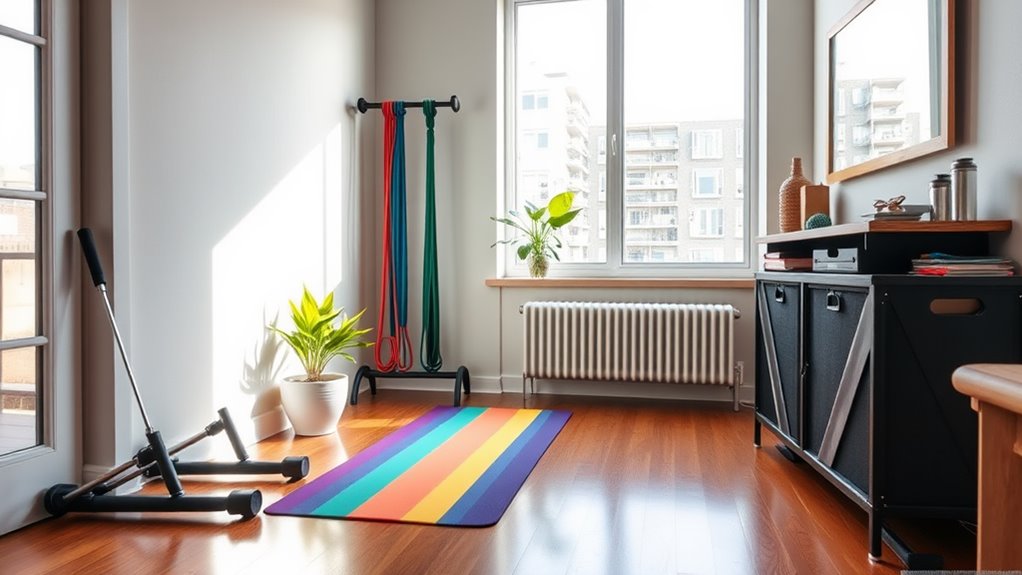
To create a DIY home gym without wasting space, start by evaluating your available area and measuring dimensions. Define your fitness goals to align equipment choices with your needs. Opt for multi-functional equipment like kettlebells and resistance bands that save space. Use vertical storage solutions to keep smaller items organized. Make the most of natural light for a motivating atmosphere, and establish a maintenance routine to keep your gym in top shape. Discover more tips for optimizing your home gym!
Assessing Your Available Space
Before you plunge into creating your DIY home gym, it's crucial to assess your available space. Start by using effective space measurement techniques, like a tape measure or laser distance measurer, to determine the dimensions of the area you plan to use. This gives you a clear picture of what you're working with.
Next, visualize how you can optimize that space. Consider creative layout ideas that improve functionality. For instance, placing heavier equipment against walls can free up floor space for your workouts. Think about multi-use furniture, such as benches that can double as storage units.
Don't forget to account for clearance around your equipment; you'll want enough room to move freely. By taking these steps, you'll regain control over your environment, ensuring your home gym is both efficient and motivating.
Defining Your Fitness Goals
How do you envision your fitness expedition? Defining your fitness objectives is the first step toward achieving success in your DIY home gym. Start by pinpointing what you want to accomplish—whether it's losing weight, building muscle, or improving endurance. This clarity fuels your fitness motivation and keeps you on track.
When setting goals, use the SMART criteria: Specific, Measurable, Achievable, Relevant, and Time-bound. For example, instead of saying, "I want to get fit," aim for, "I'll run three times a week for 30 minutes." This precise goal setting gives you control over your progress and helps you stay focused.
Regularly revisit your goals to assess your progress and adjust as needed. Staying flexible guarantees you're always working toward something meaningful. By defining your fitness goals clearly, you'll create a strong foundation for your home gym expedition.
Choosing the Right Location
Where will you set up your DIY home gym? Choosing the right location is essential for maximizing your workout experience. Start by evaluating location factors like accessibility and natural light. You want a space that's easy to get to, so you won't skip workouts because of inconvenience. Consider a room with windows; good lighting can boost your motivation.
Next, think about space considerations. Assess how much room you actually have for your equipment and movements. Verify you'll have enough space to stretch, jump, and perform various exercises without feeling cramped. A garage, basement, or even a spare bedroom can work, as long as you can create a comfortable environment.
Lastly, keep in mind noise levels. If you live in an apartment, choose a location that won't disturb others. By carefully selecting your gym's location, you'll create a space that inspires consistent workouts and helps you achieve your fitness goals.
Selecting Multi-Functional Equipment
Once you've picked the perfect spot for your DIY home gym, it's time to contemplate the equipment that'll make your workouts effective and enjoyable. Focus on multi-functional gear to maximize your space and versatility. Kettlebells are a fantastic choice; they allow you to perform a variety of exercises, from swings to squats, giving you a full-body workout in less room. Pair them with resistance bands, which are incredibly adaptable and can be used for strength training, flexibility, and rehab exercises.
Both kettlebells and resistance bands are lightweight and easily stored, allowing you to maintain a clutter-free environment. When selecting these tools, think about your fitness goals and verify they align with your chosen equipment. By prioritizing multi-functional options, you'll gain the control you seek over your fitness expedition as you make the most of every square inch in your home gym.
Utilizing Vertical Storage Solutions
To create a functional and organized home gym, you'll want to make the most of your vertical space. Start by installing wall-mounted racks to keep your equipment off the floor. These racks can hold weights, resistance bands, and yoga mats, allowing you to easily access what you need without clutter.
Consider adding vertical bike storage if you cycle regularly. This solution frees up valuable floor space during keeping your bike secure and out of the way. You can use a simple wall hook or a specialized bike rack that allows for easy mounting and dismounting.
Incorporating Foldable and Portable Gear
Integrating foldable and portable gear into your home gym not just conserves space but furthermore improves your workout flexibility. You can easily switch between exercises without feeling cramped. For instance, consider investing in foldable benches that can be stored away when unused, allowing you to maximize your floor area. Portable weights are a game-changer, letting you adjust resistance levels and target different muscle groups without needing a full rack of equipment.
| Gear Type | Benefits | Suggested Brands |
|---|---|---|
| Foldable Benches | Saves space, versatile for workouts | Bowflex, Fitness Reality |
| Portable Weights | Easy to store, customizable weight | PowerBlock, Tone Fitness |
| Resistance Bands | Lightweight, full-body workouts | TheraBand, Bodylastics |
| Jump Ropes | Cardio, compact storage | WOD Nation, Survival & Cross |
With these tools, you're in control of your workout environment!
Designing a Versatile Workout Area
Creating a versatile workout area allows you to maximize your exercise options and stay motivated. Start by designing a creative layout that accommodates different activities. Consider incorporating flexible zones that can easily shift from strength training to yoga or cardio. Use modular furniture or equipment that can be rearranged effortlessly, enabling you to switch up your routine whenever you want.
Think about the flow of your space. Position heavier equipment in areas where you'll perform strength workouts and leave room for dynamic movements in other zones. This way, you maintain an organized environment that promotes productivity. You'll appreciate having designated workout areas that can adapt to your needs, whether it's a high-intensity interval session or a calming stretching routine. By taking control of your workout space, you'll create an inspiring atmosphere that encourages consistent exercise and keeps you engaged in your fitness voyage.
Creating a Motivating Atmosphere
To stay motivated in your home gym, you need to create an atmosphere that inspires you. Choosing the right color scheme, adding inspiring wall art, and setting up proper lighting can make a huge difference. Let's explore how each of these elements can transform your workout space into a motivating haven.
Color Scheme Choices
Choosing the right color scheme for your home gym can greatly impact your motivation and energy levels during workouts. Comprehending color psychology can help you create an environment that boosts your performance. Here are some effective color combinations to ponder:
| Color | Effect | Best For |
|---|---|---|
| Blue | Calming and focused | Yoga and Pilates |
| Yellow | Energizing and uplifting | Cardio sessions |
| Green | Invigorating and revitalizing | Strength training |
Inspiring Wall Art
As you work on building your dream home gym, adding inspiring wall art can greatly improve the atmosphere and keep you motivated. Think about incorporating motivational quotes that resonate with your fitness goals. These phrases can serve as daily reminders to push through tough workouts. You can additionally consider artistic murals that reflect your personal style and passion for fitness. Whether it's a lively design or a calming scenery, the right artwork can create a space that feels uniquely yours. Position these pieces where you'll see them during workouts to maintain focus and energy. By taking control of your environment, you'll cultivate a motivating atmosphere that inspires you to reach your fitness potential every day.
Proper Lighting Setup
Even though you might not think about lighting as a crucial element in your home gym, it plays a significant role in shaping your workout experience. Proper lighting can create an environment that motivates you to push harder and stay focused. Consider these points for a successful setup:
- Use ambient lighting: Soft, diffused light can create a welcoming atmosphere, reducing harsh shadows and enhancing your mood.
- Incorporate adjustable fixtures: These allow you to change the brightness based on your workout intensity, whether you're lifting weights or doing yoga.
- Position lights wisely: Make certain they illuminate your workout area without causing glare or distractions.
With the right lighting, you'll feel more energized and ready to tackle any fitness challenge that comes your way.
Streamlining Your Accessories
To make your home gym more efficient, focus on multi-functional equipment that serves multiple purposes. This not only maximizes your workout options, but it likewise helps you save space. Moreover, consider space-saving storage solutions to keep your accessories organized and easily accessible.
Multi-Functional Equipment Choices
When you're setting up a home gym, choosing multi-functional equipment can greatly improve your workout experience during saving space and money. By integrating versatile tools, you can maximize your routine without cluttering your environment. Here are three crucial items to reflect on:
- Adjustable Weights: These allow you to customize your resistance for various exercises, from strength training to cardio, all in one compact set.
- Resistance Bands: Perfect for a range of exercises, resistance bands add intensity to your workouts without taking up much space.
- Multi-Use Bench: This can serve as a weight bench, step-up platform, or even a support for bodyweight exercises, enhancing your overall training options.
With these choices, you'll have complete control over your fitness expedition without overwhelming your space.
Space-Saving Storage Solutions
As you build your home gym, effective storage solutions can keep your space organized and functional. Start by using wall-mounted racks and pegboard organizers to maximize vertical space, allowing quick access to your gear. Incorporate storage baskets for smaller items, ensuring everything has a designated spot. Compact shelving can hold your weights and accessories, whereas under bed bins are perfect for stashing seasonal items out of sight. Don't forget about sliding drawers for easy access to equipment, and hanging hooks for resistance bands or jump ropes. Consider furniture alternatives, like benches with built-in storage, to combine functionality with style. With these strategies, you'll maintain control over your environment and improve your workout experience.
Making Use of Natural Light
Utilizing natural light in your DIY home gym not just improves the ambiance but also boosts your energy levels during workouts. The natural light benefits extend beyond aesthetics; it plays an essential role in enhancing mood and motivation. Here's how you can make the most of it:
- Position your gym near windows: Choose a space with ample windows to flood your workouts with sunlight.
- Use mirrors strategically: Mirrors reflect light and create an illusion of a larger space, making your gym feel more open and inviting.
- Opt for lighter colors: Light-colored walls and workout equipment can amplify the brightness, creating a lively atmosphere.
Establishing a Regular Maintenance Routine
A regular maintenance routine is crucial for keeping your DIY home gym in top shape and ensuring it remains a motivating space for your workouts. Start by creating a maintenance schedule that fits your lifestyle. Dedicate specific days to check and clean your equipment. For instance, wipe down surfaces after each use and deep clean every month. This not only keeps your gear hygienic but additionally prolongs its life.
Make equipment care a priority; inspect your weights, mats, and machines for wear and tear. Tighten any loose bolts or screws to prevent accidents. Don't overlook the floor—ensure it's clear of dust and debris to maintain a safe workout environment.
Finally, keep a checklist handy to track your maintenance tasks. This way, you stay organized and in control of your gym's upkeep, allowing you to focus on your fitness goals without distractions.
Adapting as Your Fitness Journey Evolves
When you commence your fitness expedition, it is essential to recognize that your needs and goals will change over time. To effectively adapt and maintain your motivation, focus on these three key areas:
- Goal Progression: Regularly assess your fitness goals. As you achieve milestones, set new ones that challenge you further.
- Workout Variety: Introduce new exercises or equipment to keep your routine fresh and engaging. This not only prevents boredom but likewise promotes muscle growth and endurance.
- Space Reassessment: Periodically evaluate your home gym setup. As your fitness evolves, you may need to rearrange or invest in new equipment that aligns with your changing goals.
Frequently Asked Questions
How Much Budget Do I Need for a DIY Home Gym?
When considering your budget for a DIY home gym, it's essential to think about budget allocation and equipment selection. You can start with a modest budget of around $300 to $500. Prioritize versatile equipment like resistance bands, dumbbells, and a mat. As you progress, you can invest in larger items. Remember, focusing on quality over quantity will help you maximize your space and keep your workouts effective without overspending.
Can I Create a Gym in a Small Apartment?
Sure, you can create a gym in a small apartment—if you don't mind dodging your coffee table like it's a gym obstacle course! With some clever apartment modifications and smart equipment storage, you can transform that tiny space into a fitness haven. Think multi-functional furniture and wall-mounted racks. You'll be amazed at how much control you have over your workout environment, even when space seems like it's playing hard to get!
What Are the Best Flooring Options for Home Gyms?
When choosing flooring for your home gym, consider rubber mats and foam tiles. Rubber mats provide excellent durability and shock absorption, making them perfect for weightlifting and high-impact workouts. Foam tiles, in contrast, offer versatility and comfort, ideal for stretching or yoga. You can easily cut them to fit your space, giving you control over the layout. In the end, select the option that best matches your workout style and personal preferences.
How Do I Ensure Safety in a Small Workout Area?
Think of your workout area as a fortress; you want it safe and secure. To guarantee home gym safety, clear clutter and use space-saving equipment that minimizes hazards. Check for sturdy flooring to prevent slips, and always have adequate ventilation. Keep your weights and gear organized to avoid tripping. Plus, consider using mats for extra cushioning. With these precautions, you'll feel in control and ready to conquer your fitness goals without worry.
What Are Effective Workout Routines for Limited Space?
When you're working with limited space, focus on bodyweight exercises like push-ups, squats, and planks to maximize your routine. You can likewise incorporate compact equipment such as resistance bands or a set of dumbbells for added intensity. Design your workout to include circuits that alternate between strength and cardio to keep your heart rate up. This way, you'll maintain control over your fitness path without feeling cramped in your area.