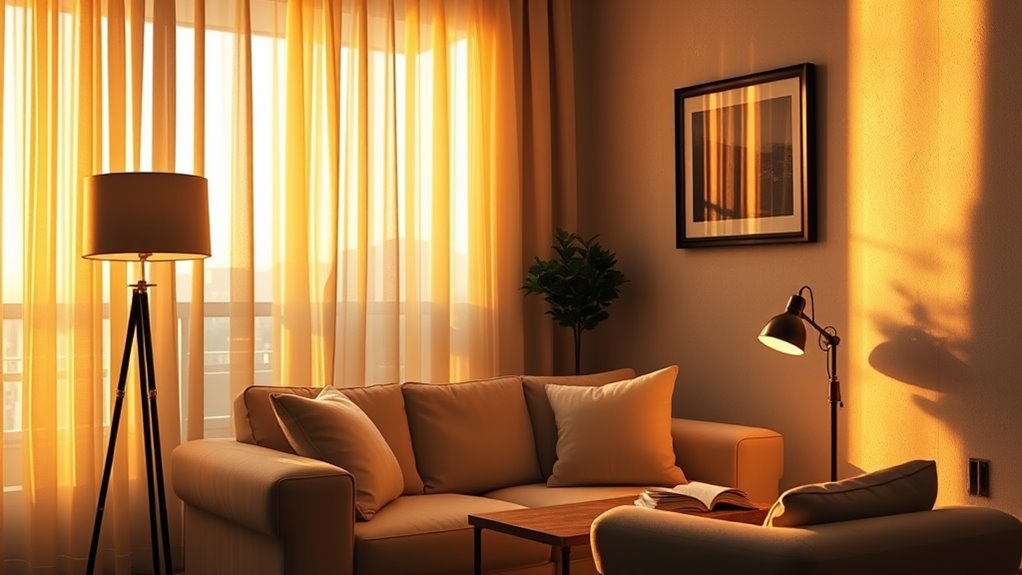
To choose the right lighting for every room, start by layering different types of light. Use ambient lighting for overall illumination, task lighting for specific activities, and accent lighting to highlight features. In the living room, combine lamps and dimmers for a cozy vibe. In the kitchen, guarantee bright, focused light over work areas. For dining, opt for warm, inviting fixtures. In the home office, mimic natural light to boost productivity. There’s much more to explore in each area. To enhance ambiance, consider using light-colored walls and mirrors to reflect illumination effectively. Additionally, increase natural light at home by keeping windows unobstructed and using sheer curtains. Smart lighting controls can further customize brightness levels for different activities.
Understanding Different Types of Lighting
Have you ever wondered how the right lighting can transform a space? Comprehending different types of lighting is essential for achieving your desired effect. You've got three main types to evaluate: ambient, task, and accent lighting. Task lighting focuses on specific areas, making activities like reading or cooking easier. Think of under-cabinet lights in your kitchen or a desk lamp for work.
Natural illumination plays an important role too. Utilize windows and skylights to bring in daylight, enhancing your mood and saving energy. Position your furniture to maximize this effect—don't shy away from rearranging for ideal light flow.
Creating Ambiance in the Living Room
How can you create a cozy atmosphere in your living room? Start by selecting the right mood lighting that sets the tone for relaxation and comfort. Consider using a mix of table lamps, floor lamps, and wall sconces to achieve layered lighting. This allows you to easily adjust the brightness based on your needs.
Next, focus on color temperature. Aim for warm white bulbs, typically around 2700K to 3000K, as they produce a softer, inviting glow. This creates an intimate setting, perfect for gatherings or quiet evenings.
Don't forget about dimmers! Installing dimmer switches gives you ultimate control over the light intensity, helping you shift from lively conversations to a serene atmosphere effortlessly.
Maximizing Functionality in the Kitchen
When you think about maximizing functionality in the kitchen, consider the significance of effective lighting. You want to guarantee that every task, from chopping vegetables to reading recipes, is well-lit. Start by incorporating task lighting in key areas like countertops and the stove. Under-cabinet fixtures are perfect for illuminating workspaces without creating shadows.
Fixture selection plays a vital role in achieving your desired brightness and style. Opt for adjustable fixtures that allow you to direct light exactly where you need it. Pendant lights over islands can likewise serve as both task lighting and a design element, giving you control over the room's aesthetics.
Don't forget about dimmer switches; they let you adjust the lighting intensity based on the task at hand. By strategically planning your lighting, you'll create a functional and efficient kitchen that empowers you in your culinary endeavors.
Setting the Right Tone in the Dining Area
To create a warm ambiance in your dining area, you'll want to focus on lighting that invites conversation and comfort. Layered lighting techniques, like combining overhead fixtures with softer accent lights, can help you achieve that perfect balance. Let's explore how to set the right tone for memorable meals and gatherings.
Warm Ambiance Essentials
Creating a warm ambiance in your dining area can transform it into a cozy retreat for family meals and gatherings. To achieve this inviting atmosphere, focus on these key elements:
- Soft Light: Use dimmable fixtures or warm-toned bulbs to create gentle illumination.
- Table Centerpiece: Add candles or a decorative lamp to improve the cozy atmosphere.
- Layered Textures: Incorporate soft fabrics, like table runners or placemats, to soften the space.
- Personal Touches: Integrate family photos or artwork to promote connection and warmth.
Layered Lighting Techniques
Selecting the right lighting can greatly improve your dining area; layered lighting techniques are essential for setting the perfect tone. To achieve this, you'll want to combine ambient layers with task layers. Start with ambient lighting, like a chandelier or pendant lights, to create a warm, inviting atmosphere. This sets the stage for casual conversations and family gatherings.
Next, integrate task layers with adjustable fixtures or wall sconces. These allow you to focus light on the dining table for activities like reading or enjoying a meal. You can control the intensity and direction of the light, tailoring it to your needs. By balancing ambient and task layers, you can effortlessly set the right mood for any occasion in your dining space.
Enhancing Productivity in the Home Office
Though many factors contribute to productivity in a home office, the right lighting can make a significant difference. Proper illumination not only improves your mood but can likewise boost your task management skills. Here's how to optimize your workspace lighting:
- Choose light colors: Opt for light-colored bulbs or fixtures that mimic natural daylight. They create a lively atmosphere and reduce eye strain.
- Use task lighting: Incorporate desk lamps focused on your work area for direct light, ensuring you can see your tasks clearly.
- Avoid glare: Position your lighting to minimize reflections on your screen, helping maintain focus.
- Adjust brightness: Utilize dimmable lights to adapt the ambiance according to the time of day or your workload, promoting sustained concentration.
Incorporating Accent Lighting Throughout Your Home
Even though accent lighting can transform the atmosphere of any room, strategically incorporating it throughout your home adds depth and character to your space. By selecting the right decorative fixtures, you can highlight architectural features or artwork, creating focal points that improve your design.
Here are some accent lighting ideas to reflect on:
| Room | Fixture Type | Purpose |
|---|---|---|
| Living Room | Wall Sconces | Highlight artwork |
| Bedroom | Table Lamps | Create a cozy reading nook |
| Kitchen | Under-Cabinet Lights | Illuminate countertops |
| Bathroom | Vanity Lighting | Improve grooming space |
| Hallway | Recessed Lighting | Provide safe navigation |
With these ideas in mind, you can take control of your home's ambiance. Don't hesitate to experiment with different fixtures and placements to discover what works best for your style and needs.
Frequently Asked Questions
How Do I Determine the Right Wattage for My Bulbs?
To determine the right wattage for your bulbs, start with a wattage calculation based on the room's size and purpose. Typically, aim for about 20 lumens per square foot for ambient lighting. If you want brighter spaces, increase that number. Consider the bulb brightness you need; LED bulbs use less wattage as they provide more light. By customizing wattage to your needs, you'll have full control over your lighting atmosphere.
What Color Temperature Is Best for Each Room?
When you're lighting your living space, think about the mood you want to create. For cozy corners, soft white bulbs (around 2700K) provide a warm, inviting glow that makes you feel at home. In workspaces or kitchens, cool white bulbs (around 4000K) brighten up the area, enhancing focus and functionality. By choosing the right color temperature, you'll control the ambiance and transform each room into a perfectly lit paradise customized to your needs.
Can I Mix Different Types of Lighting?
Absolutely, you can mix different types of lighting! In fact, using layered lighting improves your space dramatically. Start with ambient lighting for overall illumination, then add task lighting for specific activities, like reading or cooking. Finally, incorporate accent lighting to highlight artwork or architectural features. This combination not merely gives you control over the atmosphere but additionally allows you to create a dynamic environment customized to your needs and mood.
How Do I Install Recessed Lighting Safely?
"Better safe than sorry." When installing recessed lighting, your safety's a top priority. First, turn off the electricity at the circuit breaker. Use a stud finder to avoid beams, then mark your spots. Cut the holes carefully, ensuring you've got enough space for the fixtures. Connect the wiring according to the manufacturer's instructions, and secure the lights in place. Finally, restore the electricity and test your new recessed lighting. You've got this!
What Are Energy-Efficient Lighting Options Available?
You've got plenty of energy-efficient lighting options to contemplate. LED technology is a top choice because of its long lifespan and low energy consumption. Compact fluorescents are another viable option, offering significant savings. When selecting bulbs, pay attention to energy ratings to guarantee maximum efficiency. To take control of your lighting atmosphere, think about installing light dimmers, allowing you to adjust brightness in accordance with your needs as you save energy.