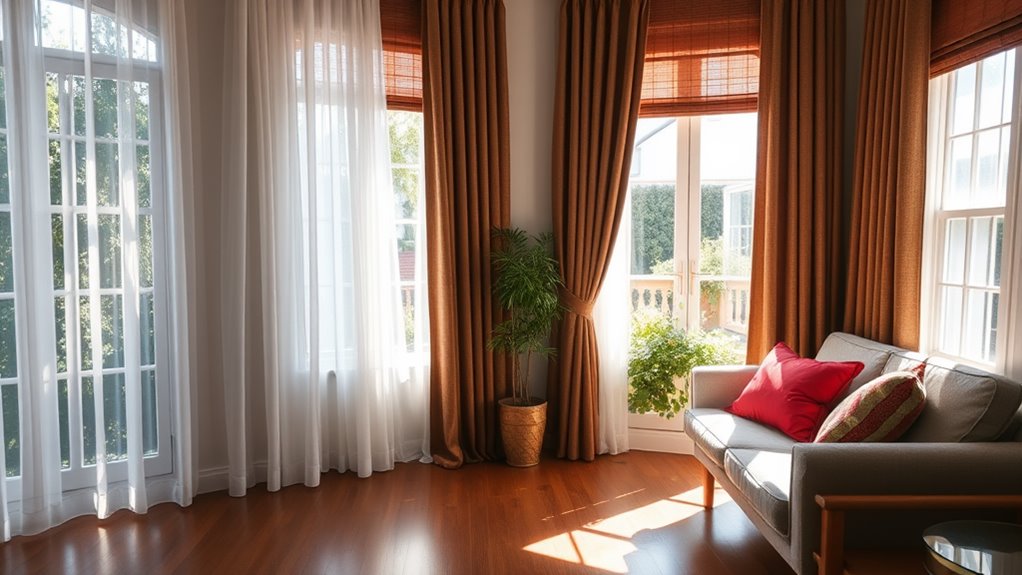
To choose the best curtains and blinds for your space, start by measuring your windows and evaluating your light control and privacy needs. Consider your room's layout and your personal style—like modern minimalist or vintage eclectic. Select fabrics that suit the ambiance you want, from sheer to heavy options. Don't forget about installation methods, maintenance, and budgeting. If you want to explore sustainable choices and styles, there's much more to discover.
Understanding Your Space and Needs
How do you envision your space? Comprehending your space dimensions is vital for making informed decisions about curtains and blinds. Take a moment to measure your windows and consider the overall layout of your room. This isn't just about aesthetics; it's about how your choices will meet your functional requirements. Do you need privacy, light control, or perhaps a touch of elegance?
Think about the activities that take place in the space. For example, if you often entertain guests, you might prefer curtains that create an inviting atmosphere during the allowance of natural light to flow. Conversely, if you require a restful environment, consider heavier blinds that block out distractions. By evaluating both the physical dimensions and your functional needs, you can confidently select window treatments that improve your space and reflect your personal style. Take charge of your environment and make it truly yours.
Assessing Light Levels and Privacy Requirements
When considering your window treatments, think about how much natural light you want to let in and the level of privacy you need. Do you prefer a bright, airy space or a cozy, dim atmosphere? Sheer curtains can filter natural light as they maintain some privacy, letting you enjoy the sun without sacrificing your comfort. Conversely, blackout curtains or roller blinds offer complete control over light and privacy, perfect for bedrooms or home theaters.
Evaluate each room's purpose; a living room may benefit from softer light, whereas a home office might require more brightness. Consider layering options for flexibility—pairing sheer curtains with heavier drapes gives you the best of both worlds. In the end, choose privacy solutions that align with your lifestyle, ensuring you feel in control of your environment while maximizing natural light.
Identifying Your Interior Design Style
Your interior design style plays a crucial role in choosing the right curtains and blinds. By identifying your style, you'll guarantee your window treatments improve your space rather than clash with it.
Consider these styles:
- Modern Minimalist: Clean lines, neutral colors, and simple textures that create an uncluttered look.
- Vintage Eclectic: A mix of patterns, rich colors, and unique textures that tell a story.
- Contemporary Chic: A blend of modern and traditional elements for a sophisticated feel.
Think about how each style aligns with your vision. Do you prefer the sleek simplicity of modern minimalist, or does the character of vintage eclectic resonate more with you? Your choice in curtains and blinds should reflect your personal aesthetics, providing you control over the atmosphere of your space as well as complementing your overall design theme.
Choosing the Right Fabric for Your Curtains and Blinds
Choosing the right fabric for your curtains and blinds can greatly impact the overall ambiance of your space. You've got a variety of fabric types at your disposal, each with distinct qualities. For a light and airy feel, consider sheer fabrics that let natural light filter through. If you're aiming for coziness, heavier fabrics like velvet or thick cotton provide warmth and insulation.
Don't overlook the texture impact; fabrics with different textures can enhance your design. Smooth fabrics lend a modern look, whereas textured options can add depth and interest. Furthermore, think about durability and maintenance. If you've got pets or kids, stain-resistant fabrics might be your best bet.
Ultimately, selecting the right fabric gives you control over the mood and functionality of your space, so choose wisely to achieve the desired effect.
Exploring Different Curtain Styles
When choosing curtains, the fabric and design play an essential role in setting the mood of your space. You'll find a variety of materials, from sheer to heavy drapes, each offering a unique look. Let's explore some popular curtain styles and how they can transform your home.
Types of Curtain Fabrics
Curtain fabrics play a crucial role in defining the style and ambiance of a room. Selecting the right material gives you control over light, privacy, and aesthetics. Consider these fabric options:
- Cotton: Durable and easy to clean, perfect for a casual vibe.
- Linen: Luxurious and breathable, ideal for a more sophisticated look.
- Sheer vs. Blackout: Sheer allows soft light to filter in, creating an airy feel, whereas blackout provides complete darkness for ultimate privacy.
Popular Curtain Designs
Even though selecting the perfect fabric is essential, the design of your curtains can dramatically influence your room's overall aesthetic. You want to take charge of your space, and the right curtain trends can help you do just that. Consider bold patterns or sleek, minimalist designs that reflect your style. Layered curtains add depth, whereas sheer options can create an airy feel.
Don't overlook the impact of blind innovations, like smart blinds that offer both functionality and modern flair. They can complement your curtains beautifully, enhancing your control over light and privacy. With a variety of styles available, from classic to contemporary, you're empowered to choose designs that perfectly align with your vision for your home.
Exploring Different Blind Styles
As you explore different blind styles for your home, you'll discover a variety of options that can improve both functionality and aesthetics. Choosing the right style gives you control over light, privacy, and energy efficiency. Here are three popular options to take into account:
- Roller blinds: Simple and sleek, offering easy operation with stylish designs.
- Vertical blinds: Perfect for large windows, allowing precise light control and a modern touch.
- Roman shades: Luxurious fabric options that add warmth and elegance to any space.
Whether you prefer the convenience of motorized systems or the natural beauty of wooden blinds, you can find styles that not just fit your décor but similarly your lifestyle. Don't forget about blackout options for bedrooms or sheer panels for a soft, diffused light. Each choice lets you tailor your environment to suit your needs perfectly.
Considering Color and Pattern Options
When selecting curtains and blinds, considering color and pattern options can greatly impact your space's overall ambiance. You want to create an environment that reflects your personality and meets your needs. Start by exploring color psychology; different hues can evoke various emotions. For instance, soft blues promote tranquility, whereas lively reds can energize a room.
Next, think about pattern harmony. Choose patterns that complement your existing decor without overwhelming the space. If you have bold furniture, opt for subtler patterns in your window treatments to maintain balance. Conversely, if your room is minimalist, a striking pattern can serve as a focal point.
Ultimately, the right color and pattern choices will empower you to design a space that feels uniquely yours, ensuring you have the control to craft an atmosphere that suits your lifestyle and preferences.
Measuring Your Windows Accurately
Measuring your windows accurately is crucial for achieving the perfect fit for your curtains or blinds. You want to make sure you've got precise window dimensions to avoid frustration later. Grab your measuring tools and follow these steps for an accurate measurement:
- Width: Measure the total width of your window frame, including any trim.
- Height: Measure from the top of the frame to where you want the curtains to fall.
- Depth: If you're installing blinds, measure the depth of the window frame.
Installation Options: DIY vs. Professional
In terms of installing your curtains or blinds, you've got two main options: DIY or hiring a professional. Each choice has its own benefits and costs, so it's important to weigh them carefully. Let's explore what you can gain from doing it yourself versus bringing in an expert.
DIY Installation Benefits
Though you might consider hiring a professional for your curtain and blind installation, opting for a DIY approach can save you time and money in addition to giving you complete control over the process. With DIY savings in mind, you can create customized solutions that perfectly fit your space. Envision the satisfaction of:
- Choosing the exact fabric or color that reflects your style
- Adjusting the height and width to your preference
- Tackling the installation at your own pace, without pressure
Professional Service Advantages
Even though DIY installation has its perks, hiring a professional can guarantee a seamless and efficient process. When you opt for expert service, you get access to knowledgeable professionals who provide customized solutions for your specific needs. They'll assess your space and help you select the right curtains or blinds that improve your room's aesthetic as well as ensuring functionality.
With their experience, you won't have to worry about mistakes that could cost you time and effort. Plus, they handle all the tricky measurements and installations, leaving you with peace of mind. Choosing a professional means you can confidently enjoy your new window treatments without the hassle. It's about control over the outcome, ensuring everything looks perfect and functions flawlessly.
Cost Considerations Explained
In the process of evaluating your budget for window treatments, it's essential to weigh the costs of DIY installation against hiring a professional. By doing a cost comparison, you can make an informed choice that suits your financial plan. Here are some budgeting tips to take into account:
- Material and hardware costs: Factor in the price of curtains or blinds, rods, and brackets.
- Tools and supplies: DIY might require additional tools you don't own yet.
- Time investment: Reflect on how much time you'll spend versus the speed of professional installation.
Ultimately, deciding between DIY and professional help depends on your comfort level and financial situation. You want to ascertain your window treatments improve your space without breaking the bank.
Maintenance and Care for Your Window Treatments
Maintaining and caring for your window treatments is essential to keep them looking fresh and lasting longer. Start with regular dusting or vacuuming to remove dirt and allergens. For fabric curtains, consider using gentle cleaning techniques like spot cleaning or machine washing, depending on the material. Always check the care label to avoid damage.
Invest in fabric protection sprays to shield your treatments from stains and fading caused by sunlight. This proactive step can extend the life of your curtains and blinds greatly.
For blinds, wipe them down weekly with a damp cloth to keep them in top shape. Pay special attention to any cords or mechanisms, ensuring they operate smoothly. By taking control of your window treatment maintenance, you'll enjoy a stylish and inviting space as you save money on replacements. Make these simple tasks part of your routine, and your window treatments will reward you with their beauty.
Budgeting for Curtains and Blinds
When planning your interior decor, budgeting for curtains and blinds is crucial to achieving the look you want without breaking the bank. Knowing your budget allows you to explore a range of styles, from budget-friendly options to luxury materials.
Consider the following when setting your budget:
- Fabric choice: Lightweight cottons or synthetic blends can be more affordable.
- Customization: Ready-made options save money compared to custom treatments.
- Hardware costs: Don't overlook the expense of rods, brackets, and rings.
Sustainable and Eco-Friendly Options
When you're choosing curtains and blinds, consider eco-friendly options that benefit both your home and the planet. Organic fabrics and recycled materials not only look great but additionally reduce your environmental impact. Making these choices can add a unique touch during promoting sustainability in your space.
Organic Fabric Choices
Why settle for conventional fabrics when you can choose organic options that are both sustainable and eco-friendly? By selecting organic cotton or hemp fabric for your curtains, you're not just dressing your windows—you're making a statement.
Imagine the benefits of these materials:
- Organic Cotton: Soft, breathable, and grown without harmful chemicals.
- Hemp Fabric: Durable, naturally resistant to mold, and biodegradable.
- Natural Dyes: Lively hues created without toxic substances, adding charm to your decor.
Recycled Material Options
If you want to take your commitment to sustainability a step further, consider curtains and blinds made from recycled materials. These eco-friendly options not just help reduce waste, but they as well add a unique touch to your space. By choosing recycled fabric options, you gain control over your environmental impact as you enhance your décor.
Here's a quick comparison of some recycled material choices:
| Material | Benefits | Style Options |
|---|---|---|
| Recycled Polyester | Durable, easy to clean | Sheer, blackout |
| Recycled Cotton | Soft, breathable | Casual, elegant |
| Recycled Bamboo | Natural look, sustainable | Modern, rustic |
Explore these options to find the perfect balance between style and sustainability for your home.
Frequently Asked Questions
How Do Curtains and Blinds Affect Energy Efficiency?
Curtains and blinds play an essential role in energy efficiency by enhancing your home's insulation properties. When you choose the right window treatments, you can greatly reduce heat loss in winter and keep your space cool in summer. Additionally, they offer excellent light control, allowing you to manage sunlight effectively. By investing in quality options, you're not just beautifying your space; you're likewise taking charge of your energy costs and comfort.
Can I Mix Different Styles of Curtains and Blinds?
Mixing different styles of curtains and blinds can be like composing a beautiful symphony; when done right, it creates a delightful design harmony. You've got to find that sweet spot where each piece complements the other, achieving style balance. Don't shy away from experimenting! Just make sure that the colors and patterns resonate with your overall décor. With a little creativity, you can craft a unique look that reflects your personal taste and control.
What Are the Best Options for Child Safety?
When considering child safety, you'll want to focus on child-proof designs and safe materials. Look for window coverings with cordless options or those featuring wand controls to eliminate dangling cords. Choose fabrics that are non-toxic and easy to clean, ensuring a safe environment for your little ones. By prioritizing these safety features, you'll gain peace of mind as you still maintain control over your home's aesthetic. Make your space both stylish and secure!
How Often Should I Replace My Curtains and Blinds?
You should replace your curtains and blinds every 5 to 10 years, depending on their condition and your decor changes. Regular blind maintenance can prolong their lifespan, but wear and tear is inevitable. If you notice fading, damage, or outdated styles, it's time for an upgrade. Keeping your space fresh and inviting is key, so don't hesitate to invest in new window treatments that reflect your style and improve your home's atmosphere.
Are There Specific Materials That Block Noise Effectively?
Yes, there are specific materials that block noise effectively. If you want to reduce sound, consider using soundproof materials like heavy fabrics or specialized acoustic curtains. These curtains often have multiple layers and dense weaves, which help absorb sound waves. By choosing the right materials, you can take command of your space's acoustics and create a quieter environment. Don't underestimate the strength of well-chosen curtains in managing noise levels!