
When comparing concrete and asphalt driveways, several factors come into play. Concrete boasts a longer lifespan over 50 years and greater load-bearing capacity, whereas asphalt is quicker to install and costs less upfront. Maintenance needs differ considerably, with asphalt requiring more frequent sealing. Aesthetic options favor concrete, offering customization that can boost property value. Choosing the right material hinges on specific needs and circumstances, so exploring the nuances between the two can be quite beneficial.
Key Differences
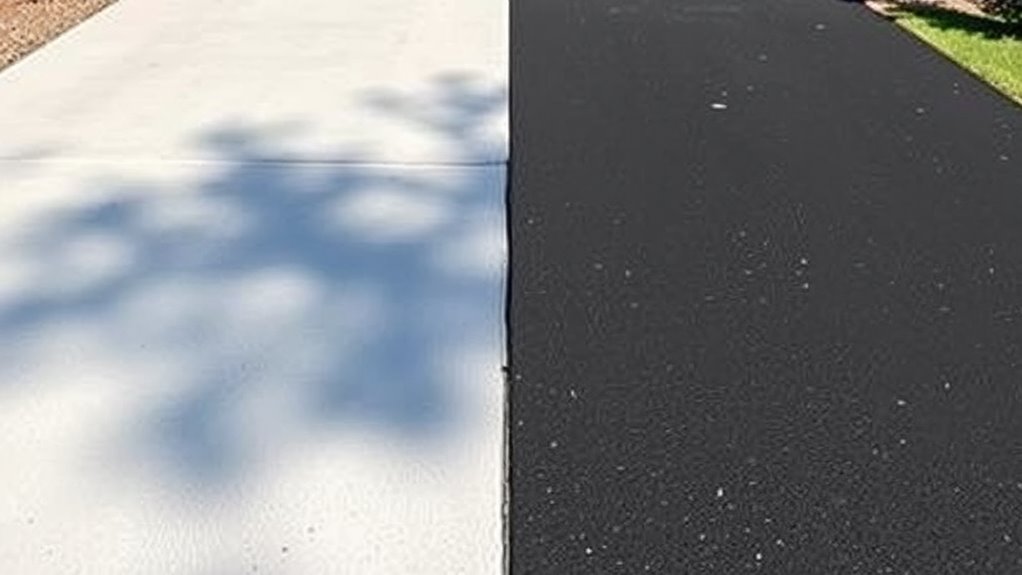
When comparing concrete and asphalt driveways, the material composition and structure play an essential role in their performance and longevity. Concrete’s robust nature allows for more aesthetic customization options, whereas asphalt typically offers a more uniform look. Comprehending these key differences can help homeowners make informed choices that suit their needs.
Material composition and structure
The essential differences in material composition and structure set concrete and asphalt driveways apart. Asphalt driveways consist of aggregates mixed with bitumen, forming a durable surface that’s rolled and cooled. On the other hand, concrete driveways are made from a blend of cement, sand, gravel, and water, which cures into a solid slab. This difference in material composition contributes to distinct durability levels; concrete driveways can last over 50 years, whereas asphalt typically lasts 15 to 30 years. Installation costs vary, with asphalt ranging from $2.00 to $4.00 per square foot and concrete from $4.00 to $6.00. Furthermore, concrete can support heavier loads than asphalt, adding to its appeal for long-term use.
Aesthetic appeal and customization options
Though both concrete and asphalt driveways serve the functional purpose of providing a solid surface for vehicles, their aesthetic appeal and customization options highlight significant differences. Concrete driveways offer a variety of customization options, including colors, stains, and stamped patterns, allowing homeowners to improve curb appeal and create a unique look that complements their property. On the other hand, asphalt typically features a standard black finish with limited design possibilities, making it less versatile. This lack of variety can impact resale value, as concrete’s personalized designs often attract buyers more effectively. In the end, for those looking to boost both visual interest and property value, concrete driveways present a more appealing option than asphalt.
Installation Process
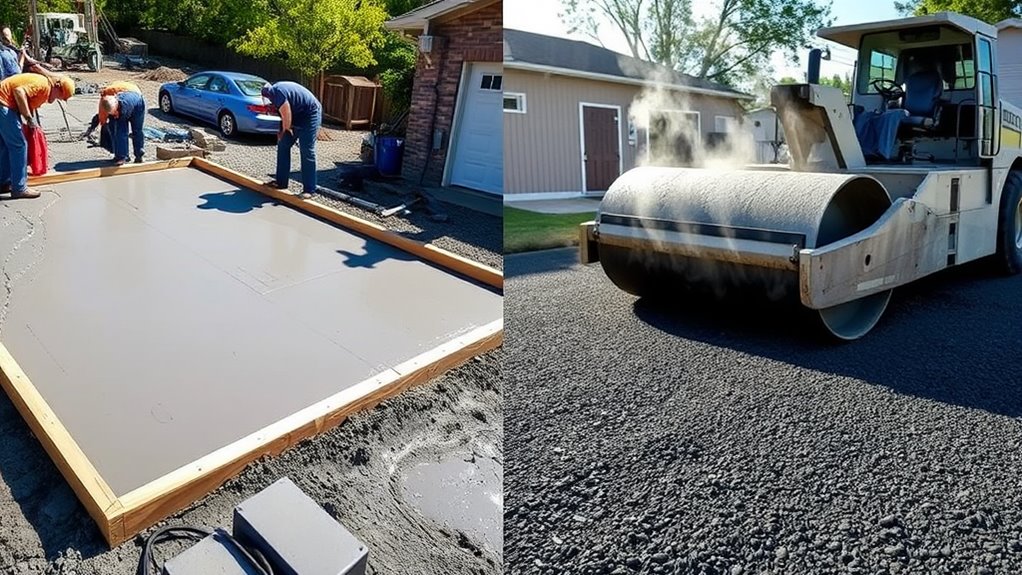
In terms of installation, the timelines and labor requirements for concrete and asphalt driveways differ greatly. Asphalt can be installed quickly, allowing for immediate use within 24 to 48 hours, whereas concrete requires about a week for proper curing before it’s ready for vehicles. Comprehending these differences can help homeowners make informed decisions based on their needs and schedules.
Timeline and labor requirements
Even though both asphalt and concrete driveways require professional installation, their timelines and labor needs differ considerably. An asphalt driveway can typically be installed and used within 24 to 48 hours, making it a quicker option. Conversely, concrete driveway installation often requires about a week for proper curing before it can be driven on, extending the installation timeline.
Key differences include:
- Asphalt: Less labor-intensive, quicker installation.
- Concrete: More skilled labor needed for proper pouring and finishing.
- Weather Impact: Installation timelines can vary based on temperature conditions.
- Curing Process: Concrete’s curing requires careful management to guarantee durability.
Understanding these factors helps homeowners make informed choices for their driveways.
Curing vs. setting times
The differences in installation timelines naturally lead to a closer look at curing and setting times for both driveway options. Asphalt driveways are ready for use in just 24 to 48 hours, whereas concrete driveways need about a week to cure properly. This longer curing time allows concrete to gain strength but requires homeowners to plan for temporary access during the installation process.
| Driveway Type | Curing/Setting Time |
|---|---|
| Asphalt Driveways | 24-48 hours |
| Concrete Driveways | Approximately 1 week |
Durability and Longevity
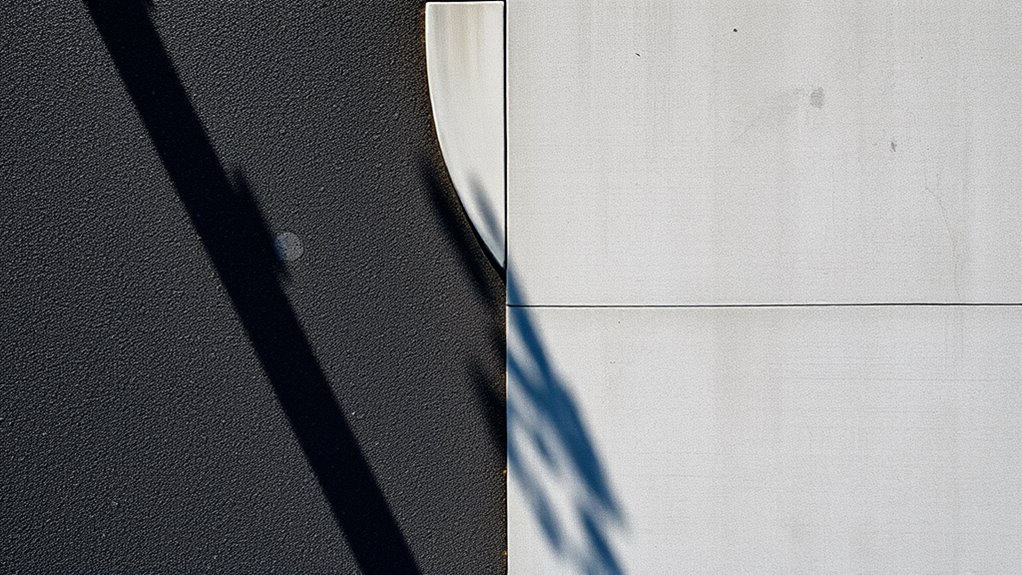
When evaluating durability and longevity, concrete driveways typically outlast asphalt options by a significant margin. With a lifespan exceeding 50 years, concrete can handle heavy loads and withstand various weather conditions better than asphalt, which typically lasts 15 to 30 years. This difference in durability highlights the importance of choosing the right material based on long-term needs.
Lifespan expectations for each material
Choosing between concrete and asphalt driveways involves comprehending their lifespan expectations, which greatly affect long-term costs and maintenance. Concrete driveways can last 50 years or more with proper care, whereas asphalt typically lasts between 15 to 30 years. Here are some key differences between asphalt and concrete regarding lifespan and maintenance:
- Concrete: Requires less frequent maintenance; lasts longer.
- Asphalt: Needs sealing every 3 to 5 years, increasing maintenance costs.
- Durability: Concrete’s compressive strength (up to 6,000 PSI) supports heavier loads.
- Costs: Although asphalt has lower initial costs, its shorter lifespan may lead to higher long-term concrete driveway costs.
Understanding these factors can help homeowners make informed decisions about their driveway material.
Resistance to weather and heavy loads
Though both concrete and asphalt driveways have their strengths, their resistance to weather and heavy loads greatly impacts their durability and longevity. Concrete can withstand loads of up to 80,000 pounds, making it ideal for heavy vehicles, whereas asphalt’s limit is around 8,000 pounds. Concrete likewise offers superior weather resistance, lasting over 50 years with proper care. Conversely, asphalt lasts between 15 to 30 years and requires more frequent maintenance, especially in high temperatures. Here’s a comparison:
| Material | Load Capacity | Lifespan |
|---|---|---|
| Concrete | Up to 80,000 lbs | 50+ years |
| Asphalt | Up to 8,000 lbs | 15-30 years |
| Weather | More resistant | Less resistant |
| Maintenance | Low | High |
Maintenance Requirements
Regarding maintenance requirements, concrete and asphalt driveways have distinct needs. Asphalt typically demands more frequent upkeep, including sealing every few years and regular repairs as a result of weather effects. Conversely, concrete requires less intensive care, needing occasional cleaning and sealing, making it a more convenient option for many homeowners.
Routine care for concrete and asphalt
Routine care for concrete and asphalt driveways is vital for ensuring their longevity and maintaining their appearance. Both driveway materials require regular maintenance to prevent costly repairs and improve durability.
- Asphalt driveways should be sealed every 3 to 5 years to maintain integrity.
- Concrete driveways benefit from sealing every 5 to 10 years to avoid cracking and staining.
- Regular maintenance for asphalt includes filling cracks and resurfacing, whereas concrete maintenance focuses on cleaning stains and applying sealants.
- Routine cleaning is fundamental for both, as asphalt hides stains better than concrete.
Proper maintenance practices greatly influence maintenance costs, with asphalt lasting 15 to 30 years and well-maintained concrete exceeding 50 years.
Seasonal considerations
Seasonal changes substantially impact the maintenance requirements for both asphalt and concrete driveways. Asphalt requires more frequent upkeep, needing resealing every 3 to 5 years, particularly after winter’s freeze-thaw cycles which can lead to cracks and potholes. Conversely, concrete driveways benefit from sealing every 5 to 10 years to guard against cracking and staining, especially in areas with extreme temperature fluctuations. Regular maintenance during seasonal changes is crucial for extending the lifespan of both materials. Asphalt is particularly vulnerable to heat damage, whereas concrete faces challenges from freezing temperatures. Homeowners should use sand or kitty litter for traction on asphalt in winter and exercise care when removing snow from concrete to prevent surface damage.
Repair and Restoration
When it pertains to repair and restoration, asphalt driveways are often easier and less costly to fix, with simple sealants used for cracks and potholes. Conversely, concrete repairs can be more complex, requiring techniques like epoxy injections or resurfacing to address damage. Comprehending these differences is essential for homeowners looking to maintain the integrity and appearance of their driveways.
Fixing cracks and potholes in asphalt
Although neglecting cracks and potholes in asphalt can lead to more considerable issues down the line, addressing these problems quickly is essential for maintaining a durable driveway. Regular maintenance is important to prevent minor issues from escalating.
To effectively repair asphalt, consider these key steps:
- Clean the area thoroughly to remove debris before applying a patching compound.
- Use crack filler for small cracks (less than 1/2 inch) and a more extensive patching process for larger cracks and potholes.
- Excavate potholes to a depth of 2 to 4 inches and fill with hot or cold asphalt mix, compacting it well.
- Seal the asphalt every 3 to 5 years to protect against water intrusion and UV damage.
Taking these actions can greatly extend the life of an asphalt driveway.
Repairing concrete damage and resurfacing options
As asphalt driveways require regular maintenance to address cracks and potholes, concrete driveways likewise encounter their share of damage over time. Repairing concrete often involves tackling issues like cracking, spalling, or uneven surfaces. Effective methods include epoxy injections, patching, and resurfacing options, which apply a thin layer of new concrete or polymer-modified overlay to improve appearance and extend lifespan. Regular maintenance, such as sealing every 5 to 10 years, is vital for preventing further damage. Furthermore, addressing underlying issues like drainage problems is necessary to avoid recurrence. For sunken areas, concrete lifting using polyurethane foam provides a quick and efficient solution, stabilizing the surface and curing within 15 minutes, ensuring long-lasting results.
Cost Comparison
When comparing driveways, initial installation costs are a significant factor. Asphalt tends to be more affordable upfront, but its shorter lifespan can lead to higher long-term expenses. Conversely, concrete’s durability and lower maintenance needs may make it a wiser investment over time.
Initial installation costs
Concrete and asphalt driveways differ considerably in initial installation costs, making the choice between them an important consideration for homeowners. Asphalt typically offers a more budget-friendly option, with installation costs ranging from $2.00 to $4.00 per square foot. Conversely, concrete’s initial cost is higher, averaging between $4.00 and $6.00 per square foot.
Homeowners should consider the following:
- Average asphalt installation cost: $5,248
- Average concrete installation cost: $6,400
- Asphalt’s quicker installation time
- Concrete’s customization options, which may increase costs
While asphalt may seem more affordable initially, concrete’s longevity could lead to better value over time when maintenance and replacement are factored in.
Long-term expenses and upkeep
Asphalt driveways may appear more affordable initially, their long-term expenses can quickly add up, making concrete a more economical option over time. Whereas asphalt installation costs around $5,248, it typically lasts only 15 to 30 years. In comparison, concrete driveways, averaging $6,400, can endure over 50 years with proper maintenance, providing a more cost-effective solution in the long run. Asphalt requires resealing every 3 to 5 years, which increases maintenance costs considerably. On the other hand, concrete needs occasional sealing every 5 to 10 years, leading to lower ongoing expenses. Ultimately, homeowners may find that the durability and reduced maintenance needs of concrete driveways offset their higher upfront costs, resulting in a better financial outcome when evaluating asphalt vs concrete.
Environmental Impact
When considering the environmental impact of concrete and asphalt driveways, sustainability and recyclability play essential roles. Both materials can be recycled, but concrete’s longer lifespan means it often results in less resource consumption and waste over time. Moreover, the heat absorption properties of asphalt can contribute to urban heat issues, making concrete a more favorable option regarding mitigating environmental concerns.
Sustainability and recyclability
Though both concrete and asphalt driveways offer sustainable options for homeowners, their environmental impacts vary greatly. Concrete boasts longer lifespans, often exceeding 50 years, which reduces resource consumption and the need for replacements. Conversely, asphalt lasts approximately 15 to 30 years but is more energy-efficient to produce, requiring 20% less energy than many alternatives.
Key points regarding sustainability and recyclability include:
- Both materials are recyclable, promoting eco-friendliness.
- Concrete’s durability leads to lower maintenance, minimizing environmental impact over time.
- Asphalt can be reused in new projects, enhancing its sustainability profile.
- Concrete’s long lifespan means less frequent replacements, supporting sustainability.
Ultimately, comprehending these factors helps homeowners make informed choices.
Heat absorption and runoff considerations
Although both concrete and asphalt driveways have their benefits, heat absorption and runoff considerations greatly impact their environmental footprint. Asphalt, with its dark color, absorbs more heat, potentially raising surrounding temperatures and contributing to the urban heat island effect. Conversely, concrete reflects more sunlight, lowering surface temperatures and helping mitigate local heat levels. Moreover, asphalt surfaces can lead to increased runoff, carrying pollutants into stormwater systems, while concrete’s porous nature allows better water infiltration, reducing runoff. This heat retention in asphalt can cause thermal expansion, leading to surface deformation and higher maintenance costs. Finally, concrete’s lower heat absorption and better runoff management improve its appeal for environmental sustainability.
Best Use Cases
When considering the best use cases for concrete and asphalt driveways, climate plays a significant role in the decision-making process. Asphalt’s flexibility makes it a great choice for colder regions, while concrete thrives in warmer areas. Furthermore, the intended application, whether residential or commercial, can influence which material is more suitable for a specific project.
Climate and regional factors
Choosing the right driveway material can greatly impact its longevity and performance, especially when considering climate and regional factors. When comparing asphalt versus concrete, comprehending local conditions is essential.
- Freezing and Thawing: Asphalt handles cold climates better, resisting cracks during freeze-thaw cycles.
- Heat Resistance: In warmer areas, concrete outperforms asphalt, which can soften and deform.
- Durability: Concrete’s strength supports heavy traffic, whereas asphalt may struggle under similar conditions.
- Maintenance Needs: Asphalt requires sealing every 3-5 years in hot climates, adding to its upkeep.
These climate considerations highlight the significance of selecting the appropriate material to guarantee durability and minimize maintenance costs, finally leading to a more effective investment in driveway longevity.
Ideal applications for residential vs. commercial settings
Even though both concrete and asphalt driveways serve essential functions, their ideal applications differ markedly between residential and commercial settings. In residential areas, concrete driveways are favored for their durability and aesthetic customization options, lasting over 50 years and enhancing property value. Homeowners appreciate the ability to personalize their driveways through staining and stamping, improving curb appeal. Conversely, asphalt driveways are typically preferred in commercial settings because of their quicker installation and ability to handle heavy loads. They’re cost-effective for large surfaces and can last 15 to 30 years with proper maintenance. Furthermore, asphalt performs well in cold climates, flexing to withstand freeze-thaw cycles, making it a practical choice for both residential and commercial applications.
Frequently Asked Questions
Is Concrete or Asphalt Better for a Driveway?
In the garden of home choices, two paths emerge: one paved with strength and longevity, the other with flexibility and quickness. He’s weighing the options, knowing each has its merits. As one path, forged from stone, promises years of steadfastness, the other, a swift asphalt ribbon, offers immediate use but demands care. In the end, his decision rests on the balance of durability and maintenance, shaping the scenery of his driveway dreams.
What Are the Cons of Concrete Driveways?
When considering concrete driveways, one must note several disadvantages. They often come with a higher initial cost, which can deter some homeowners. Furthermore, concrete’s susceptibility to cracking in extreme weather can lead to expensive repairs later on. Maintenance is required every few years, including sealing to prevent stains and deterioration. Ultimately, the light color of concrete can show dirt and wear more readily, requiring more frequent cleaning to maintain its appearance.
What Are the Disadvantages of Asphalt Driveways?
When Sarah noticed her asphalt driveway developing cracks after just a few years, she realized the drawbacks. Asphalt driveways can require regular sealing every 3 to 5 years, increasing long-term costs. They’re likewise less durable under heavy loads, making them unsuitable for larger vehicles. In high temperatures, asphalt can soften, leading to ruts. These factors contribute to frequent maintenance and repairs, making asphalt a less appealing choice for homeowners seeking longevity.
What Cost More Blacktop or Concrete Driveway?
When considering the cost of blacktop versus concrete driveways, it’s evident that concrete typically costs more upfront. Although asphalt installation ranges from $2.00 to $4.00 per square foot, concrete can reach $4.00 to $10.00 per square foot depending on customization. Nevertheless, it’s significant to mention that concrete often lasts longer, which can make it a more economical choice over time. Homeowners should weigh initial costs against long-term durability and maintenance needs.