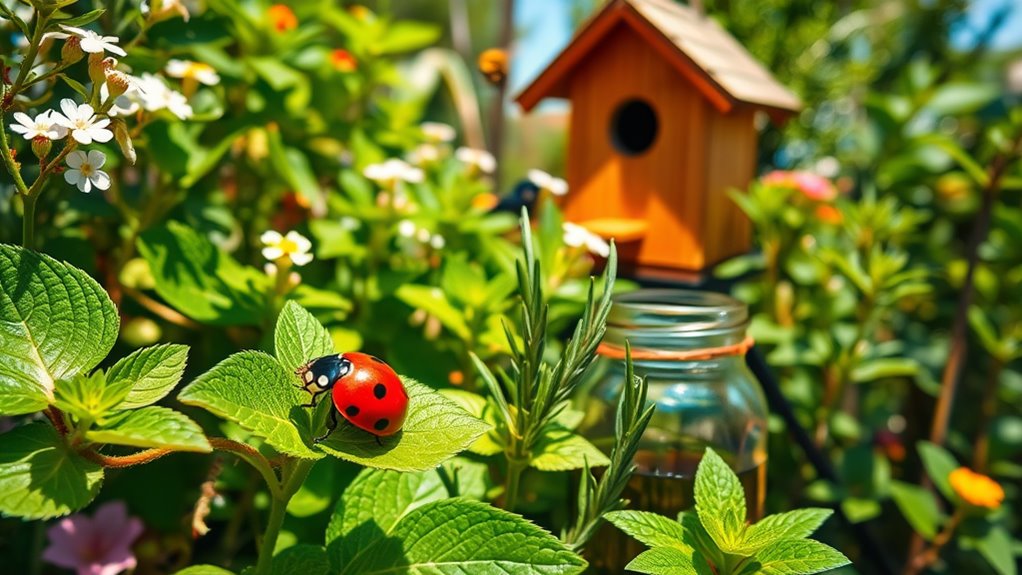
To prevent pests without harsh chemicals, use eco-friendly methods like crucial oils such as peppermint and lavender as natural repellents. Homemade insecticidal soaps are effective too. Consider diatomaceous earth for a natural barrier against soft-bodied insects. Companion planting improves pest control, as attracting beneficial insects helps maintain balance in your garden. Creating physical barriers is another smart strategy. Explore these methods further, and you'll discover even more ways to keep your home and garden pest-free.
Understanding the Importance of Eco-Friendly Pest Control
Even though pests can wreak havoc in your home and garden, comprehending the importance of eco-friendly pest control can help you tackle the problem effectively. By adopting integrated pest management (IPM), you're not just fighting pests; you're creating a balanced ecosystem. IPM combines various strategies like monitoring pest populations, using beneficial insects, and encouraging natural predators, permitting you to maintain control without resorting to harsh chemicals.
Incorporating eco-friendly practices into your organic gardening additionally improves your ability to manage pests. When you focus on building healthy soil and promoting plant diversity, you increase your garden's resilience against infestations. By choosing organic solutions, you protect your plants and the environment. Plus, you'll feel empowered knowing you're taking a proactive approach to pest control. With these strategies, you can create a thriving garden as you keep pests at bay, all without harmful substances. Take charge and make eco-friendly choices today!
Essential Oils as Natural Repellents
Crucial oils can be potent allies in your fight against pests. You'll discover which oils are most effective and how to apply them for the best results. By using these natural repellents, you can protect your home without harsh chemicals.
Effective Essential Oils
When you're looking to keep pests at bay, effective crucial oils can serve as a potent, natural alternative to harsh chemicals. You'll find that aromatic blends like peppermint, lavender, and eucalyptus act as strong pest deterrents, creating an environment that pests want to avoid. By utilizing these oils, you gain control over your space without the risks associated with synthetic solutions. Simply mix a few drops with water in a spray bottle, and you're ready to tackle unwanted visitors. Not only do these oils smell delightful, but they as well enable you to maintain a pest-free home naturally. Embrace the strength of crucial oils and reclaim your space with confidence, knowing you're using effective and safe methods.
Application Methods Explained
To effectively use vital oils as natural repellents, you'll want to explore various application methods that maximize their pest-deterring properties. Start by creating a spray solution; mix water and a few drops of your chosen oil in a spray bottle. This technique allows you to target specific areas where pests are a problem. Another method is using cotton balls soaked in vital oils placed in entry points or around your home—this acts as a barrier for pests. You can additionally use diffusers to disperse the oils throughout your living space. By utilizing these application techniques, you take charge of your pest control efforts, ensuring a safer environment without harsh chemicals.
Homemade Insecticidal Soaps
Homemade insecticidal soaps offer a simple and effective solution for tackling pests without resorting to harsh chemicals. By using basic soap ingredients, you can create your own pest control spray that's safe for your plants and the environment. Here are three easy homemade recipes to get you started:
- Basic Soap Spray: Mix 1 tablespoon of liquid soap (like castile) with 1 quart of water.
- Oil and Soap Mix: Combine 2 tablespoons of liquid soap, 2 tablespoons of vegetable oil, and 1 quart of water.
- Garlic Soap Spray: Blend 1 bulb of garlic with 1 tablespoon of liquid soap and 1 quart of water; let it steep overnight.
Just spray your homemade insecticidal soap directly on the pests and affected areas. You'll reclaim control of your garden naturally, keeping it healthy and thriving.
Diatomaceous Earth: A Natural Barrier
Diatomaceous earth (DE) is an effective natural barrier against pests, making it a favorite among organic gardeners. You'll love how this fine powder, made from fossilized algae, offers a potent defense without harsh chemicals. The diatomaceous earth benefits include its ability to dehydrate and kill soft-bodied insects like slugs, aphids, and even bedbugs.
To get the most out of your diatomaceous earth application, simply sprinkle it in areas where pests frequent, such as garden beds or around entry points of your home. Make sure to reapply after rain or heavy watering to maintain its effectiveness.
Using DE not just helps you gain control over unwanted invaders but also promotes a healthier growing environment. Embrace this natural solution to keep your garden thriving and pest-free, ensuring your plants stay strong without relying on synthetic pesticides.
Companion Planting in Your Garden
When you strategically pair plants in your garden, you can create a thriving ecosystem that naturally wards off pests and boosts growth. Companion planting improves crop diversity, making your garden less appealing to harmful insects and increasing pest resistance. Here are three effective combinations to contemplate:
- Tomatoes and Basil: Basil repels tomato hornworms while improving the flavor of tomatoes.
- Carrots and Onions: Onions deter carrot flies, protecting your carrot crop.
- Marigolds with Almost Any Plant: Marigolds emit compounds that repel nematodes and other pests.
Keeping Your Home Clean and Tidy
Keeping your home clean and tidy is crucial for pest prevention. By establishing daily cleaning routines, storing food properly, and decluttering regularly, you can create an environment that's less inviting to unwanted guests. Let's explore how these simple steps can make a big difference in maintaining a pest-free home.
Daily Cleaning Routines
Although it might seem intimidating, establishing a daily cleaning routine can greatly reduce pest problems in your home. By committing to a few simple routine habits, you can take control of your environment and keep pests at bay.
Here are three effective daily cleaning tasks to incorporate:
- Wipe Down Surfaces: Regularly clean countertops and tables to remove crumbs and spills that attract pests.
- Sweep and Vacuum: Make it a habit to sweep floors and vacuum carpets daily, eliminating food particles and hiding spots.
- Empty Trash Cans: Take out the trash every day to prevent pests from being drawn to lingering odors.
Proper Food Storage
To effectively prevent pests in your home, proper food storage is essential. Using airtight containers for food preservation not just keeps your food fresh but also denies pests access to it. You gain control over your environment by making these small changes. Here's a quick look at the benefits of proper food storage:
| Benefit | Description | Impact |
|---|---|---|
| Pest Prevention | Keeps food sealed and protected | Reduces infestations |
| Freshness | Maintains flavor and quality | Improves meal enjoyment |
| Space Efficiency | Maximizes pantry organization | Creates a tidy kitchen |
Decluttering Regularly
Even though most people don't realize it, regularly decluttering your home plays a crucial role in pest prevention. The clutter impact can create hiding spots for pests, making your home an inviting target. By maintaining a clean and tidy environment, you improve your control over pest-related issues. Here are three key organization benefits you'll gain:
- Easier Cleaning: Less clutter means quicker access to surfaces, making routine cleaning a breeze.
- Reduced Hiding Spots: With fewer items around, pests have fewer places to hide and breed.
- Improved Awareness: An organized space allows you to spot potential pest problems early, giving you the upper hand.
Take charge today—declutter regularly and protect your home from unwanted guests!
Utilizing Traps and Baits
When you're looking to keep pests at bay without resorting to harsh chemicals, utilizing traps and baits can be an effective strategy. Start by identifying the pests you're dealing with, as different species require different trap types. For example, sticky traps work well for insects, whereas snap traps are better for rodents. Choose traps that suit your environment and target pests effectively.
Next, focus on bait selection. Opt for natural baits that appeal to the specific pests you're targeting. For instance, peanut butter is great for mice, whereas fruit slices attract fruit flies. Make certain you place traps and baits in areas where pests are most active, like near entry points or food sources. Regularly check and empty traps to maintain their effectiveness. By combining the right trap types with smart bait selection, you'll gain control over pest populations without relying on harsh chemicals.
Attracting Beneficial Insects
Attracting beneficial insects can greatly improve your pest control efforts, as these allies naturally prey on harmful pests. To create a welcoming environment for these helpful insects, focus on incorporating beneficial plants and establishing insect habitats in your garden. Here are three effective strategies:
- Choose the Right Plants: Select flowers like marigolds, daisies, and yarrow, which provide nectar and pollen for beneficial insects.
- Create Diverse Habitats: Cultivate various insect habitats by adding native shrubs, ground cover, and small piles of rocks or logs. This not only shelters insects but additionally encourages a balanced ecosystem.
- Avoid Pesticides: Steer clear of harsh chemicals that can harm beneficial insects. Instead, maintain a natural approach to gardening, allowing these allies to thrive.
Natural Remedies for Common Pests
Natural remedies can effectively tackle common garden pests, offering a safer alternative to chemical solutions. You can regain control of your garden by using herbal repellents like neem oil or garlic spray, which deter pests without harming beneficial insects. Mix crushed garlic with water, let it steep, and spray around your plants to create an uninviting environment for pests.
In addition, consider incorporating pest resistant plants into your garden. Marigolds, for example, naturally repel aphids and nematodes. By strategically planting these alongside your more vulnerable crops, you create a natural defense system.
Don't forget about the strength of vital oils. Spraying a mixture of peppermint or lavender oil can keep unwanted visitors at bay. With these natural strategies, you can maintain a thriving garden as you minimize your reliance on harsh chemicals. Take charge of your garden's health with these effective, eco-friendly solutions!
Creating Physical Barriers
To effectively keep pests at bay, consider creating physical barriers around your plants. These exclusion methods act as physical deterrents, preventing pests from reaching your precious greenery. Here are three effective strategies you can implement:
- Row Covers: Use lightweight fabric to shield your plants from insects during allowing sunlight and moisture to penetrate.
- Fencing: Install a sturdy fence to keep larger pests like deer and rabbits out of your garden.
- Mulch: Apply a thick layer of organic mulch to deter crawling pests and retain soil moisture.
Sustainable Gardening Practices
To create a thriving garden without harsh chemicals, you can embrace sustainable gardening practices. You'll find that companion planting, attracting natural pest predators, and improving soil health can greatly reduce pest problems. Let's explore how these techniques can transform your gardening experience.
Companion Planting Techniques
Companion planting offers a potent way to boost your garden's health and resilience. By strategically pairing plants, you can improve pest control and stimulate growth. Here are three techniques to get you started:
- Mix plants for pest deterrence: Certain plants, like marigolds, repel harmful insects when planted alongside vegetables.
- Utilize plant diversity: A variety of plants creates a balanced ecosystem, reducing the risk of pest outbreaks.
- Incorporate crop rotation: Changing plant locations each season prevents pests from establishing a stronghold.
Natural Pest Predators
Although many gardeners turn to chemicals for pest control, embracing natural pest predators can be a more sustainable and effective solution. By introducing beneficial insects like ladybugs, lacewings, and predatory wasps into your garden, you can create a balanced ecosystem that naturally keeps pests at bay. These natural predators feed on common nuisances like aphids and caterpillars, reducing the need for harsh chemicals. You can attract these helpful allies by planting diverse flowers, providing habitats, and avoiding broad-spectrum pesticides. Furthermore, cultivating a healthy environment with native plants encourages biodiversity, ensuring your garden remains resilient against pest outbreaks. So, take control of your garden's health by utilizing nature's own pest control methods.
Soil Health Improvement
Improving soil health is essential for creating a thriving garden, as it lays the foundation for robust plant growth and pest resistance. When you focus on enhancing your soil, you empower your plants and reduce the need for harsh chemicals. Here are three effective ways to improve soil health:
- Add soil amendments: Incorporate organic matter like compost or well-rotted manure to enrich your soil and support microbial diversity.
- Rotate your crops: This practice disrupts pest cycles and promotes balanced nutrient levels in the soil.
- Cover crops: Planting cover crops during off-seasons helps prevent erosion and boosts soil structure.
Frequently Asked Questions
How Can I Identify Specific Pests in My Home?
To identify specific pests in your home, use effective pest identification techniques. Start by observing any signs like droppings, gnaw marks, or nests. Familiarize yourself with common household pests, such as ants, cockroaches, or mice. Take clear pictures and compare them with online resources or pest guides. If you're unsure, consider consulting a pest control professional who can accurately identify the issue and help you regain control of your space.
Are There Any Petsafe Pest Control Methods?
Think of your home as a fortress, and you want to keep it safe without causing harm. You can use natural repellents like crucial oils to ward off pests, creating a welcoming atmosphere for your pets. Pet-safe traps are another option, allowing you to catch unwanted visitors without putting your furry friends at risk. With these methods, you're taking control, ensuring both your home and pets stay happy and healthy.
What Are the Benefits of Using Integrated Pest Management?
Using Integrated Pest Management (IPM) offers you numerous benefits. It helps you control pests effectively as well as minimizing environmental impacts. By combining various strategies—like biological control, habitat manipulation, and careful monitoring—you reduce reliance on chemicals. IPM promotes healthier ecosystems, encouraging beneficial insects and reducing pesticide exposure. You'll find that this approach not just protects your home but likewise supports a sustainable environment, giving you peace of mind and control over pest issues.
How Often Should I Apply Natural Repellents?
You might think applying natural repellents is a one-time fix, but that's not the case. For ideal results, follow frequency guidelines based on the specific repellent you're using. Typically, reapply every few days or after rain. Utilize effective application techniques, like spraying directly on surfaces where pests appear. By maintaining a consistent schedule, you'll improve your control over pest populations and create a more pleasant environment for yourself.
Can I Combine Different Natural Pest Control Methods?
Absolutely, you can combine different natural pest control methods for effective pest prevention. Mixing natural repellents, like vital oils with diatomaceous earth or vinegar solutions, improves their potency. Each method targets various pests, and using them together can create a stronger barrier. Just make certain to test combinations on a small area first to verify they work well together without any adverse reactions. You'll gain better control over pests in your space.