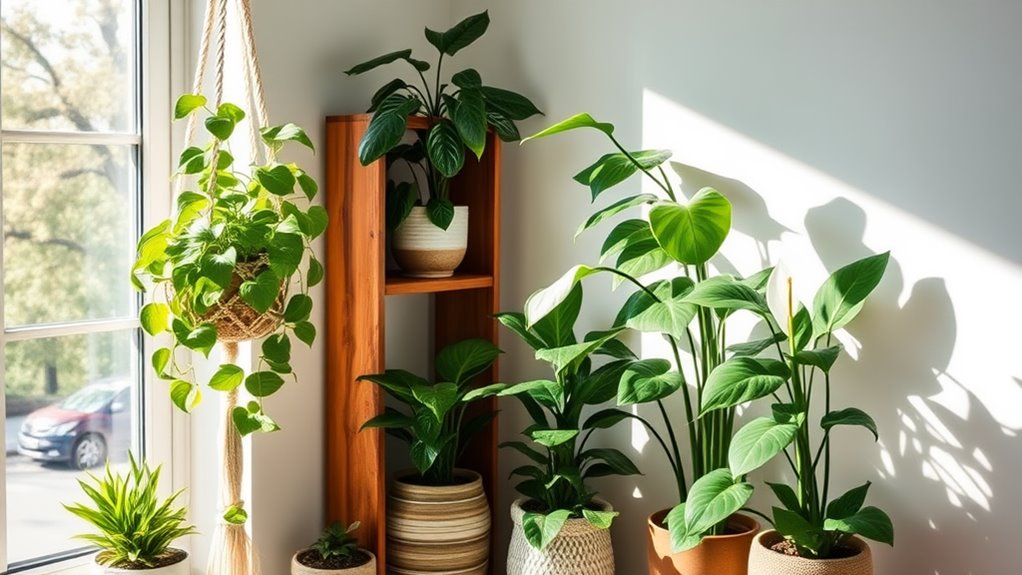
When choosing the best plants for your indoor space, consider light and humidity levels. For low-maintenance options, try a Snake Plant or Pothos that can thrive in various conditions. To improve air quality, incorporate Peace Lilies or Spider Plants. Make sure to use well-draining soil and pots with drainage holes, and water as needed. Seasonal adjustments are essential for plant health. Discover more tips and insights to keep your indoor garden flourishing throughout the year!
Understanding Your Indoor Space: Light and Humidity Considerations
When you're choosing plants for your indoor space, comprehending light and humidity is crucial. You'll want to evaluate the natural light your space receives throughout the day. Different plants thrive in varying light conditions, so knowing whether your area is bright, medium, or low light will help you select the right greenery.
Next, consider the indoor temperature and humidity levels. Most houseplants prefer a temperature between 65°F to 75°F, and humidity levels around 40% to 60%. If your home is too dry, especially in winter, you might need to use a humidifier to maintain ideal conditions. Conversely, overly humid spaces can lead to mold and mildew, which can harm your plants.
Low-Maintenance Indoor Plants for Beginners
If you're new to indoor gardening, you'll appreciate the simplicity of low-maintenance plants that thrive with minimal effort. These easy care varieties are perfect for busy lifestyles and can help you build confidence as a beginner. You won't need to worry about constant attention; just follow a few basic care guidelines.
Here are some beginner-friendly choices to reflect on:
- Snake Plant: Tolerates low light and infrequent watering.
- Pothos: Grows quickly and can adapt to various conditions.
- ZZ Plant: Thrives on neglect and requires minimal watering.
With these options, you'll enjoy the beauty of indoor plants without the stress. Each plant adds character to your space as you maintain control over your environment. Start with these low-maintenance plants, and soon you'll feel empowered to explore more challenging varieties!
Popular Houseplants and Their Unique Benefits
Houseplants can transform your indoor environment, adding both beauty and functionality. Choosing the right houseplant varieties not only improves your space but also provides unique plant benefits customized to your needs. For instance, the snake plant is a resilient option that thrives in low light, making it perfect for busy individuals. Meanwhile, the pothos is known for its trailing vines and adaptability, which can suit various decor styles.
If you're looking for a pop of color, consider the peace lily, which blooms beautifully and requires minimal care. Furthermore, the fiddle leaf fig stands out with its large leaves, serving as a striking focal point in any room.
Air-Purifying Plants to Improve Indoor Air Quality
Even though many plants enhance your home's aesthetic, certain varieties also play an essential role in improving indoor air quality by filtering out harmful toxins. You can take control of your indoor environment by incorporating the best air purifying plants into your space. These plants utilize natural air purification methods, making your home healthier and more inviting.
Here are three top choices to evaluate:
- Snake Plant: Known for its resilience and ability to filter formaldehyde and benzene.
- Peace Lily: Not only attractive, it effectively removes ammonia and xylene from the air.
- Spider Plant: A low-maintenance option that combats carbon monoxide and other pollutants.
Flowering Indoor Plants for a Touch of Color
Even though air-purifying plants improve your indoor environment, flowering indoor plants add a lively touch that enlivens any space. If you want to improve your indoor aesthetics, consider plants like the African Violet or the Peace Lily. These options not only provide colorful blooms but also create a dynamic atmosphere. You'll find that they're relatively easy to care for, giving you the control you desire over your surroundings.
Make sure to provide adequate light and water, as these factors are vital for sustaining those beautiful flowers. Regularly deadhead faded blooms to encourage new growth and maintain a tidy appearance. Furthermore, consider rotating your plants for even light distribution, promoting healthy growth and maximizing color. By incorporating flowering indoor plants, you can transform your space into a lively oasis, showcasing your personal style and love for nature. Enjoy the beauty and control these plants bring to your indoor environment!
Foliage Plants That Thrive in Low Light
If you find yourself in a space with limited natural light, don't worry—there are plenty of foliage plants that can thrive in those conditions. These plants not only add greenery but additionally purify the air, enhancing your indoor environment. Here are some top choices for low-light foliage:
- Snake Plant: Known for its resilience, it requires minimal care. Snake plant benefits include air purification and adaptability to various conditions.
- Pothos: Ideal for beginners, pothos care involves infrequent watering and occasional pruning. Its trailing vines can brighten any corner.
- ZZ Plant: This beauty is drought-tolerant and thrives on neglect, making it perfect for busy individuals.
Succulents and Cacti: The Perfect Low-Water Options
If you're looking for plants that require minimal water, succulents and cacti are your best bet. You'll want to understand the right watering techniques, ideal lighting conditions, and proper soil and potting options to keep them thriving. Let's explore how to care for these resilient beauties!
Watering Techniques Explained
When you choose succulents and cacti for your indoor spaces, comprehending their unique watering needs is vital for keeping them healthy. These plants thrive on infrequent watering, so it's important to master the right techniques.
- Use well-draining pots to promote drainage techniques.
- Water deeply but less frequently to encourage strong root growth.
- Invest in watering tools like a moisture meter to monitor soil dryness.
Ideal Lighting Conditions
Though succulents and cacti are celebrated for their low-water requirements, their lighting needs are equally crucial for thriving indoors. To maintain their health, you’ll want to provide bright light intensity. A south-facing window is ideal, allowing your plants to soak up the sun’s rays. If direct sunlight isn’t feasible, consider using grow lights to mimic those conditions. Proper lighting ensures that succulents and cacti maintain their vibrant colors and compact growth. To enhance natural light exposure, choose the best window treatments that allow maximum sunlight while reducing glare or excessive heat. Sheer curtains or adjustable blinds can help regulate light levels without completely blocking the sun’s beneficial rays.
Additionally, pay attention to light duration; these hardy plants typically thrive with about 12 to 14 hours of light each day. Too little light can lead to leggy growth, whereas too much can cause sunburn. By carefully managing both light intensity and light duration, you can guarantee your succulents and cacti flourish in your indoor space.
Soil and Potting Tips
Selecting the right soil and potting approach is essential for the success of your succulents and cacti. You want to guarantee they thrive, so choose wisely. Here are some effective soil types and potting techniques to take into account:
- Well-draining soil: Look for a cactus mix or create your own by mixing potting soil with sand and perlite.
- Pot selection: Use pots with drainage holes to prevent water accumulation that can lead to rot.
- Repotting: Aim to repot every couple of years to refresh the soil and encourage healthy growth.
Tips for Watering Your Indoor Plants Effectively
Watering your indoor plants effectively is key to keeping them healthy and thriving. You need to understand their specific watering needs, how often to water them, and recognize the signs that you might be overwatering. By perfecting these points, you'll guarantee your plants receive just the right amount of moisture.
Understand Plant Watering Needs
Grasping your plants' watering needs is vital for their health and vigor. Comprehending how much water your indoor plants require empowers you to implement effective plant hydration strategies. Different plants have varying moisture retention techniques, so it's important to adapt your approach accordingly.
- Check the soil moisture before watering to avoid over or under-watering.
- Use pots with drainage holes to prevent waterlogging and promote healthy root growth.
- Consider grouping plants with similar watering needs for easier management.
Watering Frequency Guidelines
How often should you water your indoor plants? Establishing effective watering schedules is essential for maintaining healthy plant moisture levels. Typically, most indoor plants thrive with watering every 1-2 weeks, but you need to assess each plant's unique needs. Check the top inch of soil—if it feels dry, it's time to water. Adjust your schedule based on the season; plants may require more frequent watering during warmer months. Be mindful of factors like humidity and pot size, as these can influence moisture retention. Use a moisture meter for precise control, ensuring you're not over or under-watering. By following these guidelines, you'll cultivate a thriving indoor garden that reflects your care and commitment.
Signs of Overwatering
Recognizing the signs of overwatering is just as important as knowing when to water your indoor plants. If you want to maintain control over your plant care routine, watch for these overwatering symptoms:
- Yellowing leaves, often with a mushy texture
- Root rot, which can lead to a foul smell
- Wilting, in spite of soggy soil
If you notice any of these symptoms, it's essential to act quickly for plant recovery. Allow the soil to dry out completely before watering again, and consider repotting if root rot is severe. By staying vigilant, you can prevent further damage and help your plants thrive. Remember, it's all about finding that perfect balance in your watering habits!
Essential Soil and Potting Considerations
Choosing the right soil and potting strategy is vital for the health of your indoor plants. Start by comprehending the various soil types available. For instance, a well-draining potting mix is critical for most indoor plants, whereas cacti and succulents thrive in sandy or gritty soil. If you want to take control of your plant's growth, customize your soil with organic matter or fertilizers designed for your plants' needs.
Next, consider potting techniques. Always choose a pot with drainage holes to prevent waterlogging. When repotting, gently loosen the root ball to encourage growth and add fresh soil to replenish nutrients. Don't forget to water after potting to help the soil settle. By mastering these soil and potting techniques, you'll guarantee your indoor plants not only survive but flourish, giving you the satisfaction of a thriving indoor garden.
Common Indoor Plant Pests and How to Manage Them
Even though indoor plants can improve your space, they're not immune to pests that can threaten their health. To keep your plants thriving, you need to identify and manage these pests effectively. Start by using pest identification techniques to spot issues early, ensuring you take action before they spread.
Here are some common pests and how to handle them:
- Aphids: Use a strong stream of water to dislodge them, followed by natural pest deterrents like neem oil.
- Spider Mites: Increase humidity around your plants, and spray them with insecticidal soap.
- Mealybugs: Wipe them off with a cotton swab dipped in alcohol, then follow up with a natural deterrent.
Seasonal Care: Adjusting Plant Care Throughout the Year
As the seasons change, so should your approach to indoor plant care. During winter, keep an eye on seasonal temperature drops. Most plants prefer warmer conditions, so consider moving them closer to light sources or away from cold drafts. In spring and summer, boost your watering routine as temperatures rise; plants typically need more moisture during these months.
Humidity fluctuations can likewise impact your plants. In winter, heating systems can dry out the air, so use a humidifier or place a tray of water near your plants to combat this. Conversely, during the humid summer months, guarantee good airflow to prevent mold and fungus.
Regularly assess your plants' needs as seasons shift. By adjusting watering schedules, light exposure, and humidity levels, you'll maintain control over your indoor garden's health and vibrancy throughout the year.
Frequently Asked Questions
How Do I Choose the Right Pot Size for My Indoor Plants?
Selecting the appropriate pot size for your indoor plants is essential. You want to guarantee the pot's material suits your plant's needs, whether it's ceramic, plastic, or terracotta. A pot that's too small limits growth, whereas one that's too large can cause overwatering. Always check for drainage holes; they prevent root rot by allowing excess water to escape. Aim for a pot that's just one size larger than your current one for best growth.
Can I Grow Vegetables Indoors Successfully?
Sure, you could try growing vegetables indoors, but you might as well raise a pet rock—it's that easy! With indoor gardening, you can cultivate a variety of vegetable varieties like lettuce and herbs right in your kitchen. Just grab some pots, good soil, and proper lighting, and you're in control of your mini farm. Don't forget to water them; they won't remind you! Who knew fresh veggies could be so demanding?
What Are the Best Indoor Plants for Pet Owners?
When you're choosing indoor plants as a pet owner, it's essential to focus on pet-friendly plants that won't harm your furry friends. Some safe options include spider plants, Boston ferns, and bamboo palm. These plants not only enhance your space but furthermore keep your pets safe. By selecting these varieties, you're ensuring that your pets can roam freely without the risk of toxicity, giving you peace of mind as you enjoy your greenery.
How Often Should I Rotate My Indoor Plants?
Visualize your plants as dancers, each with a unique rhythm. To keep them in step, you should rotate them every few weeks. This plant rotation helps them absorb light evenly, promoting healthy growth patterns. If you notice one side stretching more, it's a sign to switch things up! By taking control of their positioning, you guarantee they thrive, creating a harmonious environment in your home. After all, a well-balanced dance floor leads to an enthralling performance!
Are There Indoor Plants That Can Thrive in Basements?
Yes, there are indoor plants that can thrive in basements! To succeed, you need to take into account the basement lighting and humidity levels. Look for low-light plants like snake plants or pothos, which adapt well to dim conditions. Make sure humidity levels are adequate; you might need a humidifier if it's too dry. By adjusting these factors, you can create a lively indoor garden that flourishes even in the less conventional basement environment.