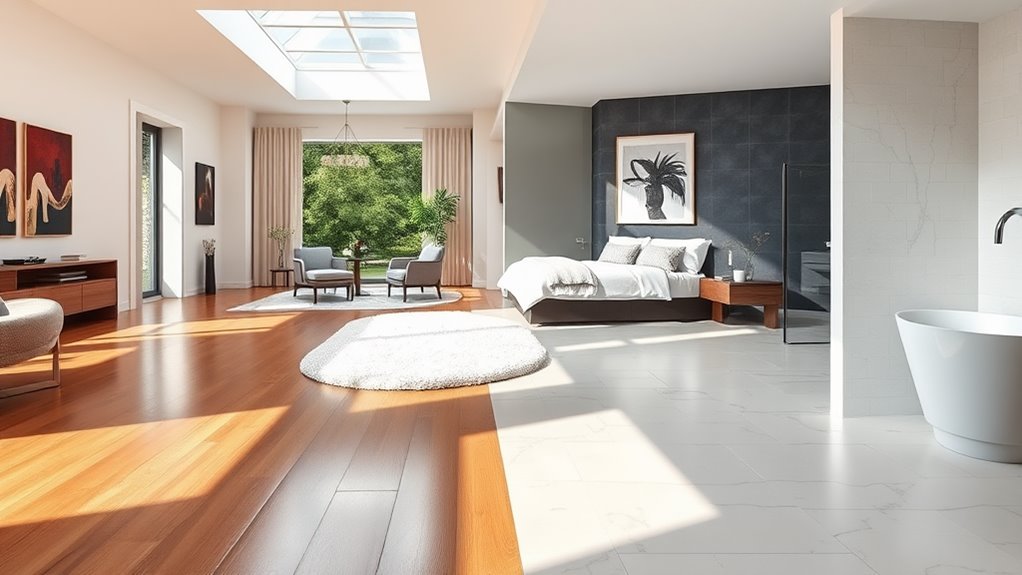
In selecting the best flooring options for every room in your home, you've got a lot to reflect upon. From the luxurious feel of exotic hardwoods in your living room to the durability and moisture resistance needed in your kitchen and bathroom, each space has its unique demands. In your bedroom, you'll want to prioritize comfort and ambiance, whereas your hallway and staircase require flooring that can withstand heavy foot traffic. As you explore the perfect flooring for each area, you'll discover how the right choice can enhance the entire atmosphere of your home – and we're about to show you how.
Living Room Luxury: Finding the Perfect Floor
What makes a living room truly luxurious? It's not just the elaborate furniture or the high-end decor – it's the floor that sets the tone for the entire space. You want a floor that exudes sophistication and refinement, something that makes you feel like royalty. That's where luxury materials come in. Hardwood floors made from exotic woods like walnut or ebony can add a touch of elegance to your living room. On the other hand, you could opt for high-end tile or stone floors that feature intricate designs and patterns. Whatever you choose, make sure it aligns with current design trends. You want your living room to look modern and stylish, not outdated and boring. By selecting the right flooring, you'll be able to create a space that's truly fit for a king – or queen.
Kitchen Flooring: Where Function Meets Fashion
As you move from the luxurious atmosphere of your living room to the heart of your home – the kitchen – your flooring needs undergo a significant shift. The kitchen is a high-traffic area that demands flooring that's both stylish and functional. You need a floor that can withstand spills, stains, and heavy foot traffic as it still complements your kitchen aesthetics.
When choosing kitchen flooring, consider the following:
- Durability: Can the flooring material withstand scratches, cracks, and fading?
- Moisture resistance: Will the flooring material be damaged by water spills or humidity?
- Easy maintenance: How easy is the flooring to clean and maintain?
- Slip resistance: Will the flooring provide traction to prevent slips and falls?
Bathroom Flooring: Water-Resistant Wonders
When choosing bathroom flooring, you're looking for surfaces that can withstand the humid environment and occasional water splashes. You need slip-resistant floor surfaces that provide traction, ensuring your safety as you get in and out of the shower or bathtub. Furthermore, you'll want durable water barriers that prevent water from seeping into the flooring material and causing damage.
Slip-Resistant Floor Surfaces
Slip-resistant floor surfaces are a necessity in bathrooms, where water and soap suds can create a hazardous environment. You need flooring that provides traction and stability, especially in areas around the shower, bathtub, and sink.
To guarantee maximum safety, consider the following slip-resistant floor surfaces:
- Textured ceramic or porcelain tiles with a matte finish
- Natural stone flooring with a honed or tumbled finish
- Rubber flooring with a textured or embossed pattern
- Vinyl flooring with a slip-resistant coating or embossing
These options not just provide crucial safety features but additionally offer a range of design options to complement your bathroom's style.
Durable Water Barriers
Because of water damage being a major concern in bathrooms, you need flooring that can withstand heavy moisture and humidity. You can't afford to take risks, so it's crucial to install durable water barriers to protect your floors. One effective solution is to apply waterproof coatings to your flooring material. These coatings create an impenetrable layer that prevents water from seeping into the flooring. Another option is to incorporate moisture barriers into your flooring system. These barriers are designed to absorb excess moisture, reducing the risk of water damage. By investing in durable water barriers, you'll have complete control over the safety and integrity of your bathroom floors.
Bedroom Flooring: Softening the Space
As you step into your bedroom, you're enveloped in a sense of serenity, and the right flooring can amplify this feeling of relaxation. You want a floor that's soft, calming, and inviting.
When choosing bedroom flooring, consider the following options:
- Plush carpet textures in neutral tones to create a calming atmosphere
- Hardwood floors in lighter bedroom colors to add warmth and coziness
- Soft, natural fibers like sisal or jute to bring in an organic feel
- Luxurious area rugs to add a touch of sophistication and comfort
These options will help you create a peaceful retreat that's perfect for unwinding after a long day. By selecting the right flooring, you'll be able to control the ambiance of your bedroom and make it a haven of relaxation.
Hallway and Staircase Flooring: Connecting the Dots
As you design your hallway and staircase flooring, you're likely thinking about two key factors: finding high-traffic area solutions that can withstand the wear and tear, and creating visual flow and continuity between different parts of your home. You want your flooring to seamlessly connect each room, creating a cohesive look that flows effortlessly. By choosing the right flooring for your hallway and staircase, you can create a beautiful, functional space that ties your entire home together.
High-Traffic Area Solutions
High-traffic areas like hallways and staircases demand flooring that can withstand the wear and tear of constant foot traffic, spills, and scratches. You need durable materials that can handle the daily grind. When choosing flooring for these areas, consider the following:
- Hardwood flooring: a popular choice for its durability and ease of maintenance.
- Porcelain or ceramic tiles: resistant to scratches and stains, making them perfect for high-traffic areas.
- Luxury vinyl tiles (LVT): highly resistant to scratches and moisture, with easy maintenance tips like regular sweeping and mopping.
- Commercial-grade carpet: a great option if you want a softer feel underfoot, with stain-resistant treatments and easy cleaning.
Visual Flow and Continuity
You've picked out the perfect flooring for your high-traffic areas, but now it's time to think about the bigger picture. Visual flow and continuity are essential in creating a cohesive look throughout your home. When choosing hallway and staircase flooring, consider how it will connect the dots between rooms. Aim for a consistent color palette to create a sense of harmony. Nonetheless, don't be afraid to introduce material contrast to add visual interest. For example, pairing hardwood stairs with carpeted hallways can create a beautiful contrast. By balancing consistency and contrast, you'll create a seamless visual flow that ties your entire home together.
Outdoor and Recreational Spaces: Flooring for Fun
When planning outdoor and recreational spaces, your flooring choice can make all the difference between a functional area and a fun, inviting oasis. You want a space that's both durable and stylish, able to withstand the elements during the time it is reflecting your personal taste.
Consider the following flooring options to create an outdoor space that's perfect for relaxation and entertainment:
- Patio tiles: available in a range of materials, including ceramic, porcelain, and natural stone, these tiles offer durability and slip-resistance
- Outdoor carpets: made from weather-resistant materials, these carpets add warmth and texture to your outdoor space
- Interlocking pavers: easy to install and maintain, these pavers create a beautiful, rustic look
- Decking: choose from wood, composite, or vinyl decking to create a comfortable, low-maintenance space
Frequently Asked Questions
Can I Install Flooring Myself or Should I Hire a Professional?
You're wondering if you can tackle flooring installation on your own or if it's better to bring in a pro. Although DIY installation can save you money, it requires significant time and effort. If you're comfortable with measuring, cutting, and laying flooring, go for it! Nevertheless, if you're short on time or unsure about the process, consider hiring a professional for a stress-free, high-quality result.
How Do I Clean and Maintain Different Types of Flooring?
Envision walking into a spotless room, the floor glistening like a mirror. You’re the one who made it happen! To keep your floors looking their best, you’ll need to develop cleaning tips and maintenance routines customized to your specific type of flooring. For hardwood, sweep daily and mop weekly. For tile, use a gentle cleaner and avoid abrasive scrubbers. And for carpet, vacuum regularly and deep clean seasonally. By following these simple rules, you’ll be able to enjoy your beautiful floors for years to come. If your floors start to lose their shine, don’t worry—there are easy ways to bring them back to life. For example, using the right polishing techniques can help restore and maintain hardwood floors, ensuring they stay vibrant and smooth. With regular care and attention, your floors will continue to enhance the beauty of your home for years to come.
Can I Use the Same Flooring Throughout My Entire Home?
You're considering using the same flooring throughout your entire home. Weigh the pros and cons: aesthetic consistency can create a sense of flow, but different rooms have unique needs. You might want softer flooring in bedrooms and durable options in high-traffic areas. Think about your lifestyle and prioritize functionality. If you do decide to use the same flooring, make certain it's versatile and suitable for various spaces. You're in control, so choose what works best for you and your home.
Are There Any Eco-Friendly and Sustainable Flooring Options Available?
You're looking for eco-friendly and sustainable flooring options that align with your values. You're in luck! Bamboo flooring is a highly renewable resource that's durable and resistant to moisture. Cork tiles are another great option, made from harvested bark that regenerates every 9 years. Both choices are not just good for the planet, but they're likewise stylish and comfortable underfoot. You can feel good about your flooring decision, knowing you're making a positive impact on the environment.
Can I Install Flooring Over Existing Flooring or Does It Need to Be Removed?
Visualize constructing a new layer on a Jenga tower – each piece must fit perfectly to avoid collapse. Regarding the installation of new flooring over existing flooring, you're fundamentally building on top of someone else's foundation. You can do it, but it's vital to verify the overlapping materials won't cause structural issues. Don't forget to reflect on the subfloor's condition and any necessary repairs before adding that new layer. Take control and assess the situation carefully to avoid a flooring fiasco.