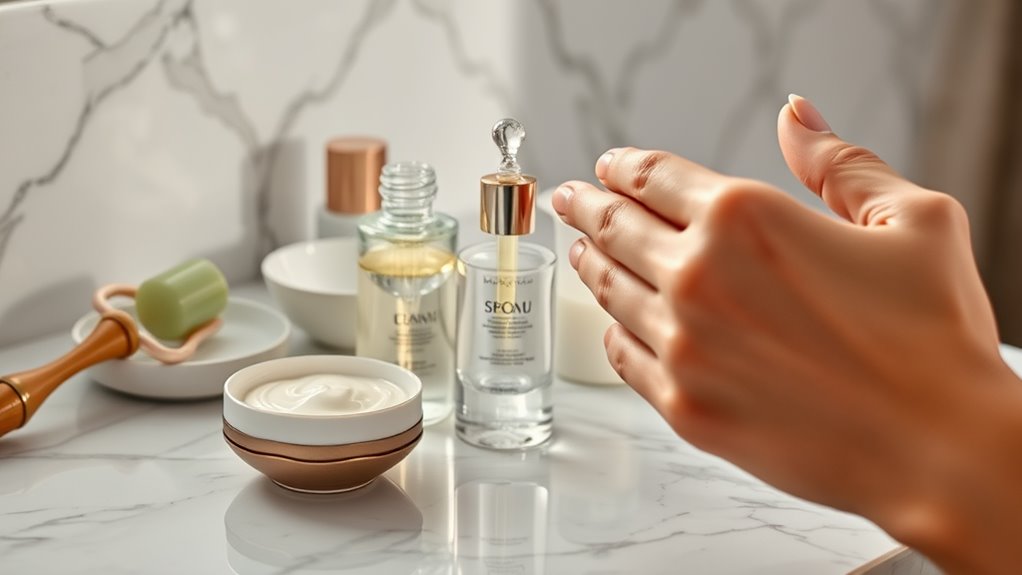
To apply skincare products for maximum effectiveness, start with a clean face, using a suitable cleanser for your skin type. Follow the correct order: cleanser, toner, serums, moisturizers, and sunscreen in the morning. Use a gentle patting motion for serums and apply spot treatments directly to blemishes. Don't forget to exfoliate 2-3 times a week and adjust your routine with the seasons. Want to unleash the full potential of your skincare? There's more to discover!
Understanding Your Skin Type
Grasping your skin type is crucial for choosing the right skincare products. To start, identify your skin type characteristics: is your skin oily, dry, combination, or sensitive? Each type has unique needs and responds differently to ingredients. For instance, oily skin might thrive on lightweight, oil-free formulas, whereas dry skin benefits from rich, hydrating creams.
Next, focus on identifying skin concerns. Are you dealing with acne, fine lines, or hyperpigmentation? Comprehending these concerns allows you to select targeted treatments that address your specific issues. For example, if you struggle with breakouts, look for products containing salicylic acid or benzoyl peroxide.
The Importance of Clean Skin
Once you've identified your skin type and specific concerns, maintaining clean skin becomes an vital step in your skincare routine. Clean skin sets the stage for ideal product absorption, maximizing your investment in innovative skincare solutions. The cleansing benefits go beyond mere aesthetics; they're significant for skin health.
By removing dirt, oil, and impurities, you prevent clogged pores and breakouts, creating a perfect canvas for your serums and moisturizers. Think of cleansing as a reset button for your skin—it revitalizes and prepares it to receive nutrients effectively.
Incorporating a gentle yet effective cleanser customized to your skin type improves your daily regimen. Whether it's a foaming cleanser or a creamy balm, the right choice can boost your skincare game. Remember, clean skin not just looks fresh but promotes a radiant glow, allowing your innovative products to work their magic. Prioritize cleanliness for stunning results!
The Correct Order of Application
Applying skincare products in the correct order can make all the difference in achieving ideal results. Start with lighter formulations and work your way to heavier ones, employing effective application techniques. Begin with your cleanser, followed by toners or essences that prep your skin. Next, apply serums packed with active ingredients; these are essential for targeting specific concerns.
Once your serums have absorbed, layer on moisturizers to hydrate and lock in moisture. If you use oils, apply them last to seal everything in. Sunscreen should be the final step in your morning routine, ensuring you protect your skin from harmful rays.
How to Apply Cleansers Effectively
Cleansing your skin properly sets the foundation for the rest of your skincare routine. To maximize the effectiveness of your cleansers, follow these innovative cleansing techniques customized to your product formulations:
- Choose the Right Cleanser: Select a formula that matches your skin type—gel for oily, cream for dry, or micellar water for sensitive skin.
- Double Cleanse: Start with an oil-based cleanser to break down makeup and impurities, followed by a water-based cleanser to remove any leftover residue.
- Use the Right Technique: Apply the cleanser with gentle, circular motions to stimulate circulation and guarantee thorough cleansing.
- Rinse with Lukewarm Water: Avoid hot water, as it can strip your skin's natural oils. Lukewarm water helps maintain balance.
Maximizing Toner Benefits
Even though many skip this step, incorporating toner into your skincare routine can considerably improve your skin's overall health. To maximize toner benefits, first, choose the right toner types based on your skin's needs—hydrating, exfoliating, or balancing. Each serves a unique purpose, so select wisely.
Next, focus on application techniques. Instead of just pouring toner onto a cotton pad, consider using your hands for a more direct application. This method allows the toner to absorb better and raises hydration. If you prefer a cotton pad, gently swipe it across your face without tugging at your skin.
Also, don't forget to apply toner immediately after cleansing as your skin is still damp. This timing increases absorption, setting the stage for subsequent products. Experiment with these methods to see which works best for you, and watch as your skin transforms for the better!
Applying Serums for Optimal Absorption
To achieve optimal absorption of serums, it's crucial to apply them on slightly damp skin right after toner. This helps lock in moisture and allows your skin to better absorb the active ingredients. Here are some innovative serum layering techniques to improve your routine:
- Start Light: Begin with lighter serums that have a watery consistency. They penetrate deeper and prepare your skin for heavier products.
- Target Treatment: Next, apply serums focused on specific concerns like brightening or anti-aging.
- Seal the Deal: Finish with thicker serums that provide a protective layer, ensuring your skin retains moisture.
- Pat, Don't Rub: Use your fingertips to gently pat the serum into your skin for optimal absorption, improving the ideal serum consistency.
The Role of Moisturizers
After layering your serums for maximum benefit, incorporating a moisturizer into your routine completes the hydration process. A good moisturizer locks in all those nutrients, ensuring your skin remains plump and radiant throughout the day. Comprehending different moisturizer types and application techniques can enhance your skincare game.
| Moisturizer Types | Application Techniques |
|---|---|
| Gel | Pat gently onto skin |
| Cream | Use upward strokes |
| Lotion | Apply in circular motions |
Choosing the right type is essential—gels hydrate without heaviness, creams provide rich nourishment, and lotions offer versatility. When applying, always remember to start with a small amount and build up as needed. This way, you can achieve a perfectly balanced finish without overwhelming your skin. By excelling in these elements, you'll maximize your skincare routine's effectiveness.
How to Use Sunscreen Properly
With regard to protecting your skin from harmful UV rays, applying sunscreen properly is crucial. To maximize the benefits of your broad spectrum sunscreen application, follow these innovative steps:
- Choose the Right SPF: Opt for a broad spectrum sunscreen with at least SPF 30 to shield against both UVA and UVB rays.
- Apply Generously: Use about a nickel-sized amount for your face and a shot glass for your body. Don't skimp; every inch counts!
- Timing Matters: Apply your sunscreen 15-30 minutes before sun exposure to allow it to absorb fully and create a protective layer.
- Reapply Regularly: Every two hours, or immediately after swimming or sweating, reapply to maintain effective protection.
Incorporating Exfoliants Into Your Routine
In terms of exfoliation, knowing the right type for your skin is key. You'll want to take into account how often you should use it to avoid irritation as you still reap the benefits. Let's explore the various types of exfoliants and find the perfect frequency for your routine.
Types of Exfoliants
Exfoliation is a key step in any effective skincare routine, helping to slough off dead skin cells and reveal a brighter complexion. Comprehending the types of exfoliants can enhance your regimen:
- Physical Exfoliants – These include scrubs and brushes that manually buff away dead skin.
- Chemical Exfoliants – These contain acids like AHAs or BHAs that dissolve dead cells without scrubbing.
- Enzymatic Exfoliants – Derived from fruits, they gently break down dead skin proteins for a smooth finish.
- Exfoliation Tips – Always patch test new products, and don't fall for exfoliation myths that suggest daily use; less is often more, especially for acne or aging skin.
Explore these techniques to maximize your exfoliation benefits, but remember, frequency is key!
Frequency of Use
Regularly incorporating exfoliants into your skincare routine can greatly improve your skin's texture and appearance. For best results, aim for a balanced frequency—typically two to three times a week. This allows your skin to rejuvenate without over-exfoliating, which can lead to irritation. Whether you choose a chemical or physical exfoliant, integrate it seamlessly into your daily regimen. After cleansing, apply your exfoliant before layering on serums and moisturizers. This product layering technique maximizes absorption and effectiveness, ensuring your skin reaps the full benefits. Remember, consistency is key, so find a schedule that works for you. By thoughtfully incorporating exfoliants, you'll reveal a brighter, smoother complexion as you keep your skin healthy and radiant.
Nighttime Routine: What to Apply and When
Your nighttime skincare routine is essential for achieving healthy skin, and knowing the right order of application can make all the difference. Focus on key ingredients that work best during your sleep, and pay attention to timing for maximum absorption. Let's break down what to use and when to apply it for ideal results.
Order of Application
A well-structured nighttime skincare routine can transform your complexion as you sleep. By perfecting the order of application, you can optimize product compatibility and improve your results through effective layering techniques. Here's a simple guide to follow:
- Cleanser: Start with a gentle cleanser to remove impurities and prep your skin.
- Toner: Apply toner to balance your skin's pH and allow better absorption of subsequent products.
- Serum: Use a targeted serum to address specific concerns, maximizing its impact with innovative formulations.
- Moisturizer: Finish with a rich moisturizer to lock in hydration and support skin repair overnight.
Key Ingredients to Use
Choosing the right ingredients for your nighttime skincare routine can make a significant difference in how your skin rejuvenates overnight. Focus on key ingredients that deliver results as you sleep. Retinol is a powerhouse, promoting cell turnover and reducing fine lines. Pair it with hyaluronic acid, an active compound that hydrates and plumps your skin. Don't overlook peptides, which support your skin's elasticity and firmness. Incorporate antioxidants like vitamin C to fight free radicals, enhancing your skin's overall health. Finally, consider niacinamide to even out skin tone and improve texture. By thoughtfully selecting these active compounds, you'll enhance your nighttime routine, ensuring your skin wakes up refreshed and revitalized each morning. Transform your skincare game with innovative, effective ingredients!
Timing for Maximum Absorption
With regard to maximizing the benefits of your nighttime skincare routine, timing plays a crucial role in how well your skin absorbs active ingredients. Utilizing effective timing techniques can improve absorption factors, ensuring your products work their magic. Here's a streamlined approach:
- Cleanse: Start with a gentle cleanser to remove impurities and prep your skin.
- Toner: Apply toner to balance pH and hydrate, allowing subsequent products to penetrate better.
- Serum: Use targeted serums next; let them absorb for a couple of minutes.
- Moisturizer: Seal in all that goodness with a nourishing moisturizer to lock moisture overnight.
Special Treatments: Spot Treatments and Masks
As your regular skincare routine lays the foundation for healthy skin, special treatments like spot treatments and masks can target specific concerns effectively. To maximize results, start with spot treatment techniques that directly address blemishes or dark spots. Apply a small amount to the affected area and let it absorb—don't rub it in completely. This allows the active ingredients to penetrate deeply and work their magic.
For masks, consider mask application tips that improve your experience. Begin with a clean face and apply an even layer, avoiding the eye area. Leave it on for the recommended time, allowing your skin to soak up the beneficial ingredients. Rinse thoroughly but gently to avoid irritation. By incorporating these innovative treatments into your routine, you'll not just address specific issues but also boost your overall skincare game, achieving glowing, resilient skin.
Adjusting Your Routine With the Seasons
As the seasons change, so should your skincare routine. You'll notice that your hydration needs vary, and certain ingredients may work better in different weather conditions. Adjusting your products accordingly can keep your skin healthy and balanced all year round.
Seasonal Ingredient Adjustments
Adjusting your skincare routine with the changing seasons is vital for maintaining healthy skin. Each season brings unique challenges and opportunities, especially if you have skin sensitivities. By incorporating seasonal ingredients, you can improve your regimen effectively. Here are four key adjustments to contemplate:
- Spring: Introduce lightweight serums with antioxidants like vitamin C to combat pollution.
- Summer: Use gel-based moisturizers with soothing aloe vera to cool and hydrate.
- Autumn: Opt for nourishing oils rich in omega fatty acids to restore moisture as temperatures drop.
- Winter: Embrace rich creams featuring shea butter to lock in hydration and protect against harsh winds.
Stay innovative and responsive to your skin's needs, and watch your complexion thrive year-round!
Hydration Needs Variation
With seasonal ingredient adjustments made, it's time to focus on how hydration needs shift throughout the year. Your skin climate changes with the seasons, affecting hydration levels and how products perform. In winter, opt for richer creams to combat dryness, whereas lighter gels or serums may suffice in summer's humidity. As the temperatures fluctuate, monitor your skin's response; it might crave more moisture or less, depending on the climate. Spring and fall often call for a balanced approach, combining both textures. Embrace innovative formulations that adapt to these shifts, incorporating ingredients like hyaluronic acid or glycerin for versatile hydration. Stay attuned to your skin's signals and tweak your routine to maintain that healthy glow all year round.
Frequently Asked Questions
Can I Mix Different Brands of Skincare Products Safely?
Yes, you can mix different brands of skincare products safely, but you've got to be mindful of brand compatibility and ingredient interactions. Start by checking the active ingredients in each product. If they complement each other, you're good to go! Nevertheless, avoid mixing potent ingredients like retinol with acids, as it could irritate your skin. Experiment with combinations to find what works best for you, keeping innovation and your skin's needs in mind.
How Long Should I Wait Between Applying Different Products?
When you're layering products, application timing matters. After applying a product, you should wait about 1-3 minutes before introducing the next layer. This allows each product to absorb effectively, maximizing its benefits. If you're using innovative formulas, they may require more time to penetrate the skin deeply. So, be patient and give each layer its moment before moving on. Your skin will thank you for the thoughtful approach!
Is It Necessary to Use a Separate Eye Cream?
Using a separate eye cream can feel unnecessary when your regular moisturizer seems sufficient, yet its benefits are hard to ignore. Your skin around the eyes is more sensitive, requiring targeted ingredients to combat puffiness and dark circles effectively. An eye cream's innovation often includes antioxidants and peptides that cater particularly to this delicate area. So, although it's not mandatory, investing in one could improve your skincare routine and address those unique concerns.
Can I Apply Skincare on Damp Skin?
You can absolutely apply skincare on damp skin! This innovative layering technique boosts product absorption, allowing your skin to soak up those beneficial ingredients more effectively. When your skin's slightly moist, it creates a favorable environment for hydration and helps seal in moisture. So, after cleansing, try applying your serums and moisturizers right away. You'll likely notice improved results in your skin's texture and overall health when you embrace this method!
What Should I Do if I Experience Irritation From Products?
If you're feeling the burn from irritation, it's time to take a step back. You might be dealing with ingredient sensitivity. Start by patch testing new products on a small area of skin before full application. This way, you can avoid putting your face in the line of fire. If irritation persists, consider consulting a dermatologist for customized advice. Remember, it's better to be safe than sorry regarding your skin!