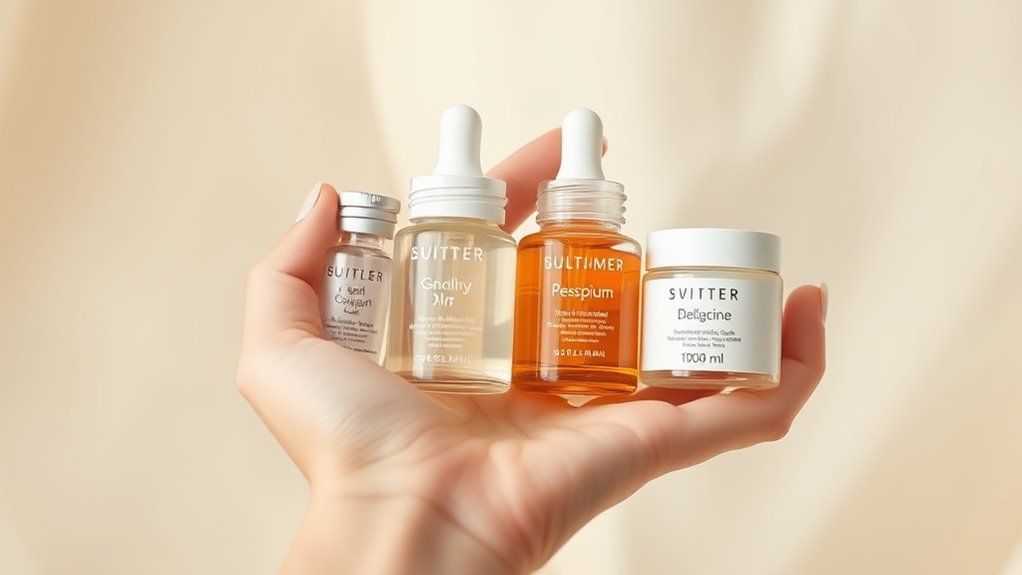
As you shift your skincare routine for each season, focus on combatting dryness and irritation in winter, balancing moisture and purifying your skin in spring, protecting against sun damage and oiliness in summer, and rehydrating and repairing your skin in fall. Adjust your cleansing routine, exfoliation strategies, and moisturizer choices to address seasonal skin concerns. By fine-tuning your products and treatments, you'll maintain ideal skin health year-round. Explore the specifics of seasonal skincare to reveal the mysteries of glowing, healthy-looking skin.
Winter Skincare: Combatting Dryness and Irritation
As winter sets in, your skin is likely to become drier and more prone to irritation. To combat this, focus on boosting your hydration levels by using a moisturizer that provides long-lasting hydration. Look for products containing hyaluronic acid, ceramides, or niacinamide, which help lock in moisture and support the skin's natural barrier function. Furthermore, prioritize barrier protection by using gentle, fragrance-free cleansers that won't strip your skin of its natural oils. Exfoliate carefully, as over-exfoliating can further dry out your skin. Instead, opt for a gentle, chemical-based exfoliant containing alpha-hydroxy acids (AHAs) or beta-hydroxy acids (BHAs) to help remove dead skin cells and unclog pores. By making these adjustments, you'll be better equipped to combat the dry, harsh effects of winter on your skin.
Spring Skincare: Balancing Moisture and Purifying the Skin
Now that the harsh winter months are behind you, you're likely noticing a shift in your skin's needs. As the weather warms up, your skin may still be dry from the cold winter air, but it's likewise more prone to oiliness and clogged pores. To balance moisture and purify your skin, update your routine with spring serums that target specific concerns, such as dark spots or fine lines. Look for hydration boosters containing hyaluronic acid, glycerin, or ceramides to lock in moisture without clogging pores. Exfoliate once or twice a week to remove dead skin cells and unclog pores, and don't forget to cleanse your skin thoroughly morning and night. By making these adjustments, you'll be on your way to radiant, healthy-looking skin that's ready to take on the new season.
Summer Skincare: Protecting Against Sun Damage and Oiliness
As you're enjoying the warmer weather, your skin is facing new challenges. Summer's intense UV rays and humidity can lead to sun damage, dark spots, and oily skin. To combat these issues, adjust your skincare routine to prioritize sun protection and oil control. Start by applying a broad-spectrum sunscreen with at least SPF 30 daily, reapplying every two hours or immediately after swimming or sweating. Look for lightweight, oil-free products labeled "non-comedogenic" or "oil-controlling" to help regulate your skin's natural moisture barrier. Exfoliate once or twice a week to remove dead skin cells and unclog pores, and consider using a clay-based mask to absorb excess oil. By making these tweaks, you'll be better equipped to tackle summer's skincare challenges and maintain healthy, radiant skin.
Fall Skincare: Rehydrating and Repairing the Skin
As you shift your skincare routine for fall, you'll want to focus on rehydrating and repairing your skin after a summer of sun exposure and heat. You'll need to moisturize dry skin deeply to lock in hydration and plump up fine lines and wrinkles. By exfoliating gently yet effectively, you'll remove dead skin cells and reveal a brighter, smoother complexion.
Moisturize Dry Skin Deeply
Dry air and harsh winds can leave your skin feeling parched and depleted, but a rich moisturizer can be a game-changer. To combat dryness, you need a moisturizer that provides deep hydration. Look for products containing nourishing ingredients like hyaluronic acid, ceramides, and glycerin, which help lock in moisture and support the skin's natural barrier function. Apply your moisturizer immediately after cleansing, as your skin is still damp, to maximize absorption. Don't be afraid to layer on a thicker moisturizer or overnight mask to provide an intense dose of hydration. By giving your skin the deep hydration it needs, you'll be rewarded with soft, supple, and radiant skin that's ready to take on the season.
Exfoliate Gently Yet Effectively
Now that you've got your skin deeply hydrated, it's time to tackle another key aspect of fall skincare: exfoliation. As the weather cools down, your skin may start to feel dull and flaky. Exfoliating gently yet effectively can help remove dead skin cells and unclog pores, revealing smoother, brighter skin.
To exfoliate like a pro, follow these tips:
- Adjust your exfoliation frequency: Scale back to 1-2 times a week to avoid stripping your skin of its natural oils.
- Opt for chemical exfoliation: Use alpha-hydroxy acids (AHAs) or beta-hydroxy acids (BHAs) to break down dead skin cells without physical scrubbing.
- Exfoliate in the direction of skin growth: Always exfoliate in an upward and outward motion to avoid causing micro-tearing.
Adjusting Your Cleansing Routine for the Seasons
As you adjust your cleansing routine for the seasons, you'll want to focus on gentle exfoliation methods that won't strip your skin of its natural oils. You'll additionally need to choose a cleanser that's customized to your skin type and the environmental conditions of the season. By making these adjustments, you'll be able to keep your skin balanced and healthy all year round.
Gentle Exfoliation Methods
As your skin is adapting to the changing seasons, it's essential to reassess your cleansing routine to guarantee it remains effective without stripping your skin of its natural oils. Gentle exfoliation methods can help remove dead skin cells and unclog pores, revealing smoother, brighter skin.
To exfoliate effectively, you can try the following methods:
- Chemical exfoliants: Alpha-hydroxy acids (AHAs) and beta-hydroxy acids (BHAs) help break down dead skin cells, revealing brighter skin.
- Physical exfoliants: Gentle scrubs or brushes remove dead skin cells, improving skin texture and tone.
- Enzyme exfoliants: Papain or bromelain-based products break down dead skin cells, leaving skin feeling soft and refreshed.
Customized Cleanser Choices
What's the ideal cleanser for your skin type, and how does it change with the seasons? As you shift your skincare routine, it's crucial to choose a cleanser that adapts to your skin's needs. In the winter, switch to a cream or oil cleanser to lock in moisture. During the summer, opt for a lightweight gel or micellar water to control oil production. If you have acne-prone skin, consider a clay or foam cleanser to purify pores. For dry or sensitive skin, a moisturizing cleanser is best. Exfoliating cleansers can be used year-round, but be gentle and adjust frequency according to your skin's sensitivity. By customizing your cleanser choice, you'll achieve a balanced, healthy-looking complexion that glows in every season.
Seasonal Exfoliation Strategies for Optimal Skin Health
When your skin is exposed to changing temperatures and humidity levels, it is vital to adapt your exfoliation strategy to maintain a healthy glow. Exfoliating helps remove dead skin cells, unclog pores, and improve skin texture, but it's important to adjust your exfoliation frequency and technique according to your skin type and the season.
Here are three seasonal exfoliation strategies to keep in mind:
- Winter: Reduce exfoliation frequency to once a week, as dry air can strip your skin of its natural oils. Opt for a gentle, chemical exfoliant containing alpha-hydroxy acids (AHAs) or beta-hydroxy acids (BHAs) to help break down dead skin cells.
- Spring and Fall: Exfoliate 2-3 times a week, using a combination of physical and chemical exfoliants to remove dead skin cells and unclog pores.
- Summer: Increase exfoliation frequency to 3-4 times a week, using a gentle physical exfoliant, such as a konjac sponge or a chemical exfoliant containing enzymes, to remove dead skin cells and control shine.
Moisturizing for the Seasons: Choosing the Right Formula
How do you adapt your moisturizer to the changing seasons? As the weather shifts, your skin's hydration needs change, and your moisturizer should too. In the winter, you'll want a richer, more emollient formula to combat dry air and harsh winds. Look for moisturizer ingredients like hyaluronic acid, ceramides, and niacinamide that lock in moisture and support the skin's natural barrier. In the summer, switch to a lightweight, oil-free moisturizer that won't clog pores or exacerbate oiliness. For spring and fall, a balanced, water-light moisturizer will provide seasonal hydration without overwhelming your skin. By adjusting your moisturizer to the season, you'll guarantee your skin stays healthy, plump, and radiant all year round.
Targeting Seasonal Skin Concerns With Masks and Treatments
Beyond moisturizing, you're likely to need additional support to tackle seasonal skin concerns. That's where masks and treatments come in – they provide an extra layer of defense against environmental stressors and seasonal changes. To get the most out of your skincare routine, you'll want to adjust your mask and treatment frequency based on the season.
Here are some seasonal mask benefits and treatment frequency adjustments to keep in mind:
- Summer: Look for masks that hydrate and soothe sun-kissed skin, and increase your exfoliating treatment frequency to combat blackheads and whiteheads.
- Winter: Opt for nourishing masks that provide an intense dose of moisture, and reduce your exfoliating treatment frequency to avoid stripping your skin of its natural oils.
- Spring and Fall: Use masks that balance and refresh your skin, and maintain a consistent treatment frequency to address any lingering skin concerns from the previous season.
Fine-Tuning Your Skincare Products for Each Season
As you adjust your mask and treatment frequency, it is essential to fine-tune your skincare products to address seasonal skin concerns. You'll want to make seasonal ingredient swaps to cater to your skin's changing needs. For instance, during winter, look for products rich in moisturizing ingredients like hyaluronic acid and ceramides to combat dryness. In summer, switch to lightweight, oil-free products that won't clog pores. Furthermore, make product texture adjustments to guarantee your products work in harmony with your skin. Thicker, richer textures are ideal for winter, whereas lightweight, watery textures are better suited for summer. By fine-tuning your products, you'll be able to tackle seasonal skin concerns head-on and maintain healthy, glowing skin all year round.
Frequently Asked Questions
Can I Use the Same Skincare Products Year-Round?
You might think you can use the same skincare products year-round, but think again! Although your favorite products might deliver year-round efficacy, their compatibility with your skin can change with the seasons. As temperatures and humidity levels shift, your skin's needs evolve, and what worked in the summer might not cut it in the winter. It's time to reassess your routine and make some smart swaps to guarantee your skin stays happy and healthy all year long!
How Often Should I Change My Skincare Routine?
You’ve probably wondered, “Do I really need to switch up my skincare routine? ” The theory is that your skin adapts to products over time, making them less effective. But is it true? As you evaluate your skincare frequency, ask yourself: Are you seeing the same results as when you first started using your products? If not, it might be time to reassess your routine. Consider changing your products or frequency every 2-3 months to keep your skin on its toes and guarantee ideal results. Additionally, sticking to the same regimen for too long without considering changes in climate, age, or skin needs can lead to common skincare routine mistakes like over-exfoliation or inadequate hydration. Evaluating your products periodically ensures you’re addressing your skin’s current concerns rather than relying on outdated habits. By staying attentive to your skin’s responses, you can adjust your routine for healthier, more radiant results.
Do Seasonal Skincare Changes Apply to Sensitive Skin?
You're wondering if seasonal skincare changes apply to sensitive skin. The answer is yes, but with caution! Sensitive skin requires gentle, thoughtful seasonal adjustments to avoid irritation. As you shift your routine, prioritize gentle, fragrance-free products and introduce new products slowly. Don't hesitate to consult a dermatologist if you're unsure. By making informed, incremental changes, you'll find a balance that works for your sensitive skin, regardless of the season.
Can I Skip Certain Steps in My Seasonal Skincare Routine?
Savvy skin savers, don't be tempted to skip seasonal adaptations in your routine. Although it's okay to customize, skipping crucial steps can sabotage your skin's harmony. Identify the must-haves for your skin type, and prioritize them in each seasonal shift. Don't compromise on cleansing, moisturizing, and sun protection – they're non-negotiables. You can, nonetheless, adjust exfoliation, masks, or serums based on your skin's changing needs. By streamlining your routine, you'll find a perfect balance that keeps your skin thriving all year round.
Do Seasonal Skincare Changes Affect Skin Conditions Like Acne?
You're probably wondering if tweaking your skincare routine with the seasons will impact skin conditions like acne. The answer is yes! Seasonal humidity can be a major acne trigger, and adjusting your routine accordingly can make a big difference. For instance, during humid summer months, you may need to focus on oil-control and exfoliation to combat clogged pores. By making these seasonal adjustments, you can reduce acne triggers and enjoy healthier, more balanced skin.