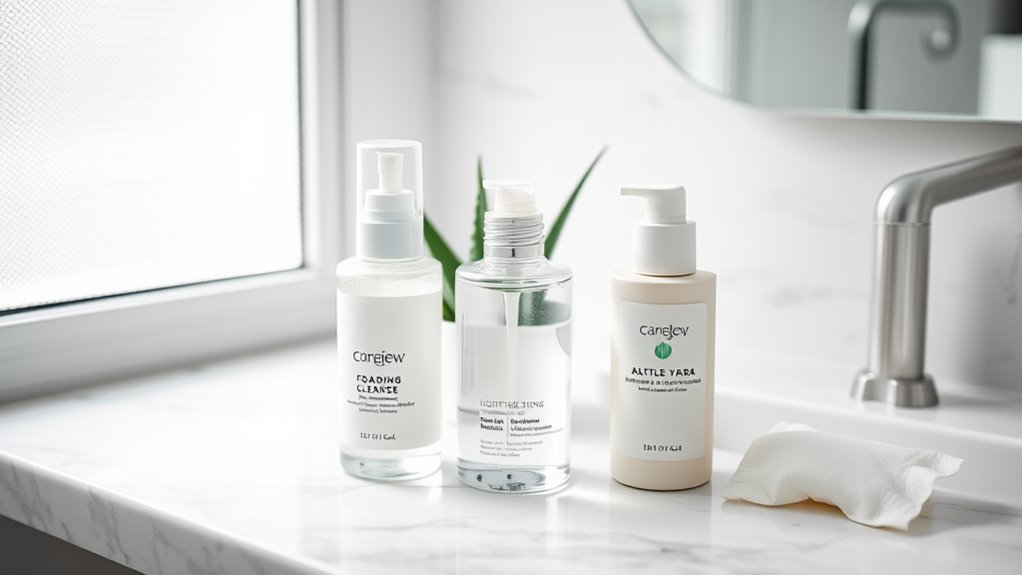
To combat oily skin without over-drying, focus on gentle cleansing with salicylic acid or tea tree oil. Incorporate regular exfoliation using mild chemical exfoliants to remove dead skin without irritation. Choose lightweight, oil-free moisturizers to keep your skin hydrated and avoid clogging pores. Clay masks can absorb excess oil during maintaining moisture balance. Don't forget to use serums strategically to regulate oil production. Looking for more effective tips to refine your routine? Keep reading!
Understanding Oily Skin and Its Causes
Oily skin can be a frustrating condition that many people deal with, and comprehending its causes is key to managing it effectively. One major contributor is hormonal influences. Fluctuations during puberty, menstruation, or pregnancy can ramp up oil production, leaving your skin shiny and prone to breakouts. It is crucial to recognize how your body's natural rhythms affect your skin.
Environmental factors likewise play a significant role. Pollution, humidity, and even the products you use can impact oil levels. For instance, living in a humid climate can exacerbate oiliness, whereas certain skincare products may clog pores and trigger excess sebum production.
The Importance of a Gentle Cleanser
Finding the right cleanser is crucial for managing oily skin effectively. You want to embrace gentle cleansing that won't strip your skin of its natural moisture. Harsh cleansers can disrupt your skin barrier, leading to irritation and increased oil production. Instead, opt for innovative formulas that combine effective oil control with soothing ingredients.
Look for cleansers containing salicylic acid or tea tree oil, which can help break down excess oil without compromising your skin's health. A gentle cleanser should feel invigorating, not tight or dry after use.
Incorporating a gentle cleansing routine helps maintain the balance your skin craves. This approach not just clears impurities but also supports your skin barrier, promoting overall skin liveliness. By prioritizing gentle cleansing, you're taking a significant step toward achieving that coveted, radiant complexion without the unwanted shine.
Incorporating Exfoliation Into Your Routine
Exfoliation is a key step in managing oily skin, as it helps remove dead skin cells and unclogs pores. When choosing your exfoliants, opt for gentle formulas that won't irritate your skin. Incorporating regular exfoliation into your routine can lead to a brighter, clearer complexion.
Benefits of Regular Exfoliation
Even though managing oily skin can feel like a constant battle, incorporating regular exfoliation into your routine can make a significant difference. Regular exfoliation helps maintain a balanced complexion by removing dead skin cells and preventing clogged pores. Here are three potent benefits you'll experience:
- Clearer Skin: Exfoliating with chemical exfoliants like AHAs or BHAs can effectively reduce breakouts and improve your skin's texture.
- Improved Absorption: With physical exfoliants, you're promoting better absorption of your skincare products, allowing them to penetrate deeper and work more effectively.
- Radiant Glow: Regular exfoliation reveals a fresher layer of skin, giving you that coveted, healthy glow.
Choosing Gentle Exfoliants
In the sphere of managing oily skin, choosing gentle exfoliants is vital for maintaining a healthy balance without causing irritation. Opt for gentle scrubs that effectively slough off dead skin cells during being kind to your complexion. Look for formulas containing natural ingredients like oatmeal or rice powder, which provide a delicate touch. Enzyme exfoliants are another innovative option; they utilize the strength of fruit enzymes to dissolve impurities and unclog pores without the abrasion of traditional scrubs. By incorporating these gentle exfoliants into your routine, you can achieve a refreshed, radiant glow without compromising your skin's integrity. Remember, consistency is key—exfoliate 1-2 times a week for best results. Your skin will thank you!
Choosing the Right Moisturizer for Oily Skin
In terms of moisturizing oily skin, lightweight formulas are key. You want non-comedogenic ingredients that won't clog your pores during the process of still offering hydration without that greasy feel. Choosing the right moisturizer can make all the difference in keeping your skin balanced and healthy.
Lightweight Formulas Matter
Choosing the right moisturizer for oily skin is crucial, since the wrong product can exacerbate shine and breakouts. You want to embrace innovation with lightweight moisturizers that hydrate without weighing you down. Here are three key considerations when selecting your moisturizer:
- Oil-Free Formulas: Look for products that are particularly labeled oil-free; they hydrate without adding extra shine.
- Gel-Based Options: These lightweight textures absorb quickly, giving your skin a revitalizing feel without clogging pores.
- Mattifying Ingredients: Seek out ingredients that help control oil production, keeping your complexion balanced throughout the day.
Pair these moisturizers with oil-free foundations for a flawless look that lasts. With the right choices, you can conquer oily skin and feel confident every day!
Non-Comedogenic Ingredients Essential
Finding the right moisturizer for oily skin means prioritizing non-comedogenic ingredients that won't clog your pores. Opt for lightweight moisturizers infused with non-comedogenic oils like jojoba or squalane. These innovative options hydrate without adding excess grease, keeping your skin balanced and fresh. Look for formulations that absorb quickly and provide crucial hydration without weighing you down. Ingredients like hyaluronic acid are likewise great for maintaining moisture levels without contributing to oiliness. Avoid heavy creams that can lead to breakouts—think sleek and breathable instead. By selecting the right non-comedogenic products, you'll not just combat oily skin but also improve your overall complexion with a healthy, luminous glow. Embrace these influential ingredients for a breakthrough in your skincare routine!
Hydration Without Greasiness
Although oily skin can be a challenge, you can achieve effective hydration without the excess shine by selecting the right moisturizer. Look for light, oil-free moisturizers that deliver moisture without clogging your pores. Consider incorporating hydrating mists to rejuvenate your skin throughout the day without adding heaviness.
Here are three innovative options to explore:
- Gel-based moisturizers – These are lightweight and absorb quickly, providing hydration without greasiness.
- Hydrating mists – Use them as a revitalizing boost to keep your skin feeling dewy without the shine.
- Oil-free moisturizers with hyaluronic acid – They help lock in moisture as they control oil production.
Embrace these options and enjoy balanced, hydrated skin!
Utilizing Clay Masks for Oil Control
When you struggle with oily skin, incorporating clay masks into your skincare routine can be a transformative solution. Clay properties, such as their natural oil-absorbing abilities, effectively draw out excess sebum and impurities without stripping your skin of crucial moisture. Selecting a high-quality clay mask customized to your skin type is key; bentonite or kaolin clay are excellent options.
For best results, focus on proper mask application. Apply a thin layer evenly across your face, avoiding the delicate eye area. Let it sit for about 10-15 minutes, allowing the clay to work its magic, and then rinse with lukewarm water. You'll notice your skin feels refreshed and balanced. To innovate your routine further, consider using clay masks once or twice a week. This regularity helps maintain oil control while ensuring your skin stays hydrated and lively, making it a game-changer in your fight against oily skin.
The Role of Serums in Balancing Oil Production
To effectively combat oily skin, incorporating serums into your skincare routine can play a crucial role in balancing oil production. The right serum ingredients can help regulate sebum levels without over-drying your skin. Look for formulations containing niacinamide, salicylic acid, or hyaluronic acid, which offer hydration as they control shine.
Here are three innovative application techniques to maximize serum effectiveness:
- Layering: Apply your serum after cleansing and toning, locking in moisture effectively.
- Patting: Use your fingertips to gently pat the serum into your skin, enhancing absorption.
- Mixing: Combine serums for a customized solution that targets multiple concerns.
Tips for Maintaining a Healthy Diet for Better Skin
While many factors influence skin health, maintaining a healthy diet can greatly improve your complexion. To combat oily skin, focus on incorporating nutrient-rich foods into your meals. Think lively fruits, leafy greens, and whole grains that provide crucial vitamins and antioxidants. These foods help reduce inflammation and promote skin repair.
Don't forget about hydration strategies. Drinking plenty of water keeps your skin plump and helps regulate oil production. You can additionally include hydrating foods like cucumbers and watermelon to boost your fluid intake.
Limit sugary and processed foods, as they can trigger breakouts and exacerbate oiliness. Instead, opt for healthy fats like avocados and nuts, which nourish your skin from within.
Frequently Asked Questions
Can Diet Alone Completely Eliminate Oily Skin?
You might think a magical diet could zap oily skin into oblivion, but that's not how it works. Although dietary changes can greatly improve your skin's appearance, they won't completely eliminate oiliness. Focus on incorporating healthy fats and hydrating foods to help balance skin hydration. Pair your diet with a consistent skincare routine for the best results. Embrace innovation by exploring new ingredients that support your path to healthier, less oily skin.
How Often Should I Wash My Face?
You should wash your face twice a day—once in the morning and once before bed. This face washing frequency helps remove excess oil and impurities without stripping your skin. Use gentle cleansing techniques, like circular motions with a mild cleanser, to avoid irritation. Experiment with different products to find what works best for you, and always listen to your skin's needs. Consistency will keep your complexion fresh and balanced!
Are There Specific Ingredients to Avoid?
Steering through skincare is like walking a tightrope; you need balance. To keep oily skin in check, steer clear of harsh alcohols and heavy oils that clog pores. Instead, look for oil-absorbing ingredients like clay or salicylic acid, and choose non-comedogenic products that won't suffocate your skin. Embracing these innovative formulations can help you achieve that perfect equilibrium without sacrificing moisture or inviting irritation. Your skin deserves the best—make it count!
Can Hormonal Changes Affect Oily Skin?
Yes, hormonal fluctuations can definitely affect your oily skin. When your hormones shift, especially during puberty, menstruation, or pregnancy, your skin's oil production can spike, leading to increased shine and breakouts. To manage this, focus on innovative skin care products that balance oil without stripping moisture. Look for ingredients like salicylic acid or niacinamide that help regulate oil levels during keeping your skin hydrated and healthy. Adapting your routine can make a big difference!
Is Oily Skin Common in All Skin Types?
Oily skin isn't exclusive to any specific skin type; its prevalence spans across various skin types. You might notice that even those with dry or combination skin can experience oiliness at times. Skin type variations play an essential role in how your skin behaves. Embracing innovative skincare solutions customized to your unique needs can help you manage that oiliness effectively, ensuring your skin stays balanced and healthy without feeling stripped or dry.