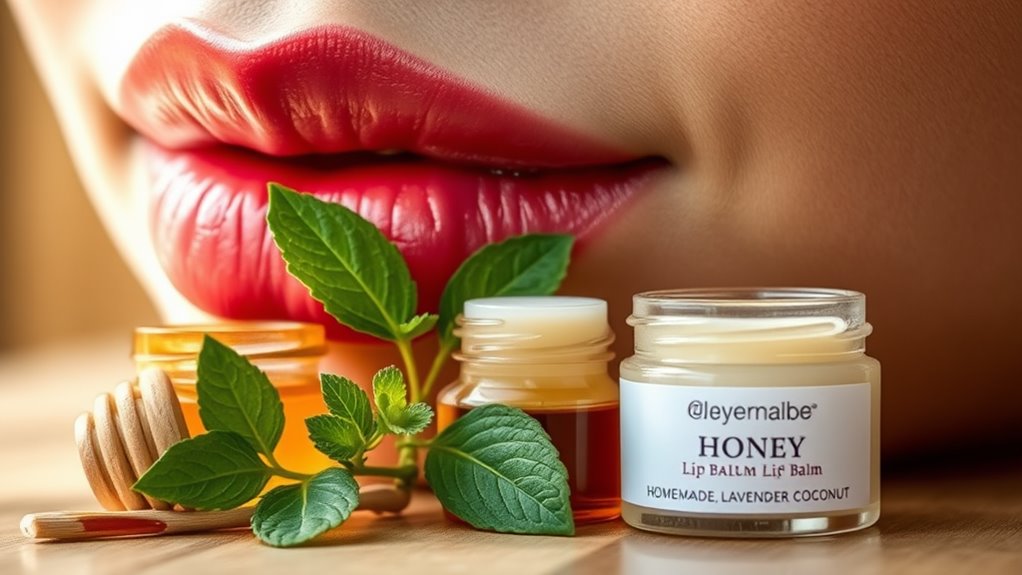
To prevent and treat chapped lips, stay hydrated by drinking plenty of water and eating hydrating foods. Choose a lip balm with ingredients like beeswax, shea butter, or coconut oil for moisture and protection. Use natural remedies like honey or aloe vera, and regularly exfoliate with sugar scrubs to remove dead skin. Protect your lips from harsh weather and know when to seek professional help if issues persist. There's even more you can do to keep your lips healthy!
Understanding the Causes of Chapped Lips
When you think about chapped lips, it's easy to overlook the various factors that contribute to this common issue. One major culprit is a compromised skin barrier. Environmental elements like cold temperatures, wind, and low humidity can strip away moisture, leaving your lips vulnerable. You might likewise be unintentionally contributing to the problem through habits like licking your lips or using harsh products that irritate sensitive skin.
To innovate your lip care routine, consider incorporating balms with natural ingredients that restore and protect your skin barrier. Look for options with beeswax, shea butter, or vitamin E, which can help seal in moisture and provide a protective layer. Furthermore, be mindful of your diet; certain deficiencies can exacerbate dryness. By comprehending these causes, you can take proactive steps to keep your lips healthy and hydrated, ensuring they stay soft and supple.
The Importance of Hydration
Staying hydrated is essential for keeping your lips healthy and preventing them from becoming chapped. When you drink enough water and consume nutrient-rich foods, you support your body's ability to maintain moisture levels. Furthermore, being mindful of humidity levels can help you keep your lips soft and smooth.
Drink Enough Water
How often do you think about the role hydration plays in keeping your lips healthy? Staying properly hydrated is essential for lip hydration. When you don't drink enough water, your lips can become dry and chapped. It's not just about feeling thirsty; your body needs adequate water intake to maintain moisture levels. Dehydration can lead to a range of issues, including cracked lips that can be painful and unsightly. By prioritizing hydration, you're not just benefiting your lips but your overall skin health too. Aim for at least eight glasses of water daily, and consider adding hydrating foods like cucumbers and oranges to your diet. Your lips will thank you with a soft, supple appearance that radiates health.
Humidity Levels Matter
Though you might think of hydration primarily regarding water intake, humidity levels in your environment similarly play a crucial role in keeping your lips healthy. When indoor air becomes too dry, it can lead to chapped lips, as moisture evaporates quickly. Implementing humidity control measures, like using a humidifier, can make a world of difference. By maintaining ideal humidity levels, you create a barrier against dry air that robs your lips of moisture. Furthermore, consider placing plants around your living space; they naturally increase humidity and improve your indoor air quality. Remember, a comfortable humidity level not just soothes your skin but promotes overall well-being. So, keep your environment hydrated, and your lips will thank you!
Nutrient-Rich Foods
Nutrient-rich foods play a crucial role in keeping your lips hydrated and healthy. Incorporating colorful fruits and vegetables into your diet can transform your hydration game. Think avocados, berries, and leafy greens—they're fantastic nutrient sources loaded with vitamins. Vitamin E, for instance, promotes skin repair and moisture retention, whereas vitamin C boosts collagen production, ensuring your lips stay plump and youthful. Omega-3 fatty acids found in fatty fish and flaxseeds additionally improve skin hydration, reducing dryness. Don't forget to sip on water-rich foods like cucumbers and watermelon, too! By focusing on these vitamin benefits, you'll not only nourish your body but also secure the ultimate defense against chapped lips. Embrace these innovative food choices for lush, healthy lips!
Choosing the Right Lip Balm
When you're choosing the right lip balm, it's essential to evaluate the ingredients that will best nourish and protect your lips. Look for balms that incorporate innovative natural ingredients, as they often provide superior hydration and healing properties. Here are three key balm ingredients to take into account:
- Shea Butter: Rich in vitamins A and E, it deeply moisturizes and soothes dry lips.
- Beeswax: Acts as a protective barrier, locking in moisture and preventing further chapping.
- Coconut Oil: Known for its antibacterial properties, it hydrates and promotes healing.
Natural Remedies for Chapped Lips
If you're looking for effective solutions to soothe chapped lips, natural remedies can be a revolutionary solution. Two standout options are honey and coconut oil. Honey benefits your lips by providing natural hydration and acting as an antibacterial agent, whereas coconut oil locks in moisture and promotes healing.
Here's a quick comparison of these remedies:
| Remedy | Benefits | How to Use |
|---|---|---|
| Honey | Hydrates, antibacterial | Apply directly, leave on overnight |
| Coconut Oil | Moisturizes, heals | Rub a small amount onto lips as needed |
| Olive Oil | Nourishes, softens | Use as a balm throughout the day |
| Aloe Vera | Soothes, repairs | Apply gel directly from the leaf |
| Beeswax | Protects, seals moisture in | Use as a base for DIY balms |
Incorporating these natural remedies into your routine will keep your lips soft and healthy!
Exfoliating Your Lips
Exfoliating your lips is crucial for keeping them smooth and healthy. You can choose natural methods, like using sugar or honey, or opt for store-bought exfoliating products designed particularly for lips. Whichever you prefer, regular exfoliation helps remove dead skin and prevents chapping.
Natural Exfoliation Methods
Although many people overlook their lips in skincare routines, natural exfoliation methods can effectively keep them smooth and healthy. You don't need elaborate products; just a few simple ingredients from your kitchen can work wonders. Try these innovative methods:
- Sugar Scrub: Mix equal parts of sugar and honey for a gentle scrub that hydrates as it exfoliates.
- Coffee Grounds: Combine used coffee grounds with a little coconut oil for a revitalizing treatment that boosts circulation.
- Olive Oil and Brown Sugar: Blend olive oil with brown sugar for a nourishing scrub that leaves your lips feeling soft and rejuvenated.
Incorporating these natural exfoliation methods into your routine can transform your lips into a soft, supple canvas!
Store-Bought Exfoliating Products
Even though natural methods can be effective, store-bought exfoliating products offer convenience and targeted benefits for your lips. Lip scrubs come in various flavors and formulations, designed to gently remove dead skin as well as hydrating your lips. Look for scrubs that contain nourishing ingredients like coconut oil or shea butter, which improve moisture and softness.
Exfoliating balms are another innovative option, combining the exfoliation process with hydration. These balms typically provide a smoother application and often include vitamins for extra care. By incorporating these products into your lip care routine, you'll not just banish chapped lips but likewise enjoy a luscious, revitalized smile. Choose your favorite, and pamper your lips to keep them healthy and kissably smooth.
Protecting Your Lips From the Elements
When you venture outdoors, protecting your lips from harsh weather is vital for maintaining their health. Weather considerations can easily lead to chapped lips if you're not prepared. Here are three innovative strategies for effective lip protection:
- Choose a Quality Lip Balm: Look for balms with natural ingredients like beeswax or shea butter. They create a barrier against wind and cold.
- Use SPF Lip Products: During sunny days, apply lip balms with SPF to shield your lips from UV rays. This prevents sunburn and long-term damage.
- Stay Hydrated: Drink plenty of water to keep your body and lips hydrated. Hydration from the inside out is fundamental for lip health.
When to Seek Professional Help
How can you tell when it's time to seek professional help for your chapped lips? If your lips remain cracked and painful in spite of trying over-the-counter treatments, it might be time to consult a specialist in lip dermatology. Persistent issues could signal an underlying condition, like eczema or a fungal infection, that requires customized treatment options.
You should likewise seek help if you notice swelling, bleeding, or signs of infection. These symptoms might indicate a more serious problem that could benefit from professional intervention. A dermatologist can provide innovative solutions and prescriptions that go beyond typical lip balms, ensuring your lips heal effectively and quickly.
Don't hesitate to reach out for expert advice when home remedies fail. Your lips deserve the best care, and professional insight can make a significant difference in achieving and maintaining healthy lips.
Frequently Asked Questions
Can Certain Foods Contribute to Chapped Lips?
Yes, certain foods can definitely contribute to chapped lips. Spicy foods can irritate your lips, causing inflammation and discomfort. Similarly, acidic fruits like citrus can strip away moisture, leading to dryness. If you notice your lips getting chapped after eating these foods, it might be time to rethink your diet. Staying hydrated and balancing your meals can help keep your lips smooth and healthy. Pay attention to your body's signals for the best results.
Is It Safe to Use Expired Lip Balm?
Oh sure, using expired lip balm sounds like a thrilling adventure in courage! But let's get real—expired ingredients might not be your best friends. Although it's unlikely you'll face a dramatic crisis, you could experience reduced effectiveness or even irritation. So, if your lip balm's past its prime and you're seeking lip balm safety, it's probably time to toss it and embrace a fresh tube. Your lips will thank you for the innovation!
How Often Should I Reapply Lip Balm?
You should reapply lip balm frequently to keep your lips hydrated. Aim for every two to three hours, especially in dry or windy conditions. Experiment with different moisturizing techniques, like layering your balm over a hydrating serum for added protection. If you're outdoors or consuming hot beverages, don't hesitate to reapply more often. Staying proactive with lip balm frequency can make a significant difference in maintaining soft, supple lips.
Can Allergies Cause Chapped Lips?
Yes, allergies can definitely cause chapped lips. When you're exposed to allergy triggers—like certain foods, pollen, or environmental irritants—your lips may become dry and cracked. It's crucial to maintain proper lip care during allergy season. You might want to contemplate using hypoallergenic lip products and staying hydrated. By addressing your allergies and keeping up with innovative lip care routines, you can keep your lips smooth and healthy, even during challenging times.
Are There Any Medications That Lead to Chapped Lips?
Envision your lips, once smooth as silk, now feeling like parched desert sand. Certain medications can certainly lead to chapped lips, often through dehydration connections. Medications like retinoids or some antihistamines can reduce moisture levels in your body, leaving your lips vulnerable. When you're aware of these medication effects, you can take proactive steps to combat dryness. It's crucial to balance your treatment plan with hydration to keep your lips soft and supple.