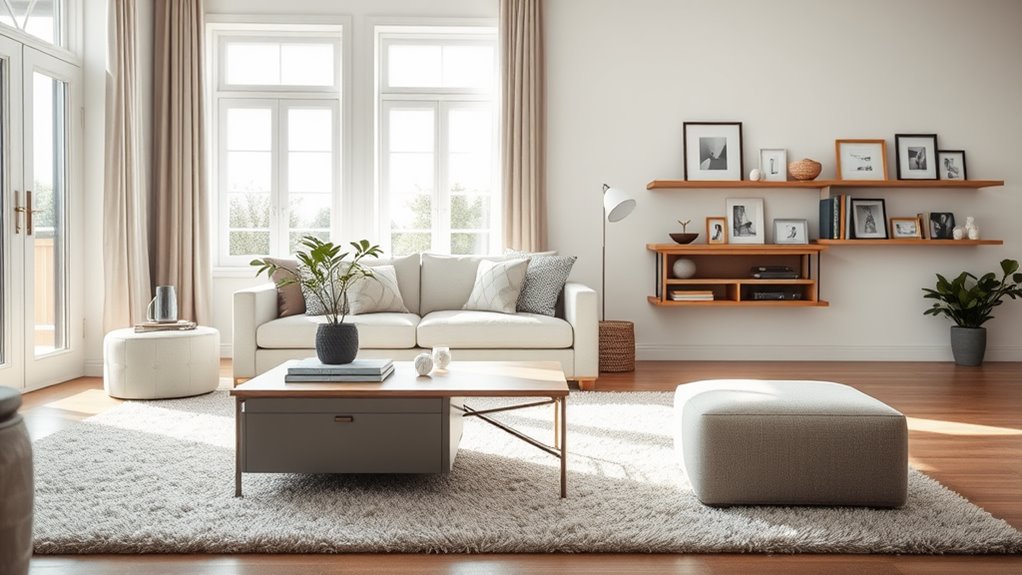
To reduce clutter in your high-traffic home, establish a daily decluttering routine and designate a landing zone for shoes and bags. Utilize multi-functional furniture to maximize space and implement a "One In, One Out" policy to keep unnecessary items at bay. Create a family command center to organize important info and limit paper clutter with digital tools. Regular sorting and donating, along with visible toy storage, can likewise help. There's a lot more you can learn to transform your space!
Establish a Daily Decluttering Routine
Although life can get hectic, establishing a daily decluttering routine helps you maintain order in your high-traffic home. By committing to daily check-ins, you can tackle clutter before it spirals out of control. Set aside just 10-15 minutes each day to focus on specific areas or items that tend to collect mess. This proactive approach minimizes decluttering challenges and reinforces a sense of control over your space.
As you engage in these daily rituals, you'll create a habit that not only keeps clutter at bay but also encourages a more serene environment. When you consistently evaluate what you truly need, you'll find it easier to make decisions about what to keep or discard. Remember, it's about progress, not perfection. With each daily check-in, you're taking a significant step toward mastering your home's order, making your busy life feel more manageable and organized.
Designate a Landing Zone for Shoes and Bags
To keep your high-traffic home organized, creating a designated landing zone for shoes and bags can be a game-changer. By having a specific area for these items, you'll eliminate the chaos of scattered shoes and bags cluttering your entrance. Start by selecting a spot near your entryway that's easily accessible. Invest in stylish shoe storage that complements your décor—think benches with hidden compartments or open shelving for quick access.
Next, install bag hooks on the wall to hang backpacks, purses, or totes. This not only keeps bags off the floor but likewise makes them easy to grab when you're rushing out the door. By designating this space, you'll create a sense of order and control in your home, ensuring that everything has its place. With a little effort, your landing zone will streamline your daily routine and maintain a clutter-free environment.
Utilize Multi-Functional Furniture
In a lively home, incorporating multi-functional furniture can greatly improve your space during the process of reducing clutter. By choosing pieces that serve multiple purposes, you'll regain control over your environment. Here are four crucial items to contemplate:
- Convertible sofas: Perfect for unexpected guests, they transform from a comfortable couch into a cozy bed.
- Storage ottomans: These versatile pieces provide seating as they discreetly store blankets, toys, or magazines.
- Expandable dining tables: They adapt to your needs, offering extra space during gatherings without occupying your living area permanently.
- Bookshelves with built-in desks: They create a workspace that can be hidden away, keeping your home office clutter-free.
Implement a "One In, One Out" Policy
To keep clutter at bay, you should adopt a "One In, One Out" policy. This means that for every new item you bring into your home, one must leave, helping you establish clear guidelines. Involving your family in this practice can make it easier to regularly assess what you really need.
Establish Clear Guidelines
Implementing a "One In, One Out" policy can drastically simplify your home's organization. To effectively establish clear guidelines, consider these guideline examples:
- Assess each item: Before bringing something new home, evaluate its necessity.
- Set a limit: Decide how many similar items you'll keep, like shoes or books.
- Enforce regularly: Schedule monthly reviews to guarantee compliance with your policy.
- Communicate clearly: Make certain everyone understands the importance of guideline enforcement.
Encourage Family Participation
Getting the whole family on board with the "One In, One Out" policy can make a significant difference in maintaining organization. By implementing this simple rule, you encourage family engagement and promote a sense of responsibility among everyone. Whenever someone brings a new item into the home, they must choose something to let go of. This not only reduces clutter but also emphasizes teamwork strategies, teaching your family the value of keeping things manageable.
Involve everyone in discussions about what to keep and what to remove. Make it a fun challenge, perhaps even rewarding those who consistently participate. When every family member takes ownership, you'll see a notable improvement in your home's organization and a more harmonious living environment.
Regularly Assess Needs
While it might seem intimidating, regularly evaluating your needs through a "One In, One Out" policy can simplify your home management. By conducting a need assessment, you gain the control to maintain an organized space. Here's how to implement it effectively:
- Identify items to remove: Look for things you no longer use or need.
- Set a seasonal review: Schedule a time each season to reassess your belongings.
- Replace thoughtfully: Before bringing a new item home, make sure you're letting go of one.
- Create a list: Keep track of what goes out and what comes in for accountability.
This simple strategy helps you maintain order and guarantees that your living space remains functional and clutter-free.
Create a Family Command Center
To keep your home organized, creating a family command center is crucial. Start by designating a central location where everyone can access important information and supplies. Then, utilize bins and baskets to store items and set up daily routines to maintain order.
Designate a Central Location
Creating a family command center can greatly streamline your home's organization, especially in a high-traffic environment. By designating a central location, you establish a hub for centralized organization and clutter-free zones. Here's how to set it up:
- Choose a strategic spot: Find an area near the entrance or a high-traffic room.
- Add crucial tools: Include a calendar, bulletin board, and hooks for keys.
- Organize paperwork: Use a designated folder for important documents and school notices.
- Create a family schedule: Post weekly plans, ensuring everyone's on the same page.
With this setup, you'll maintain control over your home's chaos, reducing clutter and enhancing efficiency for your family.
Utilize Bins and Baskets
Once you've set up a central location for your family command center, it's time to add some organization with bins and baskets. Decorative bins can improve your space as well as keeping items neatly tucked away. Labeled baskets are perfect for sorting mail, school supplies, or sports gear, making it easy for everyone to find what they need. Here's a simple organization plan:
| Purpose | Type of Container | Label |
|---|---|---|
| Decorative Bin | Important Mail | |
| School Items | Labeled Basket | Homework |
| Sports Gear | Decorative Bin | Sports Equipment |
| Miscellaneous | Labeled Basket | Misc. Items |
Set Up Daily Routines
Establishing daily routines can transform your family command center into an efficient hub for organization. By implementing structured habits, you gain control over your space. Start with:
- Morning checklists: List vital tasks for each family member to tackle before leaving.
- Designated drop zones: Create specific areas for shoes, bags, and keys to prevent chaos.
- Evening tidy up: Allocate 10 minutes each night for everyone to return items to their proper places.
- Weekly planning sessions: Set aside time to review schedules and adjust routines as needed.
These routines not only streamline your day but also cultivate a sense of order in your home. Embrace these practices, and watch your clutter diminish as your family's efficiency soars.
Invest in Smart Storage Solutions
As you navigate the challenges of a busy household, investing in smart storage solutions can transform your space into an organized haven. Smart shelving allows you to maximize vertical space, making it easier to store books, toys, and everyday items out of sight yet easily accessible. Use shelves that adjust to your needs, so you can keep your home neat and customized to your lifestyle.
Storage ottomans likewise serve a dual purpose, offering both seating and hidden compartments for clutter. Place them in high-traffic areas, like the living room or entryway, to encourage quick cleanup as well as adding style to your decor.
Encourage Kids to Participate in Cleanup
Getting your kids involved in cleanup can transform it from a chore into a fun activity. By turning tidy-up time into engaging games and establishing routine responsibilities, you'll not only reduce clutter but likewise teach them valuable habits. Let's explore some creative ways to make cleanup enjoyable for everyone!
Fun Cleanup Activities
How can you make cleanup time enjoyable for your kids? Turn it into fun cleanup activities! By introducing cleanup games and organization challenges, you can spark their interest and keep them engaged. Here are four engaging ideas to try:
- Treasure Hunt: Hide items that need to be put away and create a list for your kids to find them.
- Timer Challenge: Set a timer and see how many items they can put away before it goes off.
- Dance Party Cleanup: Play their favorite songs and encourage them to dance during cleaning.
- Team Competition: Split into teams and see who can organize a room the fastest.
These activities not only reduce clutter but in addition empower your kids to take part in maintaining order!
Establish Routine Responsibilities
Even though it's tempting to handle all the cleanup yourself, involving your kids in routine responsibilities encourages a sense of ownership and teamwork. By assigning specific chore assignments, you empower them to contribute meaningfully to the family dynamic. Start by identifying age-appropriate tasks that fit their abilities, like picking up toys or sorting laundry. Create a chore chart to visually track responsibilities, making it easier for everyone to know what's expected. This not only reduces your workload but also teaches valuable skills and discipline. By establishing these family responsibilities, you're cultivating a collaborative environment where everyone feels invested in keeping the home tidy. Remember, consistency is key—regular routines make cleanup less intimidating and more manageable for everyone involved.
Limit Paper Clutter With Digital Tools
To effectively reduce paper clutter in your home, embracing digital tools can make a significant difference. By leveraging technology, you can gain control over the chaos. Here are four influential strategies:
- Digital Note Taking: Use apps like Evernote or OneNote to capture ideas and lists, eliminating the need for sticky notes and notepads.
- Cloud Storage: Store important documents in cloud services like Google Drive or Dropbox, ensuring you can access them anytime without physical piles of paper.
- Scan and Save: Invest in a scanner to digitize receipts, bills, and important papers, keeping your physical space clear.
- Email Management: Organize your inbox with folders and labels, reducing the temptation to print out emails for reference.
Sort and Donate Regularly
Regularly sorting and donating items can transform your high-traffic home into a more organized space. By committing to seasonal sorting, you'll regain control over your belongings and reduce chaos. Start by setting aside time every few months to go through your items, focusing on clothes, toys, and household goods that you no longer use or need.
Create a designated donation box and fill it as you sort through your belongings. When it's full, find local donation drives or charities that can benefit from your generosity. Not just will this help keep your home clutter-free, but it also promotes a sense of purpose.
This proactive approach prevents clutter from piling up and encourages mindful consumption. You'll feel empowered as you take charge of your space, making your home more functional and enjoyable for everyone. Embrace the rhythm of sorting and donating—it's a transformative experience!
Set Up Visible Storage for Toys
After sorting and donating items, it's time to tackle the challenge of toy storage in your high-traffic home. You want to implement visible storage solutions that promote toy organization as you keep your space neat. Here are four effective ideas for playful storage:
- Clear Bins: Use clear plastic bins to easily identify contents, making cleanup a breeze.
- Wall-Mounted Shelves: Install shelves to display toys, adding character to your rooms as you keep them accessible.
- Baskets: Choose decorative baskets to store smaller items, blending style with functionality.
- Cubbies: Create cubby systems for various toy categories, allowing your kids to find and return toys effortlessly.
Create a Cleaning Schedule for High-Traffic Areas
Even though you might feel overwhelmed by the constant traffic in your home, creating a cleaning schedule for high-traffic areas can simplify your routine and keep your space tidy. By establishing a consistent cleaning frequency, you can maintain control over clutter and guarantee your home feels inviting.
Consider delegating tasks to family members to lighten your load. Here's a simple table to help you organize your cleaning schedule:
| Area | Cleaning Frequency |
|---|---|
| Entryway | Daily |
| Living Room | Every 2-3 days |
| Kitchen | Daily (after meals) |
With this schedule, you can tackle high-traffic areas effectively. Stick to your plan and adjust as needed. Remember, the goal is to create a manageable routine that keeps your home organized and clutter-free, allowing everyone to feel comfortable in their space.
Frequently Asked Questions
How Can I Motivate My Family to Declutter Regularly?
Did you know that homes with less clutter can reduce stress by 40%? To motivate your family to declutter regularly, emphasize family involvement by making it a collective activity. Set up a rewards system where everyone earns points for each item they declutter, which can be exchanged for fun outings or treats. This not just encourages teamwork but additionally reinforces the benefits of a clutter-free environment, giving you all a sense of control over your space.
What Are the Benefits of Decluttering for Mental Health?
Decluttering offers significant benefits for your mental health. It boosts mind clarity, allowing you to think more clearly and make better decisions. By reducing clutter, you additionally promote stress reduction, creating a more peaceful environment that helps you feel in control. You'll notice that as you clear your space, your mind feels lighter, enabling you to focus on what truly matters in your life. Embrace decluttering, and enjoy these positive changes!
How Often Should I Reassess My Storage Solutions?
Think of your storage solutions like a garden; they need regular tending to thrive. You should reassess your storage assessment at least twice a year, ideally during seasonal reviews. This way, you can identify what's working and what's not, allowing you to adapt and regain control over your space. By frequently evaluating your systems, you'll guarantee they meet your evolving needs, keeping clutter at bay and your environment organized.
What Are Some Eco-Friendly Ways to Dispose of Clutter?
When you're looking to dispose of clutter eco-friendly, consider recycling programs in your area to give items a new life. You can additionally check out local donation centers; they often accept clothes, electronics, and household goods. By choosing these options, you're taking control of your space during being kind to the environment. Think about what you can pass on to someone else or recycle instead of just tossing it in the trash.
How Can I Manage Sentimental Items Without Creating Clutter?
Envision your heart as a garden, filled with colorful memories. To manage sentimental items without letting clutter overrun your space, start by selecting a few cherished pieces that bloom brightly in your mind. Create dedicated sentimental storage, like a memory box, to preserve these treasures. This way, you're not just keeping items; you're nurturing your memories. By choosing quality over quantity, you maintain control as you allow your precious moments to flourish without chaos.