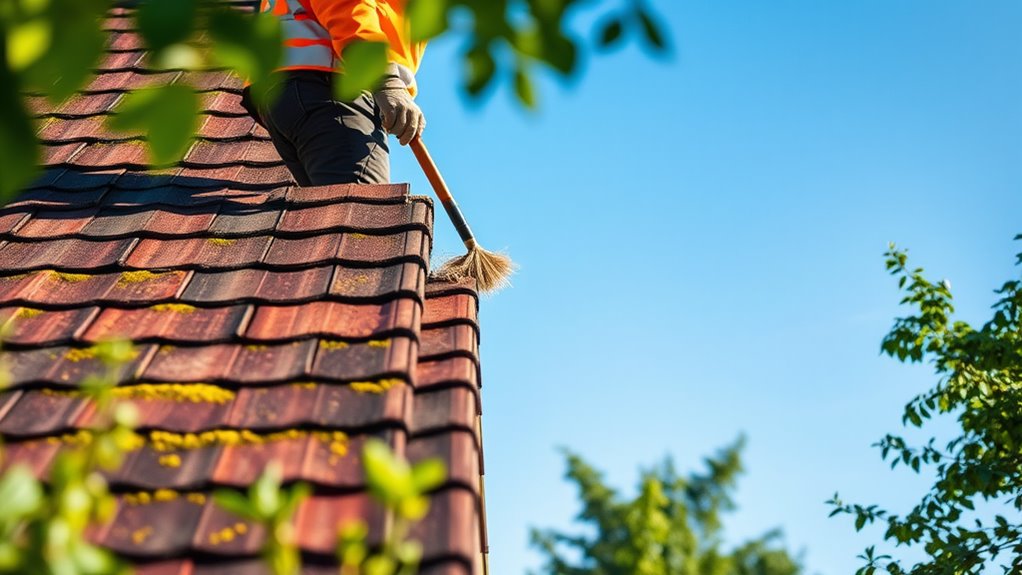
To maintain and extend your roof's life, make certain you conduct regular inspections to catch issues early. Clean your gutters and downspouts to prevent water buildup, and address any missing or damaged shingles without delay. Guarantee proper ventilation to reduce humidity and heat, and trim overhanging tree branches to avoid potential damage. Finally, schedule professional maintenance for thorough care. Discover more tips to keep your roof in top shape and improve its longevity.
Regular Roof Inspections
Regular roof inspections are essential for maintaining the integrity of your home. By taking control of your roof's condition, you can prevent costly repairs down the line. Conducting routine inspections not only helps you spot issues early but also provides numerous roof inspection advantages. You'll gain peace of mind knowing you're protecting your investment.
Start your routine inspection checklist by checking for missing or damaged shingles. Look for signs of wear, such as curling or buckling. Inspect flashing around chimneys and vents for gaps that could lead to leaks. Don't forget to examine your roof's drainage system, ensuring it's functioning correctly.
Clean Gutters and Downspouts
After inspecting your roof, it's important to turn your attention to the gutters and downspouts. Regular gutter cleaning is crucial for preventing water buildup that can lead to costly damage. You've got control over this aspect of your roof maintenance, so grab a sturdy ladder and clear out leaves, debris, and any blockages. This simple task guarantees that water flows freely, reducing the risk of overflow.
Don't forget about downspout maintenance! Check for any clogs and verify that water is directed away from your foundation. If you notice any issues, clear them immediately to maintain proper drainage. You might even consider installing gutter guards to minimize future debris buildup. By taking these proactive steps, you're not just extending your roof's life; you're likewise enhancing your home's overall health. Stay vigilant, and your roof will thank you!
Address Missing or Damaged Shingles
When you notice missing or damaged shingles, it's essential to act quickly. Start by identifying any problem areas that could lead to leaks or further damage. Once you've pinpointed the issues, replacing the affected shingles will help maintain your roof's integrity.
Identify Shingle Problems
Often overlooked, missing or damaged shingles can lead to significant issues for your roof. Regularly inspect your shingles for signs of shingle discoloration or shingle curling, as these problems can escalate quickly. By catching them early, you can maintain control over your roof's condition.
| Problem | Signs to Look For | Potential Consequences |
|---|---|---|
| Missing Shingles | Gaps in coverage | Water leaks and mold growth |
| Curling Shingles | Upturned edges | Reduced lifespan of roof |
| Discolored Shingles | Fading or stains | Aesthetic issues and decay |
| Cracked Shingles | Fractures or breaks | Structural damage risk |
Stay proactive in your inspections to guarantee your roof stays in top shape.
Replace Affected Areas
Once you've identified missing or damaged shingles, it's important to take action quickly. Ignoring these issues can lead to more extensive damage down the line. Start by using effective repair techniques to remove the affected shingles. Carefully lift the surrounding shingles and remove any nails holding them in place. For material selection, make sure you choose shingles that match your existing roof for a seamless look and peak protection. Replace the damaged areas with new shingles, securing them properly. Don't forget to check for any underlying damage to the roof deck as you're at it. By addressing these issues swiftly and effectively, you maintain control over your roof's integrity and longevity, making sure it protects your home for years to come.
Maintain Proper Ventilation
Proper ventilation is crucial for maintaining the longevity and integrity of your roof, as it helps regulate temperature and moisture levels. By ensuring your ventilation systems are in good condition, you can prevent heat buildup and moisture accumulation, which can lead to costly damage. Check your attic for proper airflow management; it should allow fresh air in and let hot, humid air escape.
Make sure vents are clear of debris and obstructions, as these can impede airflow. Consider installing additional vents if you notice stagnant air or excessive heat. A balanced ventilation system will not just extend your roof's lifespan but will also improve energy efficiency in your home. Remember, effective ventilation reduces the risk of ice dams in winter and mold growth in warmer months. Take charge of your roof's health by prioritizing these ventilation strategies, and you'll be well on your way to a durable, resilient roof.
Trim Overhanging Tree Branches
Trimming overhanging tree branches is crucial for preventing roof damage caused by falling limbs and debris. Not just will it protect your roof, but it'll likewise improve your home's aesthetic appeal and boost sunlight exposure. Taking care of this simple maintenance task can make a big difference in the longevity of your roof.
Prevent Roof Damage
Even though you might appreciate the shade that overhanging tree branches provide, they can pose a serious risk to your roof. Regularly trimming these branches is crucial to prevent roof wear caused by debris buildup. Leaves, twigs, and other organic materials can trap moisture, leading to mold growth and accelerated deterioration. Furthermore, during storms, branches can break off and damage your roofing materials, exposing your home to the weather effects that can compromise your roof's integrity. By taking control and maintaining a safe distance between your trees and roof, you'll help extend its lifespan. Make it a priority to inspect your trees annually, ensuring that any potential threats are addressed before they escalate into costly repairs.
Enhance Aesthetic Appeal
When you keep overhanging tree branches in check, you not just protect your roof but further improve your home's curb appeal. By trimming those branches, you allow your roof color and design elements to shine through, creating a more polished and appealing look. This simple act boosts the overall aesthetic of your property, making it more attractive to both visitors and potential buyers. Plus, it helps prevent debris accumulation, which can distract from your roof's beauty. Regularly maintaining your trees not just safeguards your roof but gives you control over how your home presents itself. So, take charge, grab those clippers, and uplift your home's appearance as you preserve the integrity of your roof.
Improve Sunlight Exposure
Maximizing sunlight exposure is vital for maintaining your roof's health and longevity. When tree branches overhang your roof, they block important sunlight, leading to potential moisture buildup and mold growth. By trimming those branches, you can improve sunlight benefits, ensuring your roof stays drier and healthier. This simple step not only prolongs your roof's lifespan but also increases your home's energy efficiency. With more sunlight hitting your roof, your insulation works better, reducing heating and cooling costs. Take control of your roof's fate—schedule regular tree maintenance to keep branches at bay. By doing so, you're investing in your home's future, ensuring it remains in top shape for years to come. Don't underestimate the strength of sunlight!
Schedule Professional Maintenance
To keep your roof in top shape, scheduling professional maintenance is vital. It's not merely about fixing problems; it's about preventing them. By consulting roofing professionals, you can guarantee your roof remains durable and reliable. Here's how you can take charge of your roof's care:
- Establish a Maintenance Frequency: Aim for at least two inspections a year, ideally in spring and fall.
- Assess Your Roof's Condition: During inspections, check for missing shingles, leaks, or debris.
- Clear Gutters and Downspouts: Keep them free of leaves and dirt to prevent water damage.
- Document Findings: Keep a record of your maintenance visits to track any recurring issues.
Taking these steps will empower you to extend your roof's life considerably. Regular professional maintenance not only saves you money in the long run but additionally gives you peace of mind.
Frequently Asked Questions
How Often Should I Replace My Roof Entirely?
You should consider roof replacement every 20 to 30 years, but roofing lifespan factors like material type, climate, and maintenance habits can affect this frequency. If you notice significant wear, it might be time to replace your roof sooner. Regular inspections help you gauge its condition and make informed decisions. By staying proactive, you can control when you replace your roof, ensuring you protect your home and investment effectively.
What Are the Signs of a Failing Roof?
Picture your roof as a shield, slowly rusting under the sun. If you notice roof discoloration, that's your first clue something's wrong. Keep an eye out for sagging areas or water stains on your ceilings—both are signs of impending trouble. Don't ignore peeling paint or mold, either. Regular leak detection can save you from costly repairs. By staying vigilant, you can maintain control and protect your home's fortress from deterioration.
Can I Install New Shingles Over Old Ones?
You can install new shingles over old ones, but it's crucial to check your local roofing regulations first. Many areas allow for a second layer, but there could be restrictions. Verify the old shingles are in good condition and have no major damage. This method can save you time and money, but you're taking a risk with potential issues like added weight or inadequate ventilation, so weigh your options carefully.
Does Weather Affect Roof Lifespan Significantly?
Yes, weather can greatly influence your roof's lifespan. Extreme temperatures, heavy rain, snow, and high winds wear down materials over time. If you live in a harsh climate, you'll want to take these factors into account when selecting roofing materials. By comprehending the weather impact in your area, you can make informed decisions that help protect your investment. Taking climate factors into account now can save you money and hassle down the line.
What Roofing Materials Last the Longest?
When you're considering roofing materials, metal roofs and asphalt shingles are popular options. Metal roofs can last 40 to 70 years, offering durability and resistance to harsh weather. Conversely, asphalt shingles typically last 15 to 30 years, depending on their quality. If you want longevity and minimal maintenance, metal roofs might be your best bet. Assess your needs, and choose the material that fits your control over your home's protection.