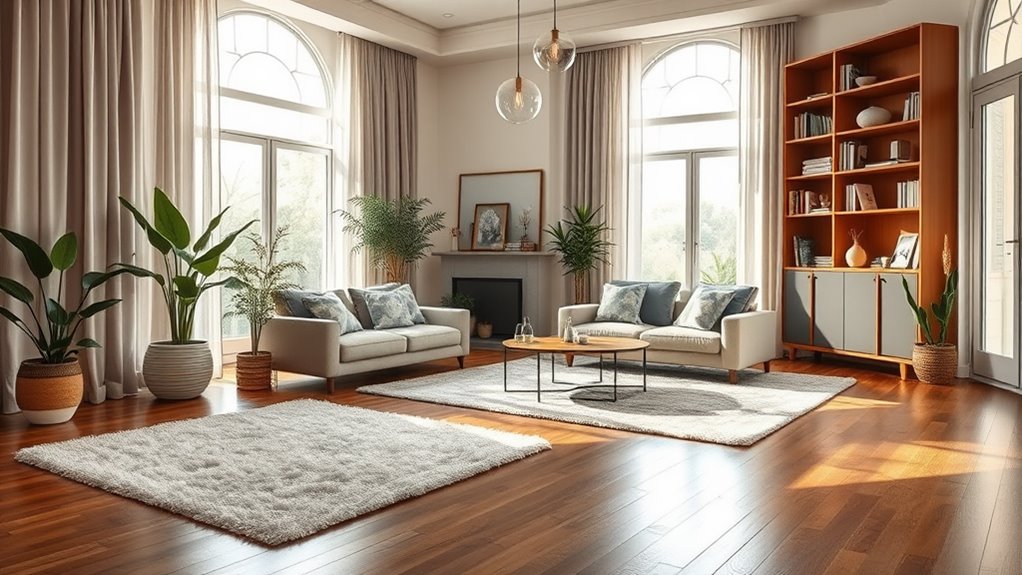
To reduce noise in your open-concept home, start by incorporating soft furnishings like plush sofas and thick curtains. Use area rugs to absorb sound and minimize impact noise. Install acoustic panels, and consider sound-absorbing materials for your walls. Create defined spaces with furniture arrangement and plants, which act as natural sound barriers. Finally, invest in quality windows to limit external noise. For more effective solutions, explore additional strategies that can further improve your home's tranquility.
Incorporate Soft Furnishings
Incorporating soft furnishings is one of the simplest ways to reduce noise in an open-concept home. You can take control of your space by strategically choosing and placing textiles. Start with your furniture placement; position large, plush sofas and armchairs to create natural barriers. This not only defines areas but likewise absorbs sound, making your environment quieter.
Next, consider your fabric choices. Opt for thick curtains, upholstered pieces, and textured cushions that can dampen sound waves. Materials like velvet or heavy linens are excellent for reducing noise as well as adding style to your decor.
Use Area Rugs
Layering area rugs throughout your open-concept space can markedly cut down on noise levels. By strategically selecting rug types and placements, you create a more serene environment. Here's how to maximize their effectiveness:
- Choose thicker, plush area rugs for better sound absorption.
- Opt for natural fibers like wool or jute; they offer durability and added texture.
- Layer smaller, colorful rugs over larger ones to improve style and functionality.
- Position rugs in high-traffic areas, such as under coffee tables or dining sets, to minimize impact noise.
- Experiment with varying shapes and sizes to fit different zones, creating visual interest.
Using area rugs not just dampens sound but also adds warmth to your home. Take control of your space's acoustics by incorporating these practical and stylish solutions.
Install Acoustic Panels
If you're looking to cut down on noise in your open-concept home, installing acoustic panels can make a significant difference. These panels not only absorb sound but likewise improve the overall aesthetics of your space. Let's explore the benefits and some handy tips for installation.
Benefits of Acoustic Panels
As many homeowners appreciate the airy feel of an open-concept space, they often struggle with excessive noise levels. Acoustic panels can be a game-changer for you, enhancing both comfort and aesthetics. Here are some benefits to evaluate:
- Noise Reduction: Minimize echoes and background sounds effectively.
- Versatile Acoustic Panel Types: Choose from fabric-wrapped, foam, and wood options to fit your decor.
- Easy Installation: Many panels are simple to install, saving you time and hassle.
- Cost-Effectiveness: Installation costs can be budget-friendly, especially compared to other soundproofing methods.
- Improved Focus: Create a more peaceful environment for work or relaxation.
With acoustic panels, you'll regain control over your space's ambiance, making it feel more inviting and functional.
Installation Tips and Techniques
When you're ready to install acoustic panels, it's important to plan the placement carefully to achieve the best sound absorption. Start by identifying the areas where sound echoes most. Use effective soundproofing techniques to guide your choices. Common installation methods include adhesive mounting, brackets, and hooks.
Here's a quick reference table to help you decide:
| Installation Method | Best Use Case |
|---|---|
| Adhesive Mounting | Smooth, flat surfaces |
| Wall Brackets | Heavy or large panels |
| Hooks | Temporary setups |
| Ceiling Mounting | High ceilings |
| Corner Placement | Reducing bass frequencies |
Opt for Sound-Absorbing Materials
To create a quieter space in your open-concept home, you should consider incorporating sound-absorbing materials. Choosing acoustic panels can greatly reduce noise levels, whereas soft furnishings like rugs and curtains can likewise help dampen sound. By making these choices, you'll improve your comfort and tranquility at home.
Choose Acoustic Panels
Choosing acoustic panels can greatly boost the comfort of your open-concept home, especially if you're struggling with excessive noise. By selecting the right acoustic panel types and their strategic panel placement, you can take control of your living environment.
Consider these options to improve sound absorption:
- Foam panels for lightweight, easy installation
- Fabric-wrapped panels that add aesthetic appeal
- Wooden acoustic panels for a modern touch
- Hanging baffles to cover larger areas
- Wall-mounted panels for targeted sound reduction
Incorporate Soft Furnishings
Incorporating soft furnishings into your open-concept home not just improves its aesthetic appeal but furthermore plays a crucial role in reducing noise. By choosing sound-absorbing materials, you can create a more serene environment. Opt for plush rugs, heavy curtains, and upholstered furniture that help dampen sound waves and minimize echoes. Layering these elements adds both comfort and style as well as offering effective sound absorption. Consider using decorative cushions and wall hangings made from thick fabrics, as they further improve the acoustic properties of your space. When you strategically place these soft furnishings throughout your home, you gain greater control over the noise levels, making your living area more peaceful and enjoyable. Embrace these changes and transform your environment today!
Create Defined Spaces
Though an open-concept layout encourages a sense of spaciousness, creating defined spaces can greatly improve both functionality and comfort in your home. By establishing defined zones, you'll not just reduce noise but also improve the overall flow of your space. Here's how to effectively use furniture arrangement to carve out distinct areas:
- Area rugs: Use them to visually separate spaces.
- Sofas and chairs: Position these to create conversational nooks.
- Bookshelves: Utilize them as room dividers to reduce sound.
- Lighting: Install different fixtures to highlight individual zones.
- Artwork: Hang pieces that denote shifts between areas.
Implementing these strategies gives you control over your environment and minimizing distractions. With thoughtful furniture arrangement, you can enjoy the benefits of an open-concept home without sacrificing privacy and peace.
Utilize Plants for Noise Reduction
Plants can be a strong ally in reducing noise in your open-concept home. By strategically utilizing them, you can transform your space into a serene retreat. Consider creating indoor gardens filled with various plant selections, as they can effectively absorb sound. Larger plants, like rubber trees or fiddle leaf figs, act as natural sound barriers, whereas smaller plants, such as peace lilies or pothos, contribute to a calming atmosphere.
When choosing your plants, think about their density and height. A well-placed cluster of greenery can create a visual and acoustic buffer, breaking up sound waves. Additionally, the added benefit of improved air quality improves your living environment.
Don’t underestimate the strength of plants; they not only beautify your home but equally give you a sense of control over your living space’s acoustics. Embrace this natural solution and enjoy a quieter, more peaceful home. In addition to their acoustic benefits, plants can also improve air quality and create a refreshing atmosphere in your home. Incorporating greenery into your decor is one of the best ways to declutter mentally, as a well-organized and natural space promotes relaxation. By carefully selecting and placing plants, you can enhance both the aesthetics and functionality of your living environment.
Choose the Right Curtains
When you're looking to improve the soundproofing in your open-concept home, choosing the right curtains can make a significant difference. The right curtain fabrics and lengths can act as effective sound barriers, helping you gain control over the noise levels in your space.
Consider these factors when selecting your curtains:
- Drapery Weight: Heavier fabrics absorb sound better.
- Layering Options: Combine sheer and blackout curtains for maximum effect.
- Curtain Length: Longer curtains that reach the floor can block noise more effectively.
- Color and Texture: Opt for textured fabrics that boost sound absorption.
- Proper Installation: Verify curtains are hung high and wide to cover windows completely.
Invest in Quality Windows
To truly minimize noise in your open-concept home, investing in quality windows is key. Double-glazed windows can greatly reduce sound transmission, whereas soundproofing treatments and effective window seals add an extra layer of protection. With the right windows, you'll create a quieter, more peaceful living environment.
Double-Glazed Window Benefits
Investing in quality double-glazed windows can greatly improve your home's comfort and tranquility. These windows offer exceptional window insulation and effective noise reduction, allowing you to take control of your environment. Here are some benefits you can expect:
- Enhanced energy efficiency: Keep heating and cooling costs down.
- Improved soundproofing: Minimize external noise interruptions.
- Increased property value: Quality windows attract potential buyers.
- Condensation reduction: Maintain clearer views and less moisture.
- Better security: Stronger glass makes it harder for intruders.
Soundproofing Window Treatments
Quality soundproofing window treatments can make a noticeable difference in reducing noise in your open-concept home. By investing in options like heavy drapes or specialized window film, you create a solid sound barrier that minimizes unwanted sounds. To help you choose the best treatments, consider the following options:
| Treatment Type | Noise Reduction Level | Added Benefits |
|---|---|---|
| Heavy Drapes | High | Insulation, Privacy |
| Window Film | Medium | UV Protection |
| Cellular Shades | High | Energy Efficiency |
| Acoustic Panels | Very High | Aesthetic Appeal |
| Soundproof Blinds | High | Light Control |
These treatments not only improve your home's comfort but also give you the control you need over your living space's noise levels.
Installing Window Seals
One effective way to improve soundproofing in your home is by installing window seals. By choosing the right seal materials for your specific window types, you can greatly reduce outside noise. Here's how to take control of your environment:
- Select high-density foam seals for maximum sound isolation.
- Consider weather stripping for easy installation and effective noise reduction.
- Use vinyl seals for durability and excellent acoustic performance.
- Explore acoustic caulk to seal gaps around window frames.
- Confirm proper installation to maximize effectiveness.
Investing in quality windows with these seals will help you create a quieter, more peaceful living space. Don't underestimate how much noise control you can achieve with the right materials and techniques.
Limit Hard Surfaces
To create a quieter atmosphere in your open-concept home, limiting hard surfaces is essential. Hard materials like tile, glass, and concrete reflect sound, amplifying noise levels. Instead, opt for softer surfaces that absorb sound. Consider incorporating plush rugs, upholstered furniture, and heavy curtains. These elements not merely improve your decor but also serve as effective soundproofing techniques.
You can additionally explore noise reduction strategies like adding acoustic panels or wall art made of sound-absorbing materials. By strategically placing these items, you can considerably dampen echoes and reduce overall noise. If you’re renovating, think about using drywall with soundproofing qualities or installing foam insulation to further minimize noise transmission. Incorporating plants into your design can also aid in noise reduction, as certain greenery helps absorb sound while simultaneously enhancing the aesthetic appeal of your space. Moreover, consider combining these noise-reducing elements with organizational solutions that focus on maximizing storage in small spaces. This approach not only improves acoustics but also creates a more functional and visually pleasing environment.
Taking control of your environment means making intentional choices about your materials. Limit those hard surfaces, and you'll notice a remarkable difference in the tranquility of your home.
Establish a Noise Policy
Even though you may enjoy lively gatherings and conversations, establishing a noise policy can help maintain a peaceful atmosphere in your open-concept home. By creating noise agreements and setting family guidelines, you can guarantee everyone understands the expectations. Here's how you can implement this effectively:
- Define Quiet Hours: Set specific times when noise should be minimized.
- Limit Volume Levels: Agree on acceptable sound levels for music and TV.
- Designate Spaces: Identify areas for socializing and others for relaxation.
- Encourage Respectful Communication: Remind family members to be mindful of their noise levels when others are working or resting.
- Review and Adjust: Periodically discuss the policy to address any concerns or changes in lifestyle.
Frequently Asked Questions
How Effective Are White Noise Machines in Open-Concept Homes?
White noise machines can be highly effective in managing sound in your space. They mask disruptive noises, creating a consistent auditory backdrop that helps you focus and relax. You'll find various noise machine types, from simple devices to more advanced models with customizable soundscapes. The white noise benefits include improved sleep and increased privacy, giving you greater control over your environment. By choosing the right machine, you can tailor the experience to suit your needs.
Can Ceiling Fans Help Reduce Noise Levels?
Ceiling fans can certainly create a calming atmosphere as you control comfort levels. Proper fan placement improves airflow and can help with noise reduction, drowning out distracting sounds. You'll find that the gentle whir of a fan not just cools your space but additionally softens sharp noises, making it easier to relax. So, if you're seeking serenity, consider positioning your fan strategically to maximize its soothing sound and functionality.
What Type of Furniture Layout Minimizes Noise?
To minimize noise, focus on strategic furniture placement. Arrange large pieces, like sofas and bookshelves, to create barriers that absorb sound. Position acoustic panels on walls to further dampen echoes and improve privacy. You can additionally use rugs and fabric cushions to soften hard surfaces. By thoughtfully arranging your furniture and incorporating these elements, you'll take control of your space's acoustics, creating a more peaceful environment that suits your needs.
Should I Consider Soundproofing My Walls?
You should definitely consider soundproofing your walls if noise is a concern. Using soundproofing materials like acoustic panels or mass-loaded vinyl can greatly reduce unwanted sound. Moreover, wall treatments such as thick curtains or textured wallpaper can improve your efforts. By taking these steps, you'll create a more peaceful environment, and you'll regain control over your space. It's all about making your home a sanctuary where you can relax without disturbances.
Are There Specific Plants Better for Noise Absorption?
You might think plants can't do much for noise absorption, but you'd be surprised! Certain plant types, like rubber trees and peace lilies, are fantastic at soaking up sound. Their lush leaves create a natural barrier that helps muffle unwanted noise. By strategically placing these sound-absorbing beauties around your space, you not just improve your decor but additionally take control over your environment, creating a more peaceful and serene atmosphere.