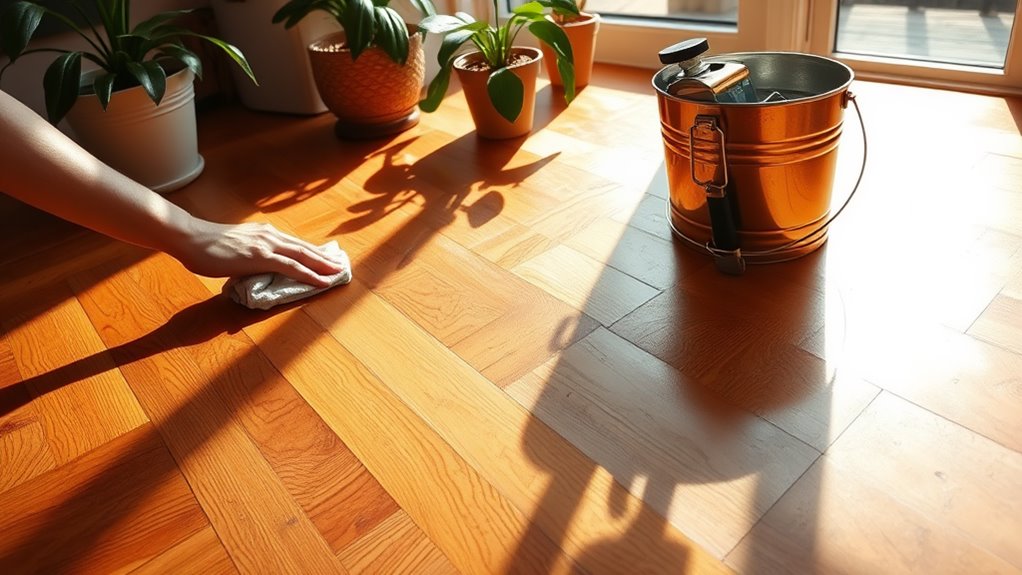
To restore and maintain your hardwood floors, start with regular cleaning by sweeping or vacuuming to remove debris, followed by damp mopping with safe cleaning products. Address scratches and dents swiftly using wood filler or steam treatment. To prevent damage, control indoor humidity levels and use area rugs in high-traffic areas. For polishing, select appropriate products and techniques. If you want to guarantee your floors stay beautiful and durable, there's more crucial information to know.
Understanding the Types of Hardwood Flooring
Regarding hardwood flooring, there are primarily three types you should know: solid, engineered, and laminate. Solid wood flooring is exactly what it sounds like—planks made from a single piece of timber. This type offers durability and can be sanded and refinished multiple times, giving you control over its lifespan. Conversely, engineered wood consists of a core made from plywood or high-density fiberboard topped with a veneer of solid wood. It's more stable and less prone to warping, making it a great option for areas with fluctuating humidity. Meanwhile, laminate flooring mimics the appearance of wood, it's not a true hardwood and lacks the same restoration potential. Choosing between solid and engineered wood depends on your specific needs and environment. Take the time to weigh the benefits of each type to guarantee you're making the best choice for your space.
Regular Cleaning Practices
Keeping your hardwood floors looking their best requires regular cleaning practices customized to the type of flooring you have. Start with daily maintenance to prevent dirt and grime buildup. Sweep or vacuum your floors each day to remove loose debris, ensuring you use a soft-bristle attachment to avoid scratching.
Establish a cleaning schedule that works for you. Set aside time weekly for more thorough cleaning. Use a damp mop with a suitable cleaner, and make sure not to saturate the wood. This helps maintain the finish without causing damage.
Pay attention to high-traffic areas, which may need extra care. Consider using area rugs to protect these spots from excessive wear.
Choosing the Right Cleaning Products
In terms of cleaning your hardwood floors, selecting the appropriate products is crucial. You'll want to look for safe ingredients that won't damage the wood or harm your family. Avoiding harmful chemicals not only safeguards your floors but likewise fosters a healthier home environment.
Safe Ingredients to Use
Choosing the right cleaning products is crucial for maintaining the beauty and integrity of your hardwood floors. You want to verify that the ingredients you use are safe and effective. Opt for eco-friendly solutions that clean without leaving harmful residues. Natural alternatives like vinegar and water can work wonders, providing a gentle yet effective clean. Furthermore, look for products labeled as biodegradable or made from plant-based ingredients. These options not only protect your floors but also contribute to a healthier indoor environment. Always check labels to confirm the absence of harsh chemicals. By making informed choices, you'll take control of your cleaning routine and keep your hardwood floors looking their best for years to come.
Avoiding Harmful Chemicals
Even though it's tempting to reach for strong commercial cleaners, avoiding harmful chemicals is vital for the longevity of your hardwood floors. These products can strip finishes and damage the wood over time. Instead, you can take control by opting for eco-friendly alternatives. Look for natural cleaning solutions that are safe for both your floors and your family. Simple ingredients like vinegar and water or a mixture of olive oil and key oils can effectively clean your surfaces without the risk of harmful residues. Furthermore, consider using pH-balanced cleaners designed specifically for hardwood. By choosing wisely, you'll not just protect your investment but also create a healthier home environment. Your floors deserve the best care, and you're in charge of that care.
Dealing With Scratches and Dents
Scratches and dents can be frustrating, but don't worry—you can effectively address them to restore your hardwood floors. With a few simple steps, you can regain control over the appearance of your flooring. Here's how to tackle those imperfections:
- For Scratch Repair: Use a wood filler that matches your floor's color. Apply it to the scratch, smooth it out, and let it dry before sanding lightly.
- For Minor Dents: Place a damp cloth over the dent, then apply heat with an iron. The steam will help the wood swell back into shape.
- For Deeper Scratches: Try a touch-up marker designed for wood. This can mask the scratch effectively.
- Regular Maintenance: Prevent future scratches by using furniture pads and rugs in high-traffic areas.
Polishing Your Hardwood Floors
In terms of polishing your hardwood floors, selecting the appropriate polish is vital for achieving a beautiful finish. You'll likewise want to master the best application techniques to guarantee an even and lasting shine. Let's explore these important steps to bring your floors back to life.
Choosing the Right Polish
Choosing the right polish for your hardwood floors is vital for maintaining their natural beauty and ensuring long-lasting protection. With various polish types available, you need to select one that suits your floor's finish and wear. Here are four important considerations:
- Water-Based vs. Oil-Based: Decide between a quick-drying water-based polish or a richer oil-based option.
- Sheen Levels: Choose from matte, satin, semi-gloss, or high-gloss finishes based on your desired look.
- Durability: Look for polishes designed for high-traffic areas for added longevity.
- Eco-Friendly Options: Consider low-VOC or natural polishes for a healthier home environment.
Application Techniques Explained
Polishing your hardwood floors can transform their appearance and extend their lifespan, making it a vital part of maintenance. To achieve the best results, start with a thorough cleaning to remove dirt and debris. Next, if you've recently done a wood stain application, verify it's fully cured before proceeding. For the finish application, choose a high-quality polish that suits your floor type. Use a microfiber mop or soft cloth to apply the polish evenly, working in small sections. Be certain to follow the manufacturer's instructions for drying times between coats. Finally, buff the floor with a clean, dry cloth to improve the shine. By taking these steps, you'll regain control over your floors' aesthetics and durability.
Deep Cleaning Methods
Although maintaining hardwood floors is crucial for their longevity, deep cleaning is imperative for removing stubborn dirt and grime. You want to guarantee your floors look their best, and using the right methods can make all the difference. Here's how to effectively deep clean:
- Vacuum Techniques: Use a vacuum designed for hardwood to eliminate dust and debris without scratching the surface.
- Steam Cleaning: Employ a steam cleaner that's safe for hardwood, allowing you to penetrate deeper into the wood grain whilst sanitizing.
- Damp Mopping: Following steam cleaning, use a damp mop with a pH-neutral cleaner to remove any remaining residue.
- Spot Treatment: For tough stains, apply a mixture of vinegar and water directly to the spot, letting it sit before gently scrubbing.
Refinishing Hardwood Floors
When you're ready to bring your hardwood floors back to life, refinishing is the way to go. You'll need the right tools and a clear step-by-step process to get fantastic results. Let's explore the crucial techniques that will help you achieve a beautiful finish.
Tools Needed for Refinishing
To successfully refinish your hardwood floors, you'll need a few vital tools that make the process smoother and more effective. Having the right equipment empowers you to achieve the best results through proper sanding techniques and stain selection. Here's what you'll need:
- Sanding Machine – A drum sander or orbital sander for even surface preparation.
- Sandpaper – Various grits for different stages of sanding, starting coarse and moving to fine.
- Applicator Pad or Brush – Fundamental for applying your chosen stain evenly and effectively.
- Vacuum – Keeps your workspace clean by removing dust and debris after sanding.
With these tools at your disposal, you’ll have better control over your refinishing project, ensuring stunning results. You can experiment with different techniques to find the best ways to refinish cabinets, whether through staining, painting, or applying a protective finish. Proper preparation, such as sanding and priming, will further enhance durability and aesthetic appeal. By following these steps, you’ll achieve a professional-quality finish that transforms your space.
Step-by-Step Process
Refinishing hardwood floors involves several key steps that transform your space beautifully. Start by removing furniture and cleaning the surface thoroughly. Next, you'll sand the floors to eliminate imperfections, using a drum sander for larger areas and a detail sander for corners. Once you've achieved a smooth finish, vacuum the dust and wipe down the floors. Apply a wood conditioner to prepare the surface for stain, then choose your desired color for a stunning look. After staining, seal your floors with a protective finish, following maintenance best practices to guarantee longevity. Finally, let the finish cure completely before moving furniture back in. By following these steps, you'll achieve remarkable hardwood floor restoration that boosts your home's appeal.
Finishing Techniques Explained
Even though you may be thrilled to see your hardwood floors restored, understanding the finishing techniques is crucial for achieving the best results. Acquiring proficiency in these methods allows you to take control of your space's aesthetic and longevity.
Here are four important finishing techniques to take into account:
- Staining Techniques: Choose from oil-based or water-based stains to improve the wood's natural beauty and achieve your desired color depth.
- Sealing Options: Select between polyurethane, moisture-cured urethane, or penetrating oils to safeguard your floor from wear and tear.
- Application Methods: Use brushes, rollers, or pads depending on your chosen stain and sealant for even coverage.
- Curing Times: Allow adequate drying and curing time between coats to guarantee a durable finish that withstands daily use.
Repairing Water Damage
When water damage occurs, it can cause significant problems for your hardwood floors, but quick action can often minimize the impact. Start by identifying the source of the water and stop it immediately. Next, dry the affected area thoroughly using fans or dehumidifiers to prevent mold growth. If the wood has warped or buckled, you may need to employ restoration techniques such as sanding and refinishing the affected boards.
In cases of severe damage, replacing individual planks might be necessary. Make sure to match the new wood with the existing floor for a seamless look. After repairs, consider applying a protective sealant to guard against future water damage, ensuring your floors stay beautiful and intact. Remember, the key to effective restoration is acting quickly and using the right techniques to restore your hardwood floors to their original glory.
Preventing Future Damage
After addressing water damage, it's important to take steps to prevent future issues with your hardwood floors. By implementing effective preventive measures, you can protect your investment and maintain its beauty for years to come. Here are four key strategies to ponder:
- Control Humidity: Keep indoor humidity levels between 30% and 50% to minimize expansion and contraction caused by environmental factors.
- Use Area Rugs: Place rugs in high-traffic areas to reduce wear and tear, preventing scratches and dents.
- Maintain a Cleaning Routine: Regularly sweep or vacuum to remove dirt and debris that can scratch your floors.
- Avoid Water Exposure: Quickly clean up spills and avoid mopping with excess water to protect the finish and wood.
Tips for Maintaining Hardwood Floors
To keep your hardwood floors looking their best, you need to adopt a consistent maintenance routine that addresses both cleaning and care. Start by sweeping or vacuuming regularly to remove dirt and debris, which can scratch the surface. For deeper cleaning, use a damp mop with a hardwood-safe cleaner—never saturate the wood.
Establishing floor maintenance routines is vital. Consider placing mats at entryways to trap dirt and using felt pads under furniture to prevent scratches. Moreover, keep the humidity levels in your home stable; too much moisture can warp your floors.
Don't forget to inspect your floors periodically for signs of wear. Address any issues swiftly to maintain their appearance and longevity. By focusing on these hardwood care fundamentals, you'll guarantee your floors remain beautiful and durable for years to come. Take control of your floor maintenance, and enjoy the lasting elegance of your hardwood.
Seasonal Care for Hardwood Floors
Maintaining hardwood floors goes beyond regular cleaning; it also involves seasonal care to adapt to changing weather conditions. Seasonal humidity and temperature fluctuations can affect your floors, so taking proactive steps guarantees their longevity and beauty.
Here are four crucial tips for seasonal care:
- Monitor Humidity Levels: Use a hygrometer to keep humidity between 30-50%. Too much moisture can cause warping, whereas too little can lead to cracking.
- Adjust Thermostat: Maintain a consistent temperature throughout your home. Sudden changes can stress the wood and cause gaps.
- Use Rugs and Mats: Place them at entryways to minimize dirt and moisture exposure during wet or snowy seasons.
- Regularly Check for Damage: Inspect for signs of wear or water damage and address issues immediately to prevent further complications.
When to Call a Professional
Even though many hardwood floor issues can be tackled with DIY methods, there are times when it's best to call in a professional. If you notice significant scratches, deep gouges, or water damage, don't hesitate to seek a professional assessment. These problems often require specialized tools and expertise that you might lack.
Additionally, if you face an urgent situation—like a burst pipe causing flooding—emergency repairs are essential. In such cases, swift action can save your floors from irreversible damage.
If you're unsure of the best approach or feel overwhelmed, a professional can guide you through the restoration process. They'll make certain that repairs are done correctly and effectively, preserving the beauty and longevity of your hardwood floors. Remember, knowing when to hand over the reins not just protects your investment but also gives you peace of mind.
Frequently Asked Questions
Can Hardwood Floors Be Installed Over Existing Flooring?
Like a puzzle piece fitting perfectly, you can install hardwood floors over existing flooring, but you need to guarantee compatibility first. Not every type of flooring can support hardwood—think about factors like height and stability. If your current flooring is solid and level, you're in the clear. Just measure twice and cut once, and you'll achieve that beautiful hardwood look without tearing up your old floors!
How Long Does Refinishing Hardwood Floors Typically Take?
Refinishing hardwood floors typically takes about three to five days, depending on the size of the area and the refinishing process you choose. You'll need to factor in drying time between coats of finish, which can vary. If you want control over the outcome, guarantee proper ventilation to speed up drying. By planning ahead and being patient, you can achieve beautiful results that improve your space and protect your investment.
What Is the Best Humidity Level for Hardwood Floors?
You'd think hardwood floors thrive in a sauna, but they actually prefer a humidity level between 30-50%. Too much moisture can lead to damage, whereas too little can cause cracking. You need to exercise humidity control to maintain that perfect balance. Monitoring your home's humidity is key, as it'll save you from costly repairs down the line. Keep it just right, and your floors will reward you with lasting beauty.
Are There Eco-Friendly Options for Hardwood Floor Maintenance?
Absolutely, there are plenty of eco-friendly options for hardwood floor maintenance. You can choose eco-friendly products like plant-based cleaners that won't harm your family or the environment. Incorporating sustainable practices, such as using microfiber mops, can help reduce waste. Regularly maintaining your floors with natural oils or waxes not just keeps them looking great but additionally supports a healthier living space. You've got the ability to make environmentally conscious choices!
How Often Should Hardwood Floors Be Refinished?
Refinishing hardwood floors is like giving your home a fresh coat of paint; it rejuvenates the space and improves its beauty. Typically, you should consider refinishing every 7-10 years, but this can vary based on foot traffic and wear. Keep an eye out for signs of refinishing, like scratches, dullness, or discoloration. Staying proactive about refinishing frequency guarantees your floors remain stunning and durable for years to come.