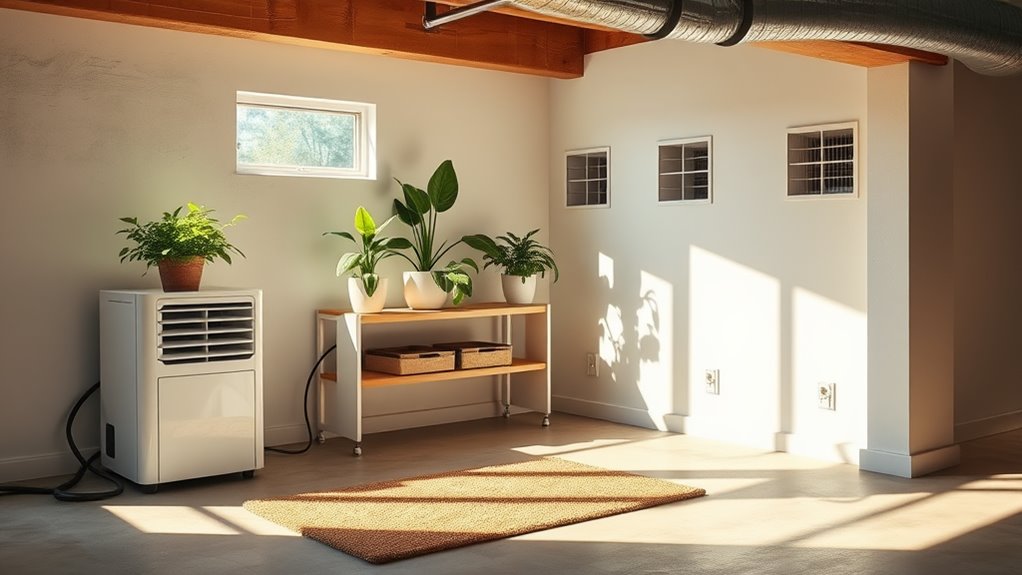
To prevent mold and moisture issues in your home, start by regularly inspecting for leaks and addressing any water damage swiftly. Verify proper ventilation in kitchens and bathrooms, and control indoor humidity levels between 30% and 50%. Use dehumidifiers in damp spaces and choose mold-resistant products like paints and drywall. Keep your home clean and clutter-free to minimize dust and moisture accumulation. There are plenty more tips and tricks to keep your environment healthy. Additionally, ensure that gutters and downspouts are clear to direct water away from your home’s foundation, reducing excess moisture. If you’re looking to improve comfort, you can also soundproof a room cheaply by using thick rugs, weather stripping, or heavy curtains to minimize noise while also helping with insulation. By taking these small but effective steps, you can create a healthier and more comfortable living space for you and your family.
Understanding Mold and Moisture: The Basics
Though you might not think about it often, grasping mold and moisture is vital for maintaining a healthy home environment. Comprehending the mold lifecycle helps you take control of potential issues before they escalate. Mold thrives in damp conditions, so identifying moisture sources is key. Common culprits include leaks from pipes, condensation on cold surfaces, and high humidity levels.
To prevent mold growth, you need to manage these moisture sources effectively. Regularly ventilate your home and use dehumidifiers in particularly humid areas. Pay attention to your bathroom and kitchen, where steam can accumulate.
Regularly Inspect Your Home for Leaks
To keep your home mold-free, you need to regularly check for leaks. Start by inspecting plumbing fixtures for any signs of water damage and guarantee your roof and gutters are in good condition. Staying proactive can save you from costly repairs and health issues down the line.
Check Plumbing Fixtures Regularly
Regularly checking your plumbing fixtures is vital for preventing mold and moisture problems in your home. By staying proactive, you can identify leaks before they become significant issues. Use this fixture inspection checklist to guide your plumbing maintenance tips:
| Fixture Type | Inspection Task |
|---|---|
| Faucets | Check for drips and leaks |
| Toilets | Test for running water |
| Pipes | Look for corrosion or moisture spots |
Schedule inspections monthly or quarterly to guarantee everything's functioning well. If you spot any issues, address them immediately. Taking control of your plumbing maintenance can save you from costly repairs and help maintain a healthy living environment. Stay vigilant, and your home will thank you!
Examine Roof and Gutters
Inspecting your roof and gutters at least twice a year is essential for preventing leaks and moisture issues in your home. Regular roof maintenance helps you spot potential problems before they escalate. Make gutter cleaning a priority to guarantee rainwater flows freely away from your foundation, reducing the risk of mold growth.
- Check for missing or damaged shingles that could lead to leaks.
- Clear leaves and debris from gutters to prevent clogs.
- Inspect flashing around chimneys and vents for deterioration.
Taking these steps not only safeguards your home but likewise gives you peace of mind. By staying proactive, you maintain control over your environment and protect against unwanted moisture that can lead to costly repairs.
Ensure Proper Ventilation in Key Areas
Proper ventilation is crucial for preventing mold and moisture issues in your home, especially in areas prone to humidity like kitchens and bathrooms. You need to make sure that your ventilation systems are functioning effectively to maintain ideal air circulation. Installing exhaust fans in these key areas helps reduce humidity levels by expelling moist air outside.
Don't overlook the importance of opening windows when weather permits to allow fresh air to flow through your home. Regularly check and clean vents to avoid blockages that can hinder airflow.
Consider investing in a whole-house ventilation system if you're serious about controlling moisture. This system can effectively manage air circulation throughout your home, keeping it fresh and dry.
Control Indoor Humidity Levels
Even though you may not realize it, controlling indoor humidity levels is essential for preventing mold growth and maintaining a comfortable living environment. By employing effective humidity control methods, you can keep moisture levels in check and reduce the risk of mold-related issues.
Here are a few strategies to take into account:
- Invest in hygrometers for indoor humidity monitoring to track moisture levels accurately.
- Seal windows and doors to prevent humid air from entering your home.
- Use exhaust fans in kitchens and bathrooms to remove excess moisture during cooking or showering.
Use Dehumidifiers in Damp Spaces
When you notice dampness in certain areas of your home, using dehumidifiers can be an effective solution to combat moisture buildup. Proper dehumidifier placement is essential for achieving ideal results. Position your dehumidifier in the most affected areas, like basements or bathrooms, to target humidity directly where it's needed.
By doing this, you'll improve humidity control and create a more comfortable environment. Remember to monitor the humidity levels regularly; ideally, you want to maintain levels between 30% and 50%. If your dehumidifier has a built-in hygrometer, use it to adjust settings as necessary.
Additionally, confirm that the appliance is emptied regularly if it doesn't have a continuous drainage option. Maintaining the right humidity levels not just helps prevent mold growth but also protects your home and belongings from moisture damage. Take charge of your living space with effective dehumidifier strategies.
Seal Windows and Doors to Prevent Moisture Infiltration
To effectively combat moisture issues in your home, sealing windows and doors plays a crucial role. By ensuring these areas are properly sealed, you can greatly reduce humidity levels and prevent mold growth. Start by inspecting your windows and doors for gaps, then apply weather stripping and door seals where needed. This not only blocks moisture but also improves energy efficiency.
Consider these important steps:
- Inspect regularly: Check for wear and tear on weather stripping and door seals every season.
- Choose quality materials: Invest in durable weather stripping and door seals that withstand the elements.
- Seal without delay: Don't wait for visible damage; seal any gaps as soon as you notice them.
Taking these proactive measures will give you greater control over your home's environment, keeping it dry and mold-free.
Maintain Gutters and Downspouts
To keep moisture at bay, you need to maintain your gutters and downspouts regularly. Make sure you're cleaning them out on a schedule and directing the downspouts away from your foundation. Don't forget to inspect for any damage that could lead to leaks or clogs.
Regular Cleaning Schedule
Although it might seem tedious, maintaining a regular cleaning schedule for your gutters and downspouts is crucial in preventing mold and moisture issues in your home. By establishing a consistent cleaning frequency, you can effectively reduce the risk of clogs and overflow, which lead to water damage. Consider these effective cleaning techniques:
- Inspect and clean your gutters at least twice a year, preferably in spring and fall.
- Use a sturdy ladder and wear gloves to safely remove debris.
- Flush the system with water to guarantee proper drainage.
Proper Downspout Direction
Guiding the proper direction of your downspouts is crucial for effective moisture management around your home. You want to direct water away from your foundation to prevent unwanted moisture buildup and mold growth. Start by checking your downspout maintenance regularly; if they're clogged or misaligned, fix them immediately. Use drainage solutions like extensions or splash blocks to direct water at least six feet away from your home. This simple adjustment can save you from costly repairs down the line. Keep an eye on your downspouts after heavy rain to verify they're functioning effectively. Taking control of your downspout direction empowers you to safeguard your home against moisture issues and maintain a healthy environment.
Inspect for Damage
After addressing downspout direction, it's time to focus on inspecting your gutters and downspouts for damage. Regular checks are crucial to maintain moisture control and prevent mold growth in your home. Look for any signs of wear and tear that could lead to leaks or blockages.
- Check for cracks or holes in the gutter system.
- Verify downspouts are securely attached and directing water away from your foundation.
- Clear out any debris that might obstruct water flow.
Properly Insulate Your Home
When you properly insulate your home, you not only improve energy efficiency but additionally create a barrier against mold and moisture. Effective insulation improves thermal performance, keeping your home comfortable year-round while preventing condensation, a major contributor to mold growth.
Choosing the right insulation materials is essential. Opt for high-quality options like spray foam, fiberglass, or cellulose, which can greatly reduce moisture intrusion. Make sure you seal all gaps and cracks around windows, doors, and electrical outlets to prevent unwanted air and moisture leaks.
Don't forget about your attic and basement; proper insulation in these areas is often overlooked, yet they're important for controlling humidity levels. By taking control of your home's insulation, you not only protect your living space from mold but also create a healthier environment for you and your family. Start today, and you'll see the benefits in energy savings and peace of mind.
Choose Mold-Resistant Products
When you're renovating or building, choosing mold-resistant products can make a significant difference in preventing future issues. These materials not just help keep mold at bay, but they furthermore offer long-lasting benefits for your home's health. Let's explore the types of mold-resistant materials available and how they can protect your space.
Types of Mold-Resistant Materials
Choosing the right materials can greatly reduce the risk of mold growth in your home. Implementing mold-resistant products is a proactive step in maintaining a healthy environment. Consider using:
- Mold resistant paints: These specially formulated paints contain antimicrobial properties to inhibit mold development on walls and ceilings.
- Moisture resistant drywall: Also referred to as green board, this type of drywall is designed to withstand high humidity areas, such as bathrooms and kitchens, minimizing mold-friendly conditions.
- Mold-resistant insulation: This type of insulation helps prevent moisture accumulation, ensuring your walls stay dry.
Benefits of Mold Resistance
Opting for mold-resistant products not just improves your home's durability but also promotes a healthier living environment. When you choose materials with mold resistance benefits, you're taking proactive steps in mold prevention techniques, ensuring that moisture doesn't compromise your health or property. These products can save you money in the long run by reducing maintenance costs and preventing costly repairs stemming from mold damage. Furthermore, they contribute to better indoor air quality, keeping your family safe from allergens and respiratory issues. By incorporating mold-resistant options into your home, you gain control over your living space, allowing for peace of mind and a more comfortable atmosphere. In the end, you're investing in a future free from unnecessary mold-related concerns.
Keep Your Home Clean and Clutter-Free
A clean and clutter-free home is essential for preventing mold and moisture issues. When you organize spaces and eliminate unnecessary items, you reduce humidity and create an environment where mold struggles to thrive. Here are some decluttering tips to help you maintain control over your space:
- Regularly assess your belongings and donate or discard what you no longer need.
- Use clear storage bins to keep items visible and reduce dust accumulation.
- Create a cleaning schedule to guarantee you're consistently keeping surfaces clean and dry.
Address Water Damage Promptly
Even with a clean and organized home, unexpected water damage can occur, whether from a leaking roof, burst pipe, or flooding. To prevent mold and moisture issues, your prompt response is critical. The quicker you address the situation, the less damage your home will sustain.
| Action | Time Frame |
|---|---|
| Identify the source | Within hours |
| Remove standing water | Within 24 hours |
| Begin drying process | Within 48 hours |
Start by locating the source of the water damage and stop it if possible. Next, remove any standing water to minimize further harm. Use dehumidifiers and fans to help dry out the affected areas. Remember, every minute counts. By taking immediate action, you regain control over the situation, protecting your home from long-term mold and moisture issues. Stay proactive; it pays off in the end.
Educate Your Family on Mold Prevention
Though it might seem like mold issues are solely the homeowner's responsibility, educating your family about mold prevention can greatly reduce risks. When everyone understands the importance of keeping your home dry and clean, you empower them to take action. Consider hosting family workshops where you can discuss mold awareness and prevention strategies.
Here are some effective ways to educate your family:
- Share educational resources, like articles and videos, that explain mold growth and its impact on health.
- Create a checklist of mold prevention tasks to be completed regularly, such as checking for leaks and maintaining proper ventilation.
- Encourage open discussions about moisture issues, so everyone feels comfortable reporting potential problems.
Frequently Asked Questions
How Can I Tell if Mold Is Toxic or Non-Toxic?
When you spot mold, it's essential to differentiate between toxic and non-toxic types. Whereas some mold might seem harmless, others can seriously impact your health. You can take control by conducting mold testing to identify the specific type. Look for signs like black or green patches, and consider their location. Trust your instincts, and don't hesitate to reach out for professional help if you're unsure about what you find. Your well-being matters!
What Are the Health Effects of Mold Exposure?
When you're exposed to mold, you might experience various mold symptoms, such as sneezing, coughing, or skin irritation. Some people likewise suffer from headaches or fatigue. The health risks increase for those with allergies or respiratory conditions, like asthma. It's essential to pay attention to how your body reacts, as prolonged exposure can lead to more serious issues. By recognizing these symptoms early, you can take control of your environment and protect your health.
Can I Paint Over Mold to Hide It?
Visualize trying to cover a cracked windshield with a sticker; it won't fix the problem, just conceal it. You can't simply paint over mold. First, you need thorough mold removal to tackle the issue head-on. After that, choose the right paint types designed for moisture resistance to prevent future growth. Taking these steps empowers you to control the environment, ensuring your space remains healthy and mold-free for years to come.
Do Houseplants Contribute to Indoor Humidity?
Yes, houseplants can contribute to indoor humidity levels. Certain houseplant types, like ferns and peace lilies, release moisture into the air through a process called transpiration. If you want to control humidity, consider the number and types of plants you keep indoors. Although they can improve your space, too many might increase humidity more than you'd like, potentially leading to unwanted issues. Monitor your environment to maintain a balance that works for you.
How Often Should I Inspect My Home for Moisture Issues?
You should inspect your home for moisture issues at least once every six months. Regular home inspections allow you to catch potential problems early. During these checks, focus on areas like basements, bathrooms, and under sinks. Utilize moisture detection tools to assess humidity levels accurately. By staying proactive, you'll maintain better control over your living environment and prevent costly damage down the line. Keep your home dry and comfortable with consistent assessments!