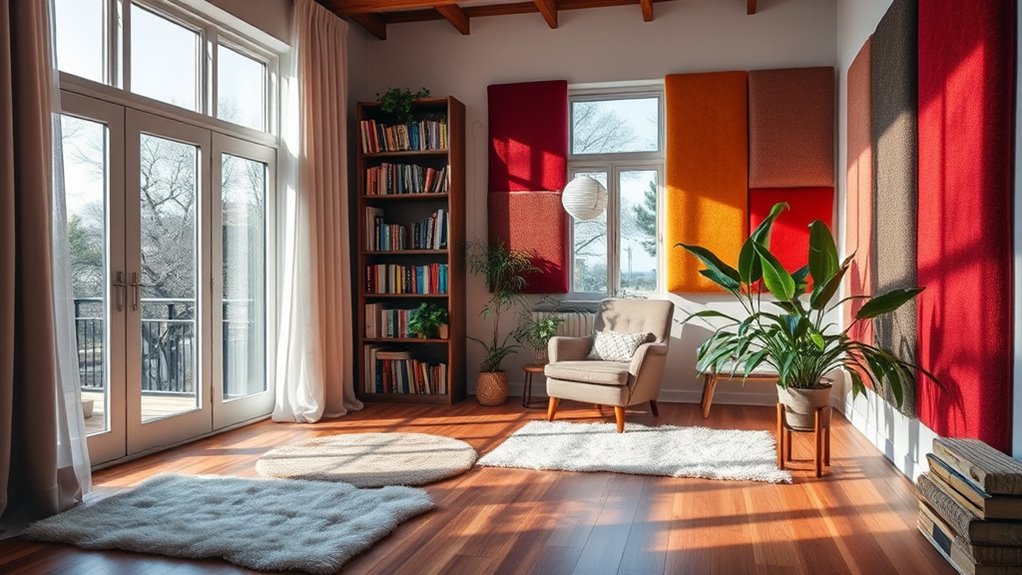
To soundproof a room without expensive renovations, start by sealing gaps and cracks around windows and doors. Add soft furnishings like cushions and throws, and think about using thick area rugs or carpets. Installing soundproof curtains can likewise help reduce noise. Incorporate acoustic panels and consider placing bookshelves against shared walls to create barriers. If you want to explore more creative and effective techniques, there are plenty of additional solutions waiting for you.
Understanding Soundproofing Basics
When you're looking to create a quieter space, comprehension of soundproofing basics is essential. You need to grasp how sound behaves in your environment, especially regarding reverberation control and sound absorption. Reverberation occurs when sound bounces off walls, ceilings, and floors, creating an echo effect that can be distracting. To combat this, you can implement sound absorption techniques, using materials like acoustic panels, carpets, or curtains to soak up excess sound and reduce that echo.
Focus on the surfaces in your room—hard surfaces reflect sound whereas softer materials absorb it. By strategically placing sound-absorbing materials around your space, you'll take significant steps toward creating a controlled acoustic environment. Remember, it's all about combining these principles effectively to minimize noise disturbances. With the right approach, you can achieve a peaceful sanctuary without breaking the bank.
Assessing Your Room's Current Noise Level
To start soundproofing your room, you'll want to identify the main sources of noise around you. Once you know where the sounds are coming from, measuring the sound levels can help you understand how much noise is affecting your space. This assessment is essential for determining the best soundproofing strategies to implement.
Identify Noise Sources
Noise can be a disruptive force in any room, so identifying its sources is crucial for effective soundproofing. Start by listening closely to different noise types, like chatter, traffic, or mechanical sounds. Pay attention to the sound frequencies; low-frequency noise from appliances might need different treatment than high-frequency sounds like voices. Walk around your space and pinpoint where the noise is coming from. Is it seeping in through windows, walls, or doors? Consider the times when the noise is most intense to prioritize your efforts. By comprehending the specific sources of disruption, you can take targeted actions to minimize their impact, empowering you to create a quieter, more peaceful environment. Take control of your space and enjoy the tranquility you deserve.
Measure Sound Levels
Measuring sound levels in your room is essential for grasping how much noise you're dealing with. By using reliable measuring tools, you can accurately gauge the sound level in various areas. Start by picking up a sound level meter or a smartphone app designed for this purpose. Make sure to take readings at different times of day and in various locations to capture the full extent of noise interference. Document your findings, noting peaks and averages, so you can identify patterns. This data empowers you to make informed decisions about soundproofing solutions customized to your specific needs. Recognizing your room's noise environment gives you the control needed to create a more peaceful and quiet space.
Sealing Gaps and Cracks
To effectively soundproof your room, you need to start by identifying any gaps and cracks where sound might seep in. Focus on areas around windows, doors, and outlets, as these are common problem spots. Once you've pinpointed them, using effective sealants can make a big difference in reducing noise.
Identify Problem Areas
Even though you might not notice them at first glance, gaps and cracks in your walls, windows, and doors can greatly compromise your room's soundproofing. To take control of your space, start by identifying these problem areas. Look for openings where sound can easily seep through, as they hinder noise reduction efforts and limit sound absorption. Check around window frames, door edges, and electrical outlets for any vulnerabilities. Even small cracks can allow unwanted noise to disrupt your peace. By systematically inspecting your room, you'll pinpoint where to focus your soundproofing efforts. Once you've identified these gaps, you'll be ready to implement effective solutions that improve your room's acoustic performance and create a quieter, more serene environment.
Use Effective Sealants
Once you've identified the gaps and cracks in your room, using effective sealants is essential for preventing sound from sneaking in. Selecting the right sealant types and perfecting application techniques can make a significant difference. Here's a quick guide to help you:
| Sealant Type | Best For | Application Technique |
|---|---|---|
| Acoustic Caulk | Walls and ceilings | Use a caulking gun for precision |
| Silicone Sealant | Windows and doors | Apply smoothly with a finger or tool |
| Foam Sealant | Large gaps | Fill gaps generously, trim excess |
| Weatherstripping | Door frames | Stick along the edges securely |
| Soundproof Tape | Small cracks | Firmly press along seams |
Adding Soft Furnishings
When you want to improve soundproofing in a room, adding soft furnishings can make a significant difference. These elements not only improve your space aesthetically but also absorb sound, reducing noise levels. To effectively use soft furnishings, consider the following:
- Cushions and Throws: Incorporate plush cushions and textured throws on sofas and chairs. They help absorb sound waves and soften the overall atmosphere.
- Area Rugs: Lay down thick area rugs on hard floors. They'll dampen footsteps and other noises, making your room quieter.
- Furniture Arrangement: Strategically arrange your furniture to create barriers against sound. Position larger pieces, like bookshelves or sofas, to block noise from entering or exiting the room.
Using Soundproof Curtains
If you're looking to reduce noise in your space, soundproof curtains can be a game-changer. You'll want to evaluate the benefits they offer, like blocking unwanted sounds and adding a touch of style. Choosing the right fabric and installing them properly will maximize their effectiveness.
Benefits of Soundproof Curtains
Even though many people seek peace and quiet, achieving that in a noisy environment can be challenging. Soundproof curtains offer a practical solution, allowing you to regain control over your space. Here are three key soundproof benefits you'll enjoy:
- Noise Reduction: Soundproof curtains effectively block out unwanted noise, creating a serene atmosphere.
- Energy Efficiency: Many curtain materials are designed to insulate, helping maintain room temperature and reducing energy costs.
- Aesthetic Appeal: Available in various styles and colors, soundproof curtains improve your décor as they serve a functional purpose.
Choosing the Right Fabric
Choosing the right fabric for your soundproof curtains plays a crucial role in maximizing their effectiveness. To guarantee you get the best sound absorption, consider heavier fabric types like velvet, thick cotton, or polyester blends. These materials are dense enough to block and absorb sound waves effectively. Furthermore, look for curtains with a high acoustic rating, as this indicates their ability to reduce noise. Don't overlook the importance of layering; combining different fabrics can improve soundproofing even further. By taking control of your fabric choice, you can markedly diminish unwanted noise and create a more peaceful environment. Invest time in researching and selecting the right fabric, and you'll reap the benefits of a quieter space.
Proper Installation Techniques
To achieve ideal soundproofing with your curtains, it is vital to focus on proper installation techniques. A well-executed installation maximizes their effectiveness, minimizing noise infiltration. Here's how to guarantee you get it right:
- Select Quality Installation Materials: Use sturdy curtain rods and brackets to support the weight of soundproof curtains, enhancing stability.
- Utilize Appropriate Installation Tools: A level, drill, and measuring tape are fundamental for precise placement, making sure your curtains hang correctly and securely.
- Seal Gaps Effectively: Confirm the curtains extend beyond the window frame and touch the floor to eliminate any gaps that could let sound in.
Installing Door Sweeps and Weather Stripping
One of the simplest ways to reduce noise entering your room is by installing door sweeps and weather stripping. These solutions are easy to apply and can greatly improve your peace and quiet. Door sweeps offer multiple benefits, like blocking drafts and preventing sound from slipping under your door. You'll find them in various materials, such as rubber, vinyl, or aluminum, so you can choose what fits best with your décor.
Weather stripping types are diverse, including adhesive-backed foam, V-strip, and door gaskets. Each type serves to seal gaps around doors and windows, ensuring sound doesn't creep in. Before you start, measure the door and select the right materials for an effective installation. With these simple upgrades, you'll take control of your environment and enjoy a quieter, more comfortable space without breaking the bank.
Creating a Sound Barrier With Bookshelves
Even though you might not think of bookshelves as soundproofing tools, they can effectively create a sound barrier in your room. By strategically utilizing bookshelf placement, you can improve sound absorption and minimize noise intrusion. Here's how to maximize their effect:
- Position against shared walls: Place your bookshelves on walls that connect to noisy areas, creating a barrier for sound waves.
- Fill them up: The more books and items you have, the better the sound absorption. Consider adding heavy books or decorative boxes to increase density.
- Layer with soft materials: Integrate fabrics like curtains or cushions nearby to further dampen sound, complementing the bookshelf's effectiveness.
Utilizing Area Rugs and Carpets
Even though you might not realize it, area rugs and carpets can greatly improve your room's soundproofing capabilities. By choosing the right rug density and carpet thickness, you can effectively dampen sound and create a more peaceful environment. Here's a quick guide to help you decide:
| Rug Density | Carpet Thickness | Soundproofing Effect |
|---|---|---|
| Low | Thin | Minimal |
| Medium | Medium | Moderate |
| High | Thick | Significant |
| Layered | Varying | Improved |
| Natural Fibers | Any | Eco-friendly option |
Opt for thicker, denser rugs to absorb more sound. Layering rugs can improve soundproofing as well. This simple addition to your decor not only boosts aesthetics but also gives you control over your auditory environment. Take charge of your space by using rugs and carpets wisely for ideal sound reduction.
Incorporating Acoustic Panels
To improve soundproofing in your room, incorporating acoustic panels can be a revolutionary factor. These panels come in various acoustic panel types, allowing you to choose what suits your needs best. Whether you're aiming for aesthetic appeal or maximum sound absorption, the right choice can make all the difference.
Consider these key strategies for effective panel placement:
- Identify Reflection Points: Locate the areas where sound bounces off walls and ceilings.
- Cover Large Surfaces: Install panels on large, flat surfaces like walls and ceilings for better sound control.
- Create a Balanced Layout: Distribute panels evenly to avoid creating dead spots in your room's acoustics.
Leveraging White Noise Machines
Acoustic panels can greatly upgrade your room's sound quality, but they might not be enough on their own. To truly improve your sound environment, consider leveraging white noise machines. These devices work by masking disruptive sounds, providing a consistent auditory backdrop that can promote focus and relaxation.
| Machine Type | White Noise Benefits | Best Use |
|---|---|---|
| Fan-based machines | Natural sound, airflow sensation | Sleeping, studying |
| Digital white noise | Variety of sounds, adjustable | Offices, therapy rooms |
| App-based solutions | Portable, customizable | Travel, quick fixes |
| Sound masking speakers | High-quality sound, immersive | Home theaters, relaxation |
| Sleep sound machines | Helps with insomnia | Bedrooms, naptime |
Choosing the right machine type can empower you to control your auditory environment, creating a peaceful sanctuary that suits your needs.
DIY Soundproofing Techniques
If you're looking to improve your room's sound insulation without breaking the bank, several DIY soundproofing techniques can make a significant difference. You have more control over your environment than you might think. Here are three effective strategies:
- Use Heavy Curtains: Thick, heavy curtains act as excellent soundproofing materials that reduce noise from outside. Hang them over windows and doors for maximum effect.
- Seal Gaps and Cracks: Apply weather stripping or caulk around windows and doors to eliminate sound leaks. This simple step can dramatically boost noise reduction.
- Add Soft Furnishings: Incorporate rugs, cushions, and upholstered furniture. These items absorb sound waves, minimizing echoes and creating a quieter space.
Frequently Asked Questions
Can I Soundproof a Room Without Losing Natural Light?
Yes, you can soundproof a room without sacrificing natural light. Start by installing acoustic curtains, which can greatly reduce noise during still allowing sunlight to filter through. Furthermore, check and improve your window seals to minimize sound leaks. These simple changes give you control over your space's acoustics without blocking out that precious daylight. With the right materials, you can achieve a quieter environment whilst enjoying a bright and inviting room.
What Common Household Items Can Help With Soundproofing?
Envision trying to escape the chaos of a lively city, but noise sneaks in like an uninvited guest. To reclaim your space, you can use common household items. Thick blankets hung on walls absorb sound, as door sweeps block noise creeping under doors. With these simple solutions, you can create a more peaceful environment without breaking the bank. Take charge of your space and enjoy the tranquility you deserve.
How Effective Are Plants for Sound Absorption?
Plants can be surprisingly effective for sound absorption, adding both beauty and functionality to your space. Certain plant types, like rubber plants and peace lilies, absorb sound waves, helping to reduce noise levels. By strategically placing these plants in your room, you can create a more serene environment. Plus, they improve air quality, giving you more control over your surroundings. So, consider integrating a few plants to improve your room's acoustics.
Is It Possible to Soundproof a Room Temporarily?
Think of your room as a fortress; sometimes, you just need a temporary shield. Yes, it's possible to soundproof a room temporarily! You can create noise barriers using thick blankets, heavy curtains, or even foam panels. These temporary solutions can greatly reduce unwanted sounds, giving you control over your environment. Just remember, these methods won't be as effective as permanent fixes, but they can certainly help when you need peace in a pinch.
Will Soundproofing Affect My Room's Temperature?
Soundproofing can certainly affect your room's temperature. When you add sound insulation, you're likewise enhancing temperature regulation. Materials like acoustic panels and heavy curtains can trap heat, keeping your space warmer in winter but potentially making it stuffy in summer. You'll need to balance your soundproofing choices with ventilation options to guarantee comfort. By strategically selecting the right materials, you can maintain control over both sound and temperature in your room.