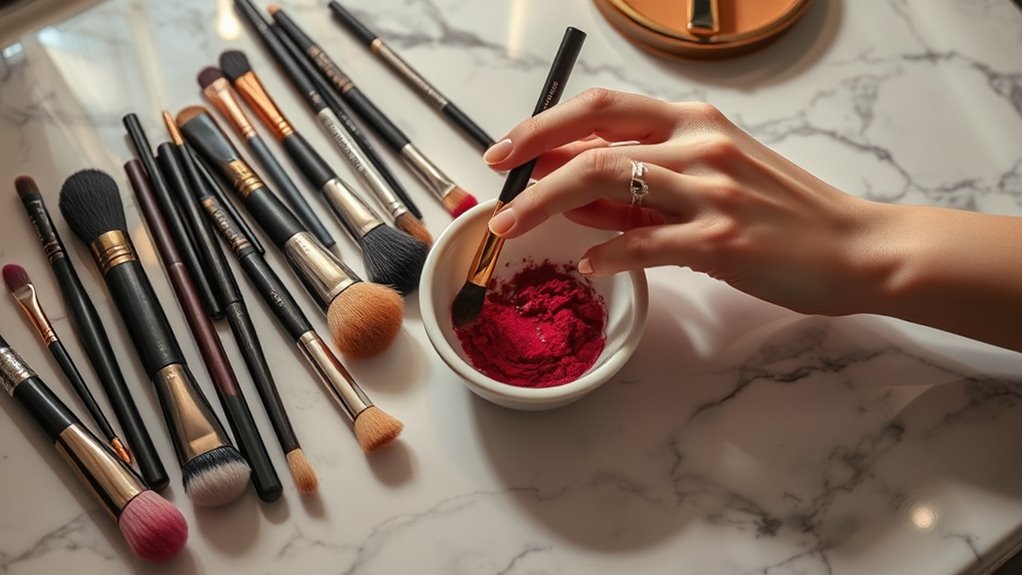
Choosing the right makeup brushes is crucial for a flawless look. Start with important face brushes like flat, buffing, and stippling ones. For your eyes, use fine-tipped eyeliner and fluffy blending brushes. Master techniques like building color softly and blending in circular motions. Don't forget to clean your brushes regularly to maintain their performance. You'll find that investing in quality tools pays off in the long run. Keep exploring to discover even more tips and techniques for perfect makeup application!
Understanding Makeup Brush Basics
Makeup brushes are vital tools in your beauty kit, helping you achieve a flawless look with ease. To boost your makeup game, it's important to understand brush bristles types and handle materials. Synthetic bristles are perfect for liquid and cream products, providing seamless application and easy cleaning. Natural bristles, conversely, excel with powders, offering a soft finish and blendability.
When choosing a brush, consider the handle materials as well. Wooden handles offer durability and a classic feel, whereas acrylic options can be sleek and modern. You'll find that the right combination of bristles and handle will improve your precision and control, making each application feel effortless.
Investing in innovative brushes customized to your needs will not just improve your technique but will also transform your overall makeup experience. So, explore the realm of brushes and discover what works best for your unique style!
Essential Face Brushes
When you want to create a flawless complexion, having the right pivotal face brushes is key. Start your makeup routine with a quality foundation brush, and explore the various foundation brush types available. A flat brush offers a smooth application, whereas a buffing brush provides a seamless finish. Don't overlook the strength of a stippling brush, which can help you achieve that airbrushed look.
Next, master fundamental face brush techniques. For liquid foundations, use a stippling motion to blend, ensuring even coverage without streaks. If you're using a powder foundation, a fluffy brush is your best friend; it allows for light application and buildable coverage. For bronzer and blush, angled brushes help define your cheekbones effortlessly. By comprehending these fundamental face brushes and techniques, you'll enhance your makeup game and create that enviable, radiant finish.
Top Eye Makeup Brushes
In regard to eye makeup, having the right brushes makes all the difference. You'll want to know the crucial brush types, effective application techniques, and how to care for your tools. Let's explore how to enhance your eye makeup game with the best brushes!
Essential Brush Types
The right tools can improve your eye makeup game considerably, making a world of difference in application and blending. To achieve that stunning look, you need to understand fundamental brush types, focusing on various brush shapes and sizes. For precision, a fine-tipped eyeliner brush can work wonders, whereas a fluffy blending brush helps seamlessly diffuse colors. A flat shader brush is perfect for packing on pigments, and a small detail brush allows you to tackle intricate designs or highlight the inner corners. Don't overlook the importance of a brow brush; it shapes and defines your brows impeccably. By selecting the right brush types, you'll boost your makeup artistry and access endless creative possibilities.
Application Techniques Explained
Perfecting application techniques is crucial for getting the most out of your top eye makeup brushes. With the right methods, you'll enhance your look and release your creativity. Here are four innovative techniques to try:
- Precision Placement: Use a flat shader brush for targeted eyeshadow application on your lid, ensuring a lively base.
- Blending Bliss: Employ a fluffy blending brush to seamlessly merge colors and create depth in your crease.
- Layering Expertise: Experiment with eyeshadow layering methods, applying lighter shades first and darker ones on top for dimension.
- Foundation Application Techniques: Don't forget to use a tapered brush for seamless concealer application around the eyes, ensuring a flawless finish.
These techniques will transform your eye makeup game!
Maintenance and Care Tips
Caring for your top eye makeup brushes is essential to guarantee they last longer and perform at their best. Start with regular brush hygiene practices—clean your brushes weekly to prevent product buildup and bacteria growth. Use a gentle brush cleaner or a DIY solution with mild soap and water. Rinse thoroughly and reshape the bristles to maintain their form.
For brush lifespan extension, avoid soaking the ferrule in water, as it can loosen glue and damage the brush. Always lay your brushes flat to dry, preventing water from seeping into the handle. Finally, store them upright in a case or holder, ensuring bristles remain intact. Following these tips not only keeps your brushes in top shape but furthermore enhances your makeup game.
Specialized Brushes for Detail Work
During the application of makeup, having the right tools can make all the difference, especially in relation to specialized brushes for detail work. These brushes enable you to achieve precision application and create intricate, detailed designs that enhance your look. Here are four crucial brushes you should consider:
- Fine Liner Brush: Perfect for creating sharp eyeliner or intricate designs along the lash line.
- Detail Brush: Ideal for precise concealing or adding highlights to specific areas of your face.
- Small Blender Brush: Great for blending eyeshadow in the crease or around the outer corners of your eyes.
- Brow Brush: Vital for filling in and defining your brows with accuracy.
Choosing the Right Brush Material
Choosing the right brush material can greatly impact your makeup application. When you're deciding between synthetic vs. natural brushes, consider what works best for your needs. Synthetic brushes are typically made from nylon or Taklon, making them ideal for liquid and cream products. They're durable, cruelty-free, and easy to clean, offering fantastic performance without any ethical concerns.
On the other hand, natural brushes, often crafted from animal hair, excel in blending powders seamlessly. They provide a luxurious feel and can deliver a more airbrushed finish. Nevertheless, they may require a bit more maintenance and aren't always suitable for those with ethical reservations.
Ultimately, the brush material benefits depend on the type of makeup you use and your personal values. Experiment with both to discover which aligns with your innovative makeup routine, ensuring your application is not only effective but also pleasurable.
How to Clean and Maintain Your Brushes
Keeping your brushes clean is vital for both their longevity and your skin's health. You should know how often to clean them, the best techniques to use, and the right way to store them. Let's explore these key tips to guarantee your brushes stay in top shape.
Cleaning Frequency Guidelines
Even though you might enjoy applying makeup with your brushes, maintaining their cleanliness is essential for both your skin and the brushes' longevity. Regular cleaning prevents bacteria buildup and guarantees peak performance. Here's a quick guide for cleaning frequency:
- Daily: Quick clean your foundation and concealer brushes with a gentle spray sanitizer after each use.
- Weekly: Deep clean your eyeshadow and eyeliner brushes using innovative cleaning methods to remove product buildup.
- Bi-Weekly: Sanitize all brushes with an alcohol-based solution to maintain brush sanitization.
- Monthly: Thoroughly wash your face brushes with mild soap, making sure they stay in top condition.
Proper Cleaning Techniques
Start your brush cleaning routine by gathering the right supplies, which include a gentle soap, warm water, and a clean towel. To begin, wet the bristles under warm water, making certain the ferrule doesn't get soaked. Apply a small amount of soap and gently work it into the bristles, using circular motions to dislodge makeup residue. Rinse thoroughly until the water runs clear, making sure to keep the bristles pointing downward to prevent damage. For ideal sanitizing brushes, consider using alcohol-based sprays as a finishing touch. After rinsing, gently reshape the bristles and lay them flat on your clean towel for brush drying. Remember, regular cleaning extends the life of your brushes and guarantees flawless makeup application!
Storage and Maintenance Tips
Proper storage and maintenance of your makeup brushes can greatly extend their lifespan and guarantee peak performance. Here are some innovative tips to keep your brushes in top shape:
- Use brush organizers: Invest in stylish organizers that keep your brushes upright and free from dust.
- Store them properly: Avoid tossing your brushes in a drawer; instead, opt for a dedicated case that protects their bristles.
- Clean regularly: Make it a habit to wash your brushes bi-weekly, ensuring you remove old makeup and bacteria.
- Consider travel storage: If you're on the go, choose compact, protective travel cases to maintain brush integrity.
Techniques for Applying Foundation
With regard to applying foundation, perfecting a few key techniques can drastically improve your makeup game. Start by choosing the right foundation brush type; flat brushes are great for precision, whereas buffing brushes excel at creating a seamless finish. Begin by applying a small amount of foundation to the back of your hand or a palette.
For foundation blending techniques, use the brush to dot the foundation on your face, focusing on areas that need coverage. Blend outward in circular motions, ensuring you don't miss those tricky spots around the nose and jawline. For a natural look, consider the stippling technique—lightly tapping the brush to build coverage without caking.
Don't forget to blend down your neck for a cohesive look. Experiment with different brush types and techniques to find what works best for you, and watch your foundation game transform!
Mastering Eyeshadow Application
In terms of mastering eyeshadow application, knowing your brush types is key. You'll want to explore various application techniques that improve your eye shape and color. Plus, blending seamlessly will raise your look to a whole new level.
Essential Eyeshadow Brush Types
Perfecting eyeshadow application starts with having the right tools, and knowing about vital eyeshadow brush types is key. Here's a quick breakdown of fundamental brushes that can enhance your look:
- Crease Brushes: Perfect for adding depth and dimension to your eyelids.
- Flat Brushes: Ideal for packing on color for a bold, lively finish.
- Shader Brushes: Great for blending colors seamlessly and achieving a soft gradient.
- Pencil Brushes: Excellent for precision work, especially in the inner corners or lower lash line.
- Blending Brushes: Vital for softening harsh lines, ensuring a polished look.
- Smudge Brushes: Perfect for creating smoky effects and blending out eyeliner.
With these brushes, you'll master the art of eyeshadow like a pro!
Application Techniques Explained
Perfecting eyeshadow application involves a few key techniques that can improve your makeup game. To start, focus on makeup layering; apply a base shade to create a canvas for your look. This sets the foundation and boosts color payoff. Next, use innovative blending techniques to seamlessly shift shades. Rather than applying a single stroke, build up color gradually, using a soft, sweeping motion with your brush. This approach not just adds depth but also prevents harsh lines. For added dimension, try a pop of shimmer in the center of your lid, blending it into your base. Remember, practice is key; experiment with different brushes and techniques to discover what works best for you. Happy blending!
Blending for Seamless Finish
Achieving a seamless finish in your eyeshadow look hinges on effective blending techniques. Perfecting these skills will enhance your makeup game with stunning seamless shifts. Here's how to master blending:
- Choose the Right Brush: Use a fluffy blending brush for soft gradients.
- Layer Wisely: Apply shadows in thin layers, building up intensity gradually.
- Circular Motions: Blend in small circles to diffuse harsh lines and create a smooth finish.
- Mind the Edges: Always check the edges; they should be soft and well-integrated.
Blending Techniques for a Flawless Finish
Even though you might have the best makeup products at your disposal, perfecting blending techniques is essential for achieving a flawless finish. Start with a clean, damp sponge for seamless application; the moisture helps to diffuse products effortlessly. Use a stippling motion for foundation, tapping it into the skin for that second-skin effect.
For eyeshadow, blend in circular motions with a fluffy brush, shifting from light to dark shades. This creates depth and dimension. Don't forget to blend the edges well to avoid harsh lines. If you're working with cream products, a synthetic brush will deliver a smooth finish; apply in a tapping motion for best results.
Lastly, finish with a setting spray to lock everything in and improve that flawless finish. Perfecting these blending techniques will raise your makeup game and leave you looking radiant and polished.
Common Mistakes to Avoid
Even with the best blending techniques, mistakes can still happen that undermine your makeup look. To enhance your game, be mindful of these common application errors:
- Using the Wrong Brush: Always match your brush type to the product for ideal results. Brush selection tips are key here!
- Neglecting to Clean Brushes: Dirty brushes spread bacteria and affect application. Clean them regularly!
- Applying Too Much Product: Less is often more. Start with a small amount and build up as needed.
- Not Tapping Off Excess: Before applying, tap your brush to remove excess product, preventing a cakey finish.
Investing in Quality Brushes
Investing in quality brushes can transform your makeup application from mediocre to exceptional. When you choose high-quality tools, you'll notice a significant difference in how product blends and adheres to your skin. Meanwhile, there are budget-friendly options available, keep in mind that investing in your artistry often pays off in performance and longevity.
Consider the debate of synthetic versus natural bristles. Synthetic brushes are fantastic for liquid and cream products, offering a smooth application without soaking up excess product. Conversely, natural bristles excel with powders, providing a soft, diffused finish.
To innovate your routine, select brushes that suit your style and the products you love. Don't shy away from splurging on a few key pieces, as they can enhance your makeup game. In the end, quality brushes are an investment in your beauty expedition, ensuring you achieve the flawless look you desire.
Frequently Asked Questions
How Often Should I Replace My Makeup Brushes?
"Out with the old, in with the new" rings true regarding your makeup brushes. You should replace them every six months to a year, depending on their brush lifespan and how often you use them. Good hygiene practices, like cleaning your brushes regularly, can extend their life, but nothing beats fresh bristles for flawless application. Stay innovative and keep your tools in top shape for the best results!
Can I Use One Brush for Multiple Products?
You can use one brush for multiple products, but be mindful of cross contamination risks. If you're switching between cream and powder products, it's crucial to clean your brush between uses. Try innovative brush cleaning techniques, like using a spray cleaner for quick touch-ups or a deeper clean with soap and water regularly. This way, you maintain your brush's longevity and guarantee your makeup application stays fresh and flawless every time.
What Is the Best Way to Store My Brushes?
The best way to store your brushes is to keep them organized and clean. Use a brush holder or a container that allows for airflow to prevent moisture buildup. Consider innovative storage solutions like magnetic strips or wall-mounted organizers. Regularly practice cleaning techniques, like using a gentle cleanser, to maintain their quality. By properly storing and caring for your brushes, you'll guarantee they stay in top shape and ready for your next makeup session.
Are Synthetic Brushes as Good as Natural Ones?
When you compare synthetic brushes and natural ones, think of the vivid colors of a sunset versus the calming hues of dawn. Synthetic brushes offer benefits like durability and easy cleaning, whereas natural brushes have advantages in softness and blending. You'll find that both types can perform beautifully, depending on your needs. Embrace innovation by experimenting with both, and you'll discover which aligns best with your makeup style and preferences.
How Do I Know Which Brush Size to Use?
Choosing the right brush size depends on your application techniques and the look you want to achieve. For detailed work, like eyeliner or precise blending, opt for smaller brushes. If you're covering larger areas, like foundation or bronzer, go for bigger brushes. Experiment with different sizes to see what feels best for you. Remember, the right brush can enhance your makeup game, so don't hesitate to innovate and try new combinations!