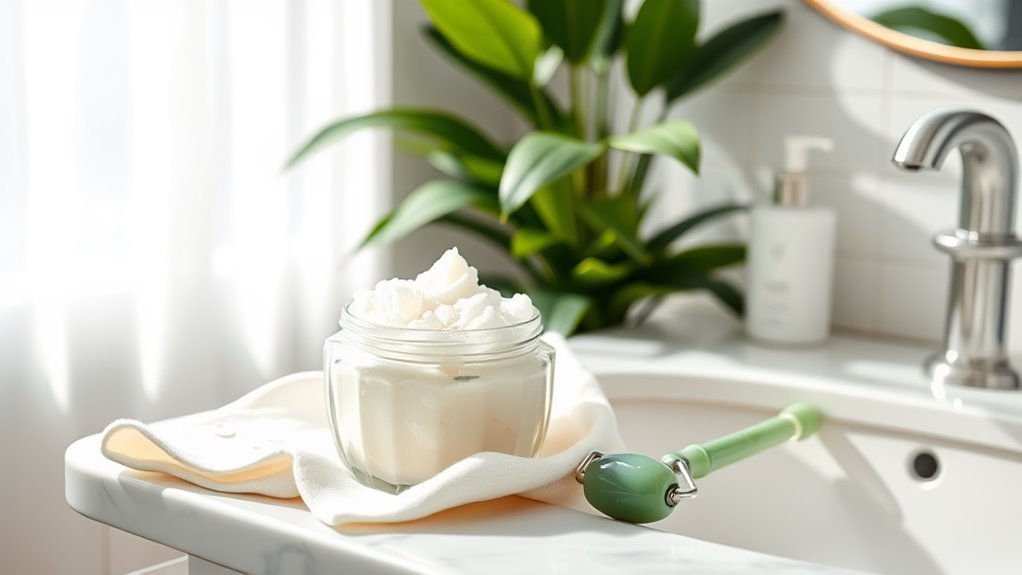
To exfoliate your skin without irritation, start by identifying your skin type. For sensitive skin, opt for gentle exfoliants with soothing ingredients like aloe vera. If you have oily skin, consider salicylic acid. Use mild mechanical scrubs or enzymatic treatments to avoid harshness. Begin with once-a-week exfoliation to monitor your skin's reaction and always follow up with hydrating moisturizers. Protect your skin with sunscreen afterward. You'll find more tips on optimizing your routine for the best results.
Understanding Your Skin Type
Before you plunge into exfoliation, it is crucial to understand your skin type, as this will guide you in choosing the right products and methods. If you have sensitive skin, you'll want to opt for gentle exfoliants that avoid harsh chemicals or abrasive textures. Look for products with soothing ingredients like aloe vera or chamomile, which can help minimize irritation. Conversely, if you struggle with oily skin, you can afford to be bolder. Chemical exfoliants, like salicylic acid, can work wonders by deeply unclogging pores and reducing excess shine. Knowing your skin type not only helps you avoid potential irritation but also maximizes the benefits of exfoliation. By tailoring your approach, you'll achieve that fresh, radiant glow without the risk of adverse reactions. Embrace innovation in your skincare routine and let your unique skin type guide your path!
Choosing the Right Exfoliation Method
Once you've identified your skin type, it's time to choose the right exfoliation method that suits your needs. Selecting between mechanical exfoliation and chemical exfoliation can feel overwhelming, but it's about finding what works best for you. Here are four innovative options to reflect on:
- Gentle Scrubs: Mechanical exfoliation with fine particles can invigorate your skin without harshness.
- Exfoliating Pads: Infused with acids, these offer a convenient chemical exfoliation that brightens and smooths.
- Enzyme Treatments: Derived from fruits, they provide a gentle yet effective way to slough off dead skin.
- Microdermabrasion: A professional option, this mechanical method gives instant results with minimal irritation.
Key Ingredients for Gentle Exfoliation
When choosing gentle exfoliation, look for key ingredients that can effectively renew your skin without causing irritation. Enzymatic exfoliants, derived from natural sources like papaya and pineapple, dissolve dead skin cells gently, making them ideal for sensitive skin. Conversely, chemical exfoliants, such as alpha hydroxy acids (AHAs) and beta hydroxy acids (BHAs), work by loosening the bonds between skin cells.
Here's a quick comparison of these exfoliants:
| Exfoliant Type | Benefits |
|---|---|
| Enzymatic Exfoliants | Gentle, ideal for sensitive skin |
| AHA | Hydrates, brightens skin |
| BHA | Penetrates pores, controls oil |
| Chemical Exfoliants | Effective for various skin types |
Tips for Incorporating Exfoliation Into Your Routine
To seamlessly incorporate exfoliation into your skincare routine, start by identifying how often your skin can handle it. Listen to your skin's needs—this is crucial for achieving that radiant glow without irritation. Here are some tips to guide you:
- Choose Wisely: Decide between physical exfoliants like scrubs or chemical exfoliants such as acids that suit your skin type.
- Start Slow: If you're new to exfoliation, begin with once a week and gradually increase as your skin adapts.
- Time It Right: Exfoliate in the evening to allow your skin to repair overnight, maximizing results.
- Stay Consistent: Make exfoliation a regular part of your routine, but don't overdo it—balance is key for healthy skin.
Post-Exfoliation Care for Optimal Results
After exfoliating, your skin needs special attention to maintain its newly revealed radiance. To guarantee ideal results, focus on post-exfoliation hydration. Your skin's barrier may feel vulnerable, so applying a hydrating serum or moisturizer enriched with hyaluronic acid can lock in moisture and improve softness. Look for soothing products containing ingredients like aloe vera or chamomile to calm any irritation and restore balance.
Avoid heavy creams that could clog pores, opting instead for lightweight, non-comedogenic formulations. Remember, your skin's needs change after exfoliation; it craves gentleness and nourishment.
Furthermore, consider using a facial mist for an instant refresh throughout the day. This not only hydrates but furthermore boosts your skin's luminosity.
Finally, don't forget the sunscreen! Shielding your fresh skin from UV rays is crucial to prevent damage and maintain that beautiful glow.
Frequently Asked Questions
How Often Should I Exfoliate Sensitive Skin?
Is your skin crying out for some TLC? In terms of sensitive skin, you should aim to exfoliate once or twice a week. Gentle exfoliation techniques, like using a soft washcloth or chemical exfoliants with lactic acid, work wonders without irritation. For product recommendations, look for those labeled 'sensitive skin-friendly.' Remember, less is often more—overdoing it can lead to redness and discomfort! Treat your skin kindly, and it'll reward you.
Can I Exfoliate if I Have Acne?
If you have acne, you can definitely exfoliate, but it's essential to choose the right exfoliation methods. Opt for gentle, chemical exfoliants like salicylic acid, which works well with acne treatments, or mild enzymatic exfoliants. These methods help clear dead skin cells without aggravating your breakouts. Avoid harsh scrubs, as they can irritate your skin. Remember, consistency is key, so listen to your skin and adjust your routine as needed for the best results.
What Should I Avoid After Exfoliating?
After exfoliating, you should steer clear of skin sensitivity triggers like harsh products, heavy makeup, and sun exposure. Prioritize post-exfoliation care by opting for gentle moisturizers and soothing serums that nourish your skin. Avoid tight clothing and excessive sweating, as they can irritate freshly exfoliated skin. By following these tips, you'll maintain a radiant complexion without risking irritation or discomfort. Embrace your skin's natural glow with thoughtful choices!
Is Physical Exfoliation Better Than Chemical Exfoliation?
When you're choosing between physical and chemical exfoliation, consider the benefits of each. Physical exfoliation offers instant results, sloughing off dead skin for a brighter look. Nevertheless, it can be abrasive if overdone. Conversely, chemical exfoliation provides deeper penetration but has drawbacks, like potential irritation for sensitive skin. In the end, it's about finding what works best for you, balancing innovation with your skin's unique needs for a radiant complexion.
Can I Exfoliate During Pregnancy?
You can definitely exfoliate during pregnancy, but it's essential to choose safe products. Opt for gentle, pregnancy skincare options like mild chemical exfoliants or soft physical scrubs. Avoid harsh ingredients that could irritate your skin. Always check with your healthcare provider to verify the products you're using are safe for both you and your baby. Remember, maintaining a healthy glow is possible during prioritizing your skin's well-being during this exciting time!