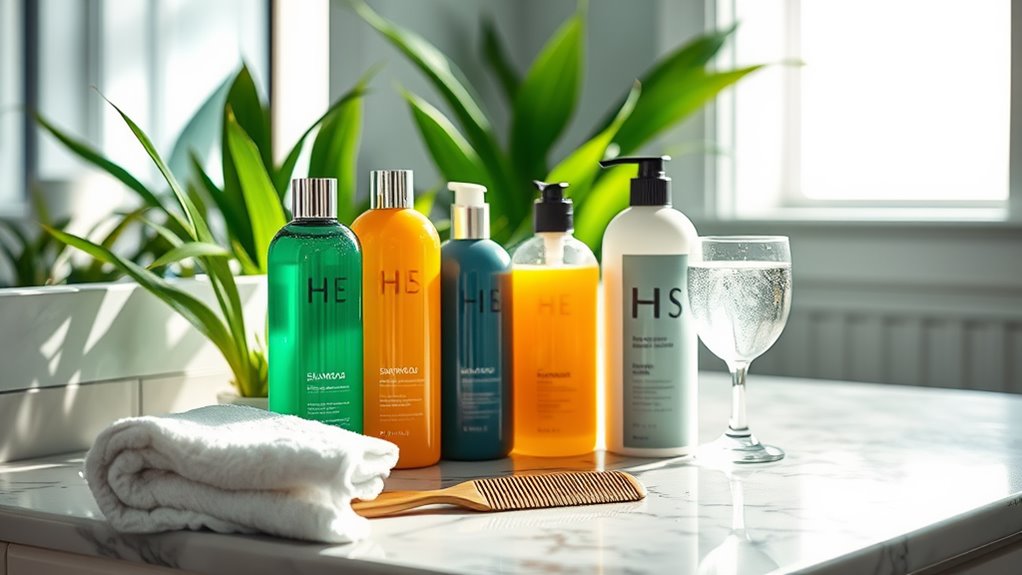
To choose the right shampoo and conditioner for your hair type, start by identifying your hair texture—straight, wavy, curly, or coily—and any specific concerns like dryness or frizz. Look for ingredients like natural oils and vitamins that hydrate and nourish your hair. Avoid sulfates, parabens, and harsh alcohols that can cause damage. Pay attention to seasonal changes in hair needs, and always test new products gradually. There's plenty more to explore on this topic!
Understanding Your Hair Type
To choose the right shampoo and conditioner, you first need to comprehend your hair type. Start by evaluating your hair texture—whether it's straight, wavy, curly, or coily. Each texture has unique needs, so recognizing yours is essential. For instance, straight hair often requires lightweight formulas to prevent greasiness, whereas curly hair benefits from moisturizing products that improve definition.
Next, consider your scalp health. An oily scalp might need clarifying shampoos to remove excess buildup, whereas a dry scalp may require soothing ingredients to alleviate irritation. By aligning your shampoo and conditioner choices with both your hair texture and scalp health, you can cultivate an innovative routine that promotes liveliness and shine.
Ultimately, grasping these fundamental aspects empowers you to select products that truly cater to your individual needs, ensuring your hair looks and feels its best every day.
Identifying Your Hair Concerns
To find the right shampoo and conditioner, you need to identify your specific hair concerns. Are you dealing with dryness, frizz, or breakage? Comprehending these issues and your hair type characteristics will help you choose products that truly work for you.
Common Hair Issues
When you're trying to find the right shampoo and conditioner, identifying your hair concerns is crucial. If you're dealing with a dry scalp, look for formulas that hydrate and soothe, promoting a balanced environment for hair growth. You'll want to avoid harsh ingredients that can exacerbate the issue. For those struggling with frizz control, seek products that offer moisture and smoothing benefits, as these can tame unruly strands and improve manageability. Consider your styling routine, too; the wrong products can leave your hair feeling weighed down or overly oily. By pinpointing your specific concerns, you empower yourself to make informed choices, leading to healthier, more lively hair that reflects your innovative spirit.
Hair Type Characteristics
Comprehending your hair type is essential for selecting the right shampoo and conditioner. If you've got curly texture, you need products that hydrate and define those beautiful curls without weighing them down. Look for shampoos and conditioners infused with natural oils and moisture-boosting ingredients. Conversely, if you have fine strands, lightweight formulas are your best bet. Opt for volumizing shampoos and conditioners that won't overpower your hair or leave it feeling greasy. Always consider your specific concerns, like dryness or brittleness, and choose products designed to address them. By identifying your hair characteristics, you can transform your hair care routine and achieve the luscious locks you desire.
Ingredients to Look For
As you explore the right shampoo and conditioner for your hair type, it is crucial to identify key ingredients that can nourish and protect your strands. Look for products that feature natural oils like argan, coconut, or jojoba, which hydrate and add shine without weighing your hair down. These oils seal in moisture and help maintain your hair’s health, making them a necessity in your hair care arsenal. Additionally, ingredients like keratin and biotin can strengthen your hair and reduce breakage, promoting overall hair health. If you frequently use styling tools, it’s important to learn how to prevent heat damage by incorporating heat-protectant sprays or serums into your routine. Using these products before applying heat can create a protective barrier, keeping your strands healthy and resilient.
Moreover, prioritize formulas rich in vital nutrients, such as vitamins A, E, and biotin. These ingredients not only strengthen your hair but likewise promote growth and resilience against environmental stressors. If you're aiming for innovation in your hair care routine, consider products infused with botanical extracts and proteins that cater directly to your hair needs. By focusing on these beneficial ingredients, you'll empower your hair to look and feel its best every day.
Ingredients to Avoid
When choosing shampoo and conditioner, it's just as important to know what to avoid as it is to know what to look for. Ingredients like sulfates, parabens, and alcohol can be harsh on your hair and scalp. Steering clear of these can help maintain your hair's health and liveliness.
Sulfates: Harsh Detergents
Although sulfates are often praised for their ability to create a rich lather, they're actually harsh detergents that can strip your hair of its natural oils. This can lead to dryness and damage over time. Instead of sulfates, consider using sulfate alternatives that gently cleanse without compromising your hair's health.
Here are some innovative options:
- Cleansing oils: These nourish as they remove impurities.
- Sodium cocoyl isethionate: A mild surfactant derived from coconut.
- Decyl glucoside: A plant-based cleanser that's gentle on sensitive scalps.
Parabens: Preservative Concerns
Many shampoos and conditioners contain parabens, which are synthetic preservatives used to prolong shelf life. Nevertheless, growing concerns about their potential health effects have led many to seek paraben alternatives. These alternatives not merely help maintain product integrity but likewise align with a more natural approach to hair care. Look for options that utilize natural preservatives like vitamin E, rosemary extract, or vital oils. These ingredients not only keep your products fresh but furthermore nourish your hair with beneficial properties. By choosing paraben-free products, you're taking a step toward a healthier routine that prioritizes innovation as you care for your hair. So, check labels carefully and embrace the natural revolution in hair care!
Alcohol: Drying Effects
As some alcohols can be beneficial for your hair, others can lead to dryness and damage. It's essential to identify the drying ingredients in your shampoo or conditioner. Certain alcohol types, like isopropyl alcohol and ethanol, can strip moisture from your strands, leaving them brittle and lifeless. Here are some specific alcohols to watch out for:
- Isopropyl Alcohol
- Ethanol
- Propanol
Instead, look for products containing fatty alcohols, such as cetyl or stearyl alcohol, which can provide hydration and softness. By choosing wisely, you can protect your hair from the adverse effects of harsh alcohols as you promote healthier, lively locks. So, always read labels and opt for innovative formulas that prioritize moisture retention.
The Importance of Ph Balance
Maintaining the right pH balance in your hair care products is crucial for healthy hair. Your hair's natural pH level typically ranges between 4.5 and 5.5. When you choose shampoos and conditioners with the correct pH levels, you help preserve your hair's cuticle integrity, which prevents damage and promotes shine. Products with an imbalanced pH can lead to dryness, frizz, and breakage, undermining your hair health.
Opt for formulas that cater to your specific hair type during ensuring they maintain a suitable pH. For instance, if you have color-treated hair, look for pH-balanced options that protect your hue as well as nourishing your strands. Remember, innovative hair care doesn't just mean trendy ingredients; it likewise means comprehending the science behind pH levels and how they impact your hair. Prioritize your hair's health by selecting products that respect its natural balance. Your hair will thank you!
Tailoring Your Routine for Seasonal Changes
When the seasons change, so do the needs of your hair, and adjusting your hair care routine accordingly can make a significant difference. Different temperatures affect your hair's moisture levels and overall health, so incorporating seasonal ingredients is key.
During the colder months, switch to richer, hydrating shampoos and conditioners to combat dryness. Conversely, lighter formulas can help during warmer seasons, keeping your hair fresh and oil-free. Here are a few tips to tailor your routine:
- Look for winter-friendly oils like argan or jojoba for nourishment.
- In summer, opt for products with UV protection to shield against sun damage.
- Shift to clarifying shampoos in spring to remove buildup after winter.
Tips for Testing New Products
How can you confidently choose new hair care products without risking your hair's health? Start with patch testing before fully committing to a new shampoo or conditioner. Apply a small amount to a discreet area of your scalp or skin and wait 24 hours to see if any irritation occurs. This simple step can save you from potential allergic reactions.
Once you've passed the patch test, consider product layering. Introduce new products gradually, allowing your hair time to adjust. Begin with one product, and after a week, add another to your routine. This method helps you pinpoint which products work best together and prevents overwhelming your hair.
Lastly, keep a journal of your hair's response to each product. Note any changes in texture, moisture, or overall health. This innovative approach guarantees you make informed choices, ultimately leading to healthy, lively hair.
Frequently Asked Questions
Can I Use the Same Shampoo and Conditioner for Different Hair Types?
You might think using the same shampoo and conditioner for different hair types is fine, but it's not always ideal. Each hair type has unique needs because of varying hair compatibility and product formulation. For example, fine hair may require lightweight products, whereas thick hair benefits from richer formulations. If you want to achieve lively, healthy hair, consider tailoring your products to specific types instead of using a one-size-fits-all approach.
How Often Should I Change My Shampoo and Conditioner?
You should change your shampoo and conditioner every few months to keep your hair healthy and responsive. Hair can adapt to a specific shampoo formulation, leading to diminished results over time. By switching products, you can introduce new ingredients that benefit your hair health and maintain its liveliness. Experiment with innovative options that cater to your hair's evolving needs, ensuring it stays colorful and nourished throughout different seasons or styles.
Is It Necessary to Use a Conditioner After Every Wash?
Using a conditioner after every wash isn't strictly necessary, but it offers significant benefits. Conditioners lock in hair moisture, making your strands softer and more manageable. If you're working with dry or damaged hair, skipping it can lead to brittleness. For innovation, consider alternating conditioners or trying leave-in formulas to improve moisture without weighing your hair down. Experiment to find the best routine that keeps your hair looking lively and healthy!
Can I Mix Different Brands of Shampoo and Conditioner?
You've probably wondered if mixing different brands of shampoo and conditioner is a good idea. Although it sounds innovative, brand compatibility matters. Not all formulas work well together, so mixing them can lead to unexpected results. Try experimenting with small amounts to see how your hair reacts. If it feels great, you've found a winning combo! Just remember, the right mix can improve your hair's health and look, so keep experimenting!
What Should I Do if My Hair Feels Oily After Washing?
If your hair feels oily after washing, it might be time to reassess your routine. Focus on scalp health by using a clarifying shampoo occasionally to remove product buildup. Make sure you're rinsing thoroughly; leftover conditioner can contribute to that greasy feeling. Additionally, consider adjusting your washing frequency; sometimes, less is more. Experiment with lighter products to keep your hair feeling fresh and innovative, whilst maintaining that sought-after balance.