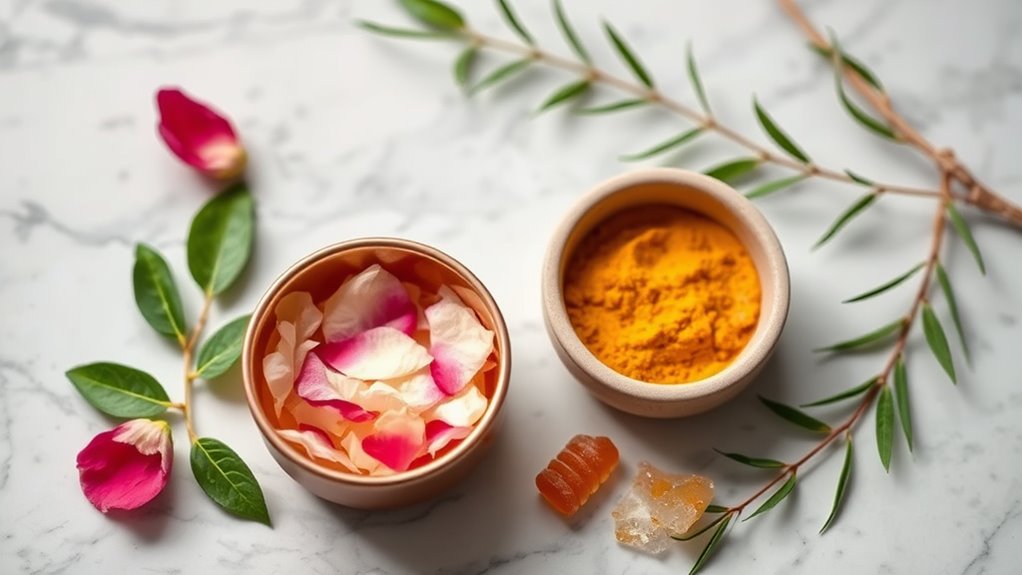
You can get glowing skin without breaking the bank or harsh chemicals! Try soothing masks with chamomile and cucumber to calm sensitive skin, or brightening masks with turmeric and yogurt to reduce hyperpigmentation. Natural exfoliants like sugar and coffee grounds can smooth out your skin, whereas tea tree oil and clay masks tackle acne. For dry skin, hydrate with honey and oatmeal or aloe vera gel. With these DIY face masks, you'll be on your way to radiant skin – and that's just the beginning of what you can discover!
Soothing Masks for Sensitive Skin
When dealing with sensitive skin, the last thing you want to do is irritate it further with harsh ingredients or abrasive treatments. You need gentle, nourishing masks that calm and soothe your skin. A DIY mask infused with calming chamomile is just what you need. This natural ingredient reduces inflammation and redness, leaving your skin feeling soft and supple. Another great option is a mask featuring cucumber coolness. Cucumber's anti-inflammatory properties help to reduce puffiness and soothe irritated skin. To make your own soothing mask, simply mash up a ripe cucumber and mix it with a tablespoon of yogurt. Apply to your face, relax for 10-15 minutes, and rinse off with lukewarm water. Your sensitive skin will thank you.
Brightening Masks for Dull Complexions
You've tried every product on the market, but your dull complexion persists. It's time to try a different approach with brightening masks that utilize the strength of natural ingredients. You'll be amazed at how Turmeric and Yogurt Combo and Lemon and Honey Delight can illuminate your skin and give you a radiant glow.
Turmeric and Yogurt Combo
As dull skin can be a real confidence-killer, you're likely enthusiastic to find a solution to brighten up your complexion. The turmeric and yogurt combo is a game-changer for achieving radiant skin. Turmeric's benefits include reducing inflammation and hyperpigmentation, whereas its natural antibacterial properties help combat acne. Yogurt, conversely, provides lactic acid that gently exfoliates and brightens your skin. When combined, these ingredients create a potent mask that tackles dullness head-on. Simply mix 1 teaspoon of turmeric powder with 2 tablespoons of plain yogurt to create a smooth paste. Apply it to your face, let it sit for 10-15 minutes, and rinse off with warm water. You'll be amazed at how this dynamic duo can transform your skin in just one use!
Lemon and Honey Delight
Two ingredients that are likely sitting in your kitchen right now can combine to create a brightening face mask that'll leave your skin looking radiant and refreshed. The lemon benefits of natural astringency and antiseptic properties help to minimize pores and reduce acne, as the honey properties of moisturizing and antibacterial agents soothe and calm your skin. Mix equal parts lemon juice and honey to create a paste, then apply it to your face for 10-15 minutes. Rinse with warm water and pat dry. You'll be amazed at how this simple yet potent combination can brighten and even out your complexion, leaving you with a glowing, healthy-looking skin.
Natural Exfoliants for Smoother Skin
You're likely no stranger to the importance of exfoliating for smoother skin, and using natural ingredients can be a great way to get the job done. By incorporating sugar, coffee grounds, or oatmeal into your skincare routine, you can gently remove dead skin cells and reveal a brighter, more radiant complexion. Whether you're looking to combat dryness, reduce the appearance of pores, or simply feel more confident in your own skin, these natural exfoliants are worth trying.
Sugar Face Exfoliant
Sugar Face Exfoliant, a natural exfoliant, gently removes dead skin cells, revealing smoother, brighter skin. You can use it to exfoliate your skin 1-2 times a week, depending on your skin type. As you massage the sugar onto your skin, it helps to break down dead skin cells, promoting cell turnover and leaving your skin feeling soft and refreshed.
| Sugar Benefits | Exfoliation Techniques |
|---|---|
| Natural humectant that retains moisture | Massage sugar onto skin in circular motions |
| Gentle enough for sensitive skin | Focus on areas with blackheads or whiteheads |
| Rich in antioxidants that combat free radicals | Rinse with warm water, then pat dry |
Coffee Ground Scrub
One tablespoon of used coffee grounds is all you need to create a natural exfoliant that'll leave your skin looking smoother and more radiant. The coffee benefits extend beyond your morning cup, as the grounds' gentle abrasiveness helps remove dead skin cells and promote cell turnover. Massage the grounds onto your skin in circular motions, focusing on areas with blackheads or whiteheads. This exfoliation technique stimulates blood flow, reducing the appearance of pores and giving your skin a healthy glow. Rinse with warm water, pat dry, and follow up with your favorite moisturizer. You'll be amazed at how this simple, eco-friendly scrub transforms your complexion.
Oatmeal Soothing Peel
As the coffee grounds scrub is perfect for tackling blackheads and whiteheads, sometimes your skin needs a gentler touch. That's where the oatmeal soothing peel comes in. This natural exfoliant utilizes the oatmeal benefits of soothing properties to calm and comfort irritated skin. Mix 2 tablespoons of oatmeal with 1 tablespoon of honey and 1 tablespoon of yogurt to create a gentle, non-abrasive peel. Apply to your face and let it sit for 10-15 minutes before rinsing off with warm water. The result? Smooth, radiant skin that's free from redness and irritation. Regular use of this oatmeal soothing peel will leave your skin looking more even-toned, calm, and refreshed.
Anti-Acne Masks for Clearer Skin
In the domain of achieving clearer skin, tackling acne is often the biggest hurdle. You don't have to shell out big bucks for expensive treatments, though – Mother Nature's got your back! Try whipping up an anti-acne mask with tea tree oil, known for its antibacterial properties. Mix it with clay masks or charcoal treatments to draw out impurities and shrink pores. Herbal remedies like green tea and witch hazel can likewise help reduce inflammation. For a more exfoliating approach, combine rice flour with apple cider to gently buff away dead skin cells. If you're feeling exotic, go for a papaya mask to dissolve blackheads and whiteheads. And for an added antibacterial boost, add a dash of neem paste to your concoction. With these natural ingredients, you'll be on your way to clearer, radiant skin in no time!
Hydrating Masks for Dry Skin
If you're struggling with dry, flaky skin, you're in the right place! You'll love these hydrating masks that'll quench your skin's thirst for moisture. You'll learn how to whip up moisturizing treats like honey and oat, avocado and banana blend, and soothing aloe vera gel to get your glow back.
Moisturizing Honey and Oat
With dry skin, you're likely no stranger to the feeling of tightness and dullness that comes with it. But fear not, as the moisturizing honey and oat face mask is here to rescue your skin! This dynamic duo works wonders to lock in moisture, soothe irritation, and leave your skin looking radiant.
| Ingredient | Benefits | Properties |
|---|---|---|
| Honey | Natural humectant, retains moisture | Antibacterial, antifungal |
| Oat | Soothes and calms skin | Anti-inflammatory, gentle exfoliant |
| Combination | Hydrates, softens, and protects skin | Synergistic benefits for ideal results |
Avocado and Banana Blend
You've conquered dry skin with the moisturizing honey and oat face mask, but now it's time to supercharge your hydration routine with an Avocado and Banana Blend. This dynamic duo combines the nourishing avocado benefits, rich in vitamins and fatty acids, with the potassium-packed banana properties that help lock in moisture. Mash ripe avocado and banana together, then mix in a tablespoon of olive oil and a teaspoon of honey. Apply the blend to your face, avoiding the eye area, and let it sit for 15-20 minutes. Rinse with lukewarm water and pat dry. This hydrating mask will leave your skin feeling soft, supple, and refreshed, perfect for tackling dry skin woes.
Soothing Aloe Vera Gel
As dry skin continues to be a concern, it is essential to incorporate a soothing aloe vera gel mask into your skincare routine. Aloe vera's hydrating properties make it an ideal ingredient for replenishing moisture and calming irritation. When you apply aloe vera gel to your skin, you'll experience numerous benefits, including:
- Reduced inflammation: Aloe vera's anti-inflammatory properties help soothe redness and irritation.
- Improved skin elasticity: Aloe vera's moisturizing properties help plump and firm the skin, reducing the appearance of fine lines and wrinkles.
- Enhanced skin clarity: Aloe vera's antibacterial properties help purify the skin, reducing the appearance of pores and acne.
Masks for Hyper-Pigmentation and Dark Spots
When hyper-pigmentation and dark spots take over your complexion, it can be frustrating and affect your self-confidence. But don't let these imperfections get in the way of your glow. You can tackle hyper-pigmentation and dark spots with the right DIY face masks. Look for ingredients like turmeric, which has natural lightening properties, and cinnamon, which can help reduce melanin production. Another effective combination is honey and yogurt, which can help even out your skin tone. For a more intense treatment, try a mask with apple cider vinegar and lemon juice, which can help brighten and lighten dark spots. Remember, consistency is key, so make these masks a part of your regular skincare routine to see noticeable results. With these hyper pigmentation remedies and dark spots treatments, you can say goodbye to uneven skin tone and hello to radiant, glowing skin.
DIY Face Masks for Anti-Aging
Since fine lines, wrinkles, and age spots can make you look older than you feel, it's vital to incorporate anti-aging face masks into your skincare routine. You can combat these signs of aging by using DIY face masks packed with potent anti-aging ingredients.
When it comes to creating your own anti-aging face masks, there are a few key ingredients to keep in mind. Here are three important components to include:
- Retinol-rich ingredients: Retinol helps to stimulate collagen production, reducing the appearance of fine lines and wrinkles.
- Antioxidant-rich ingredients: Antioxidants, such as vitamin C and E, help to neutralize free radicals and protect your skin from environmental stressors.
- Moisturizing ingredients: Hydrating ingredients, such as hyaluronic acid and glycerin, help to plump and firm the skin, giving you a more youthful appearance.
The Power of Honey in Face Masks
In the process of combating signs of aging, you're likely aware that a radiant glow is just as important for a youthful appearance. Honey, a natural humectant, is an ideal ingredient to add to your face masks for an unparalleled glow. It attracts and retains moisture, leaving your skin hydrated and plump.
| Honey Benefits | Honey Types |
|---|---|
| Antibacterial properties | Manuka honey |
| Hydrates and locks in moisture | Acacia honey |
| Soothes and calms skin | Raw honey |
When choosing a honey type, consider your skin concerns. For acne-prone skin, Manuka honey's antibacterial properties can help combat breakouts. For dry skin, Acacia honey's hydrating abilities can provide long-lasting moisture. Raw honey, with its unpasteurized goodness, is perfect for sensitive skin. Whichever you choose, honey's natural goodness will leave your skin looking radiant and youthful.
Turmeric Face Masks for Radiant Skin
You've likely heard of turmeric's incredible healing abilities, and its benefits extend far beyond the kitchen. Turmeric face masks are a game-changer for achieving radiant skin. The active compound curcumin in turmeric has potent anti-inflammatory and antioxidant properties that can help soothe and brighten your skin.
Turmeric benefits your skin in several ways:
- Reduces acne and inflammation: Turmeric's anti-inflammatory properties can help calm redness and reduce acne breakouts.
- Fades hyperpigmentation: Turmeric's antioxidants can help lighten dark spots and even out your skin tone.
- Hydrates and plumps: Turmeric can help lock in moisture, leaving your skin looking smooth and supple.
Try incorporating turmeric into your skincare routine with simple recipes like mixing 1 teaspoon of turmeric powder with 1 tablespoon of honey and 1 tablespoon of yogurt. Apply the mask to your face and let it sit for 10-15 minutes before rinsing off. With consistent use, you can expect to see a noticeable improvement in your skin's texture and tone.
Lemon and Sugar Face Masks for a Natural Glow
Even though turmeric’s potent anti-inflammatory properties can work wonders for your skin, another natural duo is waiting in the wings to help you achieve that coveted glow. Lemon and sugar face masks are a revitalizing twist on traditional skincare routines, utilizing the strength of citrus and sweetness to illuminate your complexion. The lemon benefits your skin by naturally brightening and lightening, reducing the appearance of dark spots and hyperpigmentation. Meanwhile, sugar exfoliation gently removes dead skin cells, revealing smoother, brighter skin. To create this mask, mix 2 tablespoons of lemon juice with 1 tablespoon of sugar and gently massage onto your face. Rinse with warm water and pat dry to reveal a radiant, sun-kissed glow. By incorporating this DIY face mask into your routine, you’ll be well on your way to achieving the radiant, healthy-looking skin you’ve always desired. For even better results, consider pairing this DIY treatment with the best beauty tools worth buying to enhance your skincare routine. Using a gentle facial brush or exfoliating sponge can help distribute the mask evenly while boosting circulation for an even brighter complexion. Making this mask a regular part of your regimen, along with the right beauty tools, will leave your skin feeling refreshed, smooth, and naturally radiant.
Frequently Asked Questions
Can I Use DIY Face Masks on My Skin if I Have Skin Allergies?
"An ounce of prevention is worth a pound of cure" rings true in relation to using DIY face masks on skin prone to allergies. You should always take skin allergy precautions before applying any new ingredients. Start by patch testing a small area of your skin with the mask ingredients to check for any adverse reactions. If you don't notice any issues, you're good to go! But if you experience any redness, itching, or irritation, it's best to err on the side of caution and avoid using that particular mask.
How Often Should I Apply a Face Mask for the Best Results?
Regarding face masks, you're probably wondering how often to apply them for ideal results. The key is to find a frequency that works for your skin. As a general rule, you should mask 1-2 times a week, depending on your skin type. If you have sensitive skin, start with once a week and adjust as needed. For oily skin, you can mask more frequently, whereas dry skin may require less. Remember to follow frequency guidelines and consider your skin type when masking for the best results.
Can I Store Leftover Face Mask Mixture in the Fridge?
You're wondering if you can store leftover face mask mixture in the fridge. The good news is, yes, you can! Just make sure to store it in an airtight container to maintain mask longevity. Typically, leftover mixtures can last up to 3-5 days in the fridge. When you're ready to use it again, simply give it a good stir and apply as usual. Proper leftover storage will keep your mask fresh and effective for your next use.
Are Face Masks Suitable for All Skin Types and Ages?
In relation to face masks, you're probably wondering if they're suitable for everyone. The answer is, it depends. You need to evaluate your skin type compatibility – some masks can be too harsh for sensitive skin, whereas others may not be moisturizing enough for dry skin. Age factors are likewise key, as certain ingredients may be more beneficial for anti-aging or acne-prone skin. By choosing a mask that's customized to your needs, you'll get the most out of your skincare routine.
Do I Need to Rinse My Face After Removing a Face Mask?
When you're done with your face mask, do you wonder if you need to rinse your face afterwards? The answer is yes! After mask removal, rinsing techniques are essential to remove any residue. You should gently wash your face with lukewarm water to get rid of any remaining product. This guarantees your skin can breathe and absorb the benefits of the mask. Don't skip this step, as it'll help your skin look radiant and healthy!