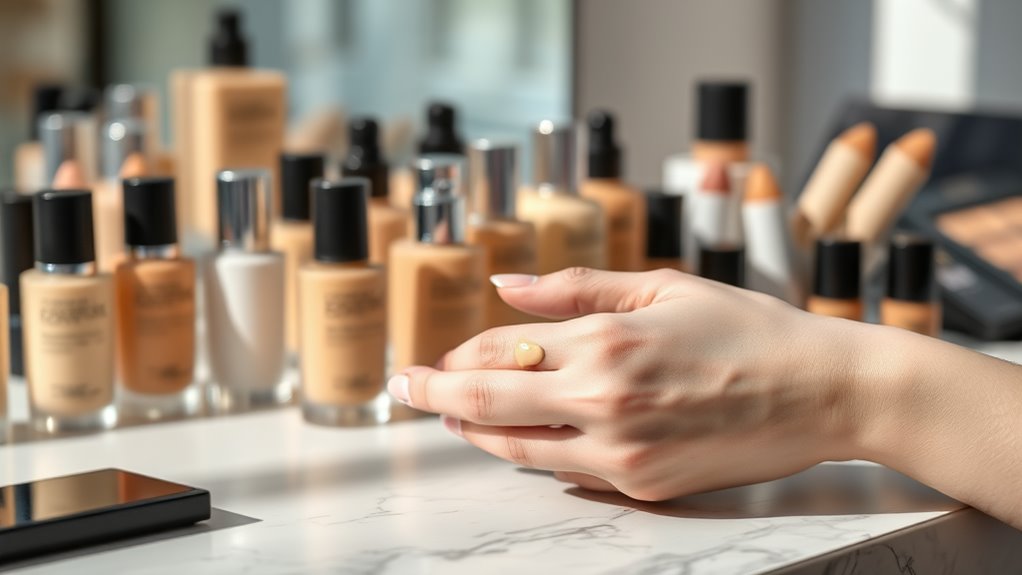
To choose the perfect foundation for your skin type, start by identifying your skin concerns, whether it's acne, fine lines, or hyperpigmentation. Next, determine your skin type – normal, dry, oily, combination, or sensitive – and look for formulas that address your specific needs. If you're dry, opt for hydrating foundations; if you're oily, choose oil-absorbing ones. Don't forget to reflect on your desired finish, from natural to radiant. Now, take the next step to discover the ideal foundation match for a flawless, customized look that's all you.
Understanding Your Skin Type
Since finding the perfect foundation match relies heavily on grasping your skin type, it's essential to determine whether you have normal, dry, oily, combination, or sensitive skin. Your skin type plays a significant role in how foundation looks and feels on your face. To get an accurate assessment, you'll need to analyze your skin characteristics. Take a closer look at your skin in the morning, before applying any products. Notice how it looks and feels. Do you have large pores, fine lines, or a natural glow? This skin analysis will help you identify your skin type. If you're still unsure, consider consulting with a dermatologist or skincare expert who can provide personalized guidance. By comprehending your skin type, you'll be able to choose a foundation that complements your skin, rather than working against it.
Identifying Your Skin Concerns
Now that you've pinpointed your skin type, it's time to examine your skin concerns. This is where you identify specific issues that can affect how your foundation looks and feels on your skin.
You may have one or multiple concerns, but it's crucial to recognize them to find the perfect foundation. Here are some common skin concerns to reflect on:
- Acne concerns: Do you have active breakouts, acne scars, or hyperpigmentation?
- Skin sensitivity: Do you experience redness, itching, or stinging when using certain products?
- Fine lines and wrinkles: Are you concerned about visible signs of aging?
- Hyperpigmentation: Do you have dark spots, freckles, or uneven skin tone?
Foundation Formulas 101
When you're on the hunt for the perfect foundation, it's crucial to understand the different formulas available. You'll likely come across liquid foundations, which offer sheer to medium coverage and a natural finish. Now, let's break down the benefits of liquid foundations, along with cream foundations and powder finishes, to help you make an informed decision.
Liquid Foundations Explained
Among the many foundation formulas, liquid foundations are a popular choice for their versatility and ease of application. You'll love the liquid texture that glides smoothly onto your skin, allowing for a natural-looking finish. To get the most out of your liquid foundation, consider these application techniques:
- Use a primer to create an even surface for your foundation to adhere to.
- Apply with a beauty blender for a seamless, airbrushed look.
- Use a foundation brush for more precise application and control.
- Build coverage gradually, starting with a light layer and adding more as needed.
With the right liquid foundation and application techniques, you'll be on your way to a flawless, radiant complexion.
Cream Foundations Defined
As liquid foundations offer a natural-looking finish, cream foundations provide a rich, velvety texture that's perfect for dry or mature skin. You'll love the cream foundation benefits, including intense moisturizing and a more even tone. In terms of cream foundation application, use a gentle, sweeping motion to blend the product into your skin. Focus on one area at a time, building coverage as needed. Look for a cream foundation that's infused with nourishing ingredients like antioxidants and vitamins to give your skin an extra boost. With the right cream foundation, you'll enjoy a radiant, healthy-looking complexion that feels comfortable all day long.
Powder Finishes Detailed
You're likely familiar with the smooth, matte finish that powder foundations provide. But did you know there's more to powder finishes than just a one-size-fits-all solution? The type of powder you choose can greatly impact the final look and feel of your foundation.
To get the most out of your powder foundation, consider the following:
- Loose powders for a light, airy finish that won't cake or settle into fine lines.
- Pressed powders for a more intense, buildable coverage that's perfect for oily skin.
- Mineral powders infused with nourishing ingredients for a natural, radiant glow.
- Setting powders particularly designed to set your liquid or cream foundation in place.
Mastering powder types and application techniques can enhance your foundation game and give you the flawless, long-lasting finish you've always wanted.
Dry Skin: Hydrating Foundations
When dealing with dry skin, finding the right foundation can be a challenging task, especially since it's prone to flakiness and irritation. You need a foundation that not only provides coverage but likewise hydrates and nourishes your skin. Look for hydrating ingredients like hyaluronic acid, glycerin, and ceramides that help lock in moisture.
| Foundation Characteristics | Benefits for Dry Skin |
|---|---|
| Moisturizing formula | Helps to hydrate and soothe dry skin |
| Buildable coverage | Allows for customizable coverage without caking |
| Non-comedogenic | Won't clog pores, reducing irritation |
When applying foundation, use a gentle, patting motion to avoid pulling or tugging on your skin. Apply a lightweight, oil-free primer beforehand to help your foundation glide on smoothly and last longer. By choosing a hydrating foundation and following these application tips, you can achieve a flawless, comfortable base that complements your dry skin.
Oily Skin: Oil-Control and Mattifying Foundations
If you have oily skin, you know the struggle of keeping your foundation in place all day. You need lightweight oil absorbers that won't clog your pores, and a long-lasting matte finish that won't turn greasy by lunchtime. Look for oil-control and mattifying foundations that can help you achieve a smooth, shine-free complexion that lasts.
Lightweight Oil Absorbers
As oily skin tends to produce excess sebum, it is essential to find a foundation that not just provides adequate coverage but also helps control shine and mattify the complexion. You need a lightweight oil absorber that won't clog your pores or accentuate imperfections. Look for oil-free options that are particularly designed to combat shine and provide a smooth, even finish.
When searching for the perfect lightweight oil absorber, consider the following key features:
- Shine control: Does the foundation contain ingredients that help reduce shine and oil production?
- Mattifying properties: Will the foundation leave your skin with a smooth, matte finish?
- Oil-absorbing capabilities: Can the foundation absorb excess oil without drying out your skin?
- Breathable formula: Does the foundation allow your skin to breathe, reducing the risk of clogged pores and breakouts?
Long-Lasting Matte Finish
For oily skin, a lightweight oil absorber is just the first step in achieving a flawless complexion. To take your look to the next level, you need a foundation that provides a long-lasting matte finish. Look for oil-control and mattifying formulas that won't clog your pores or accentuate fine lines. These innovative foundations are designed to absorb excess oil and reduce shine, giving you a smooth, even canvas. With long-lasting wear, you can say goodbye to mid-day touch-ups and hello to a confident, radiant you. Opt for a formula that sets quickly, won't oxidize, and has a soft-focus effect to blur imperfections. With the right foundation, you'll be on your way to a flawless, oil-free complexion that lasts all day.
Combination Skin: Balancing Act
About 40% of women have combination skin, which means you're not alone in this balancing act. Combination skin can be tricky, with oily areas like the T-zone and dry patches elsewhere. The key to finding the perfect foundation is to look for a formula that balances oils without drying out your skin.
When shopping for a foundation, keep the following tips in mind:
- Opt for a lightweight, oil-free formula that won't clog pores or exacerbate oily areas.
- Choose a foundation with hydrating ingredients to help evening texture and combat dryness.
- Select a foundation with a built-in primer to help your makeup stay in place all day.
- Look for a foundation labeled "combination skin" or "balancing" to guarantee it's designed particularly for your skin type.
Normal Skin: Finding the Perfect Match
What's your skin type's secret to radiant beauty? As someone with normal skin, you're lucky to have a balanced canvas for your foundation. With minimal pores and no extreme oiliness or dryness, you can focus on finding the perfect shade and finish to improve your natural glow.
When it comes to shade selection, look for a foundation that matches your skin tone as closely as possible. Test different shades on your jawline to find the one that blends seamlessly. If you’re still unsure, don’t be afraid to mix and match different shades to create your perfect match. Additionally, consider how your foundation shade complements other makeup products, such as blush and bronzer, for a cohesive look. Once you’ve found your ideal foundation, you can also explore the best lipstick shade for your skin to enhance your overall complexion. Choosing complementary tones will help you achieve a natural, polished finish.
In terms of finish preference, you have the flexibility to choose from a range of options. Do you prefer a natural, "no-makeup" look or a more glamorous, radiant finish? Consider your lifestyle and personal style when making your decision. With the right foundation, you'll be on your way to achieving the radiant beauty that's unique to normal skin.
Special Considerations: Sensitive Skin and Beyond
How do you navigate the domain of foundation when your skin is sensitive, acne-prone, or has other unique needs? You're not alone in this struggle. When dealing with sensitive skin, it's vital to prioritize products that minimize the risk of sensitive reactions.
Here are some tips to take into account:
- Opt for hypoallergenic options: These products are particularly designed to reduce the risk of allergic reactions and are often fragrance-free.
- Look for gentle, non-comedogenic formulas: These won't clog your pores, making them perfect for acne-prone skin.
- Choose a foundation with soothing ingredients: Ingredients like aloe vera, chamomile, or green tea can help calm and comfort your skin.
- Perform a patch test: Always test a new foundation on a small area of your skin before applying it to your face to confirm you don't have any adverse reactions.
Frequently Asked Questions
How Do I Know if I'm Using Too Much Foundation?
You're wondering if you're overdoing it with your foundation application. Here's a tip: if you're getting excessive coverage that looks cakey or accentuates pores, you're probably using too much. Take a step back and assess your face in natural light. If your foundation is hiding your skin rather than enhancing it, it's time to dial it back. Start with a light hand and build coverage as needed – remember, the goal is to look like you're wearing no makeup at all!
Can I Use Foundation to Cover Tattoos or Scars?
You're thinking of using foundation as a magic eraser for your tattoos and scars, right? Newsflash: it's not a Photoshopper in a bottle! Although it's tempting to cover up, foundation can actually accentuate imperfections if not done right. That being said, yes, you can use foundation for tattoo coverage and scar concealing. Look for heavy-duty, full-coverage formulas and layer them strategically. Blend, blend, blend! With the right technique and products, you can achieve flawless camouflage without caking.
Do I Need to Set My Foundation With Powder?
You're wondering if you need to set your foundation with powder, right? The answer is, it depends on your skin type and personal preference! Setting your foundation with powder can help extend its wear and reduce shine, but there are powder alternatives, like setting sprays, that can achieve similar results. If you have dry skin, you might skip powder altogether and opt for a hydrating setting mist instead. Experiment with different methods to find what works best for you!
Can I Mix Two Foundations for a Custom Shade?
You're a rebel, always pushing boundaries! Mixing two foundations for a custom shade? Absolutely, you can! Custom mixing is all about finding that perfect hue that matches your unique skin tone. By combining two shades, you're creating a bespoke foundation that's customized to your complexion. So, go ahead and get creative – experiment with different ratios, and don't be afraid to shake things up until you find your ultimate shade match.
Will Foundation Expire if I Don't Use It Often?
You're wondering if that foundation will expire if you don't use it often? The answer is, yes, it can! Foundation shelf life typically ranges from 6 to 24 months, depending on the formula and storage. To extend its life, follow makeup storage tips like keeping it in a cool, dry place, away from direct sunlight, and tightly sealing the cap. Proper storage will help preserve the foundation's quality and prevent bacterial growth.